Duration
12 Days


 Unbeatable Holiday Offers - Save Up to 20% on Your Next Adventure!

Duration
12 Days
Trip Difficulty
Difficult
Group Size
2-16 People
Best Season
Mar-May, Sep-Nov
Transportation
Flight
Accommodation
Teahouse, Hotel, Lodge
Meals
Breakfast, Lunch & Dinner
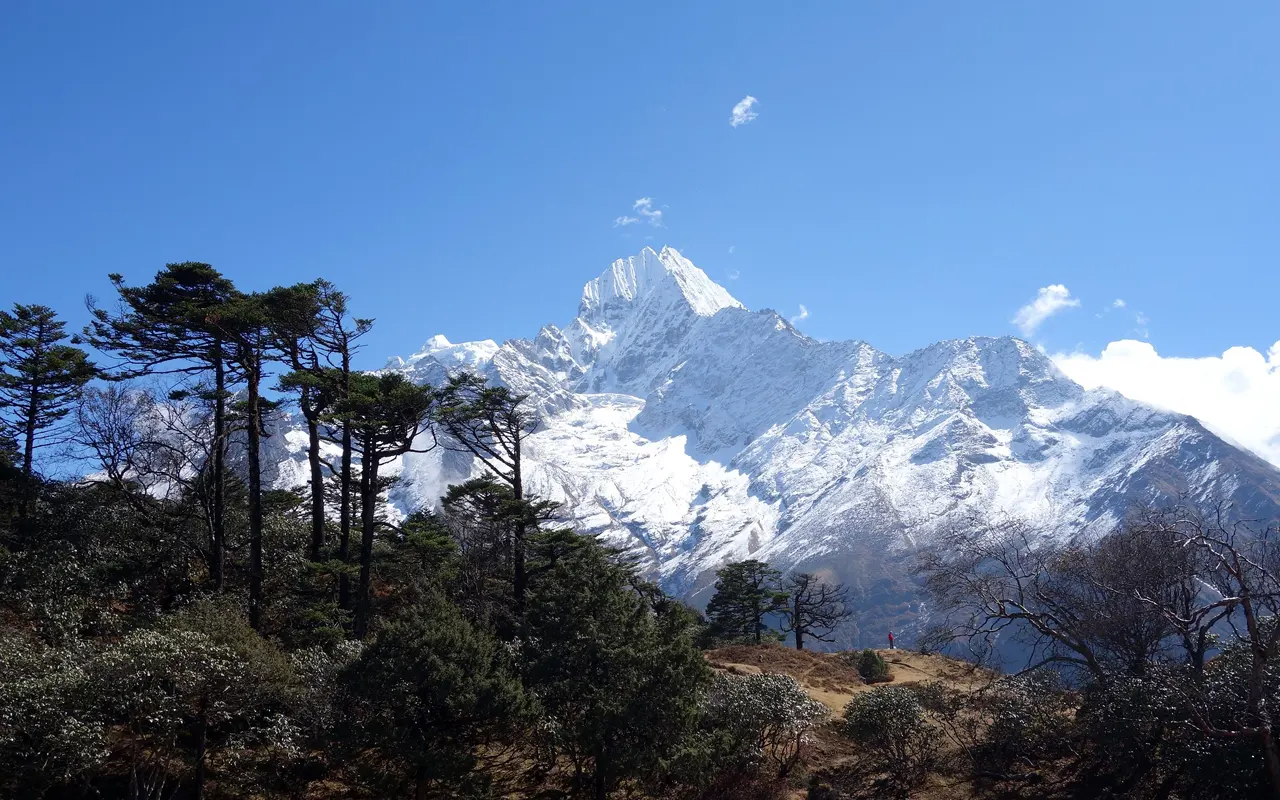
The Everest Base Camp Helicopter Trek is a unique journey that combines trekking adventure with the comfort of a helicopter return. It is aimed at the traveler who wishes to enjoy the beauty of the Everest region, but does not wish to undergo the entire journey on foot. It will take you on a scenic mountain road, ancient Sherpa villages, amazing scenery, and to the Everest Base Camp (5,364 m / 17,598 ft).
The Everest Base Camp Helicopter Trek starts with a Kathmandu to Lukla helicopter flight, where the Everest region starts. From there, you hike through forests, suspension bridges, and riverside paths, slowly gaining elevation. On your way, you will see such well-known places as Namche Bazaar (3,440 m / 11,286 ft) and Dingboche (4,410 m / 14,469 ft), where you can experience acclimatization to adapt your body to the increased altitude. The trek is smooth and slow-paced so that you can have the views without risking your health.
The Everest Base Camp Helicopter Trek has many attractions, one of them being the visit to the Everest Base Camp. It is a highlight for many trekkers to be able to stand next to the Khumbu Glacier (5,364 m / 17,598 ft). The hike to the Kala Patthar (5,545 m / 18,192 ft) in the early morning is another major experience that provides one of the most panoramic views of Mount Everest and the surrounding mountains.
Once the trekking part is over, it becomes easier to get back to Kathmandu by helicopter. This is the Everest Helicopter Trek, which saves time and reduces physical effort after several days of trekking at high altitude. The Everest Base Camp Helicopter Trek provides you with the opportunity to have beautiful aerial views of the Himalayas, which makes it even more special.
This 12-day Everest Base Camp Trek itinerary is a mix of adventure and comfort. It is appropriate to moderate-fitted trekkers who intend to explore Everest in a more comfortable and shorter time. It is a trek that is best suited to the needs of the people who want to save time on the same route.
Altogether, the Everest Base Camp Helicopter Trek is a pleasant mixture of culture, nature, and adventure. This trip is a safe, well-organized, and memorable adventure in the center of the Himalayas with proper planning and instructions from seasoned organizers like Himalayan Pathways.

You land in Kathmandu and have your initial taste of the vibrant Nepal. The team from Himalayan Pathways will greet you at the airport and take you to the hotel. Once you have checked-in you can relax, take some water, and unwind after your travelling.
You then later meet your trekking guide, who briefs you on the Everest Base Camp Helicopter Trek. The guide informs about what to expect in the next few days, the safety precautions, and the itinerary. You also inspect your trekking equipment and seek clarification on any queries that you might have.
In the evening, you have a welcome dinner in which you get to experience Nepali hospitality. It is preferable to make the night light and go to sleep early so that your body is able to rest and get ready for the trek ahead.


You start a guided tour of Kathmandu Valley after breakfast. Your cultural and religious destinations include Pashupatinath Temple, Boudha Stupa, Swayambhu Mahachaitya, and Kathmandu Durbar Square. These sites reveal the ways in which Hindu and Buddhist cultures are integrated into everyday life in Nepal. The country is understood more through its architecture, prayer rituals, and local lifestyle.
You go back to your hotel in the afternoon to prepare for the trek. Your guide inspects your gear and assists you in packing your duffel bag. You consider the layers of your clothes depending on the weather conditions. You can also purchase last-minute products, such as gloves or water bottles.
You pack your backpack and keep yourself hydrated in the evening. This is a day that will make you relax and prepare to go on with the trekking adventure.
On this day of the Everest Base Camp Helicopter Trek, you take a scenic helicopter journey from Kathmandu to Lukla that takes approximately 35 minutes. You see beautiful views of the Himalayas during the flight.
Once you land, you are greeted by your support team and porters. From Lukla, trekking towards Phakding begins. The path is built along the Dudh Koshi River and through the little villages, prayer wheels, and mani walls. The trail is easy to climb and descend, and it is a pleasant first day of walking. You even move slowly and breathe in the fresh mountain air.
Afternoon brings you to Phakding, where you take a rest and have a warm meal. This day will enable your body to adapt to trekking and altitude and expose you to the mountain. It predetermines a calm and gradual rhythm of the journey.
You keep trekking along the river after breakfast, crossing several suspension bridges and villages such as Benkar and Monjo. You get into the Sagarmatha National Park, and your permits are verified.
The trail is steeper after lunch as one ascends to Namche Bazaar. You might start experiencing elevated altitude, and thus you move gradually and have a constant breathing pace. You can also get the first clear glimpses of the surrounding mountains on the way. The last ascent to Namche is difficult, but satisfying.
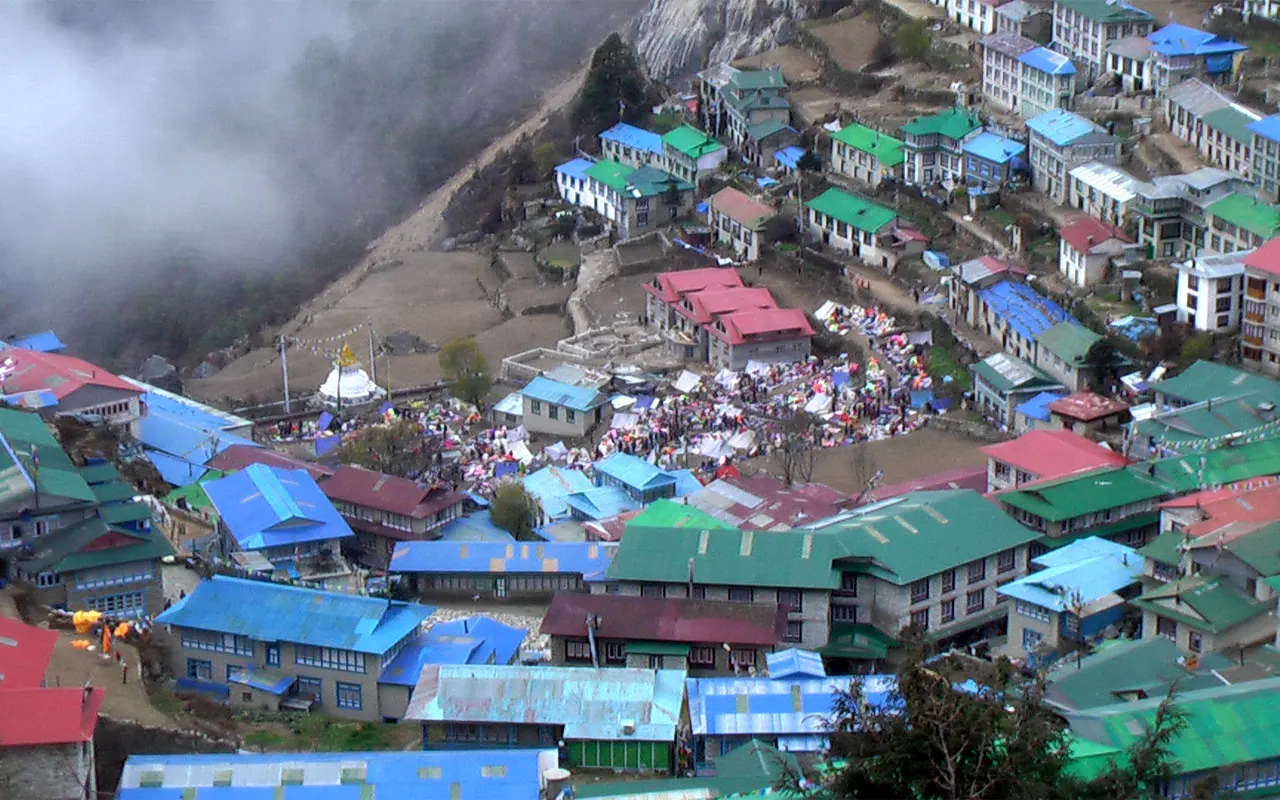
Namche Bazaar is a vibrant town constructed in a natural amphitheater, with hills. It boasts of stores, bakeries, and a good trekking vibe. This is a significant stop where acclimatization is important. One night’s rest here assists your body to acclimatize to the higher altitudes.
The day is an acclimatization day to get your body used to the altitude during the Everest Base Camp Helicopter Trek. You spend the morning in Namche Bazaar in a relaxed manner. You may visit the local markets, a small museum, or a cafe and have a cup of coffee.
Later, you hike to the Everest View Hotel (3,880 m / 12,730 ft). This short hike makes your body accustomed to the elevation by climbing higher during the day and then coming back to sleep at a lower altitude. On the path, you might encounter some beautiful sights of Ama Dablam and some other Himalayan Mountains, provided the weather is clear.
Once back in Namche, you take a rest and have your meal. Your guide will make sure that you move at a slow pace and keep hydrated. This is a day that enhances your safety and is ready to get to greater heights, and the mountain views are stunning.
You move out of Namche and take a scenic path that has beautiful mountain scenery. The road takes you softly to Phunki Tanga, where you have lunch. In the afternoon, you start on a gradual climb upwards to Tengboche. This part must be taken at a gradual pace.
Tengboche has a popular monastery and provides a serene setting with breathtaking mountain scenery. You keep on walking to Debuche after visiting the monastery area, where you spend the night. The day involves an uphill and a downhill part, and therefore, you should manage your energy. The higher you go, the cooler the air is, particularly at night.
You can also observe the change of the landscape from being forested to the more open alpine terrain. Take a break and keep warm to be ready for the next part of the journey.
You continue your trek after breakfast through gorgeous scenery with mani walls, chortens, and small villages on this day. You traverse bridges across the Imja Khola and reach a broader valley. The trail then ascends slowly upwards, and the air becomes thinner as you rise higher. Your guide will tell you to walk slowly and drink water frequently.
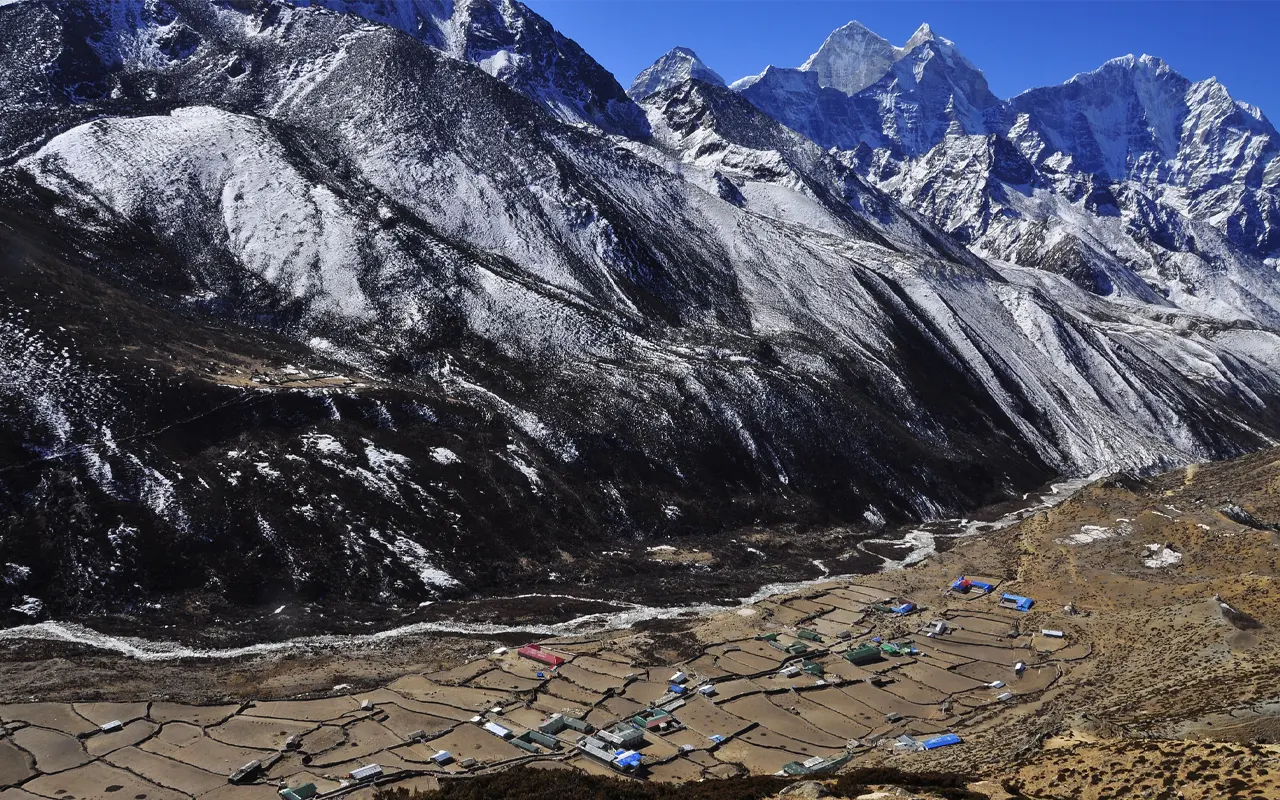
You arrive at Dingboche (4,410 m / 14,469 ft), a village that has stone walls that help to keep crops and animals safe during strong winds. The environment is less wooded and is more rugged with fewer trees and a more mountainous landscape.
It is a day of additional acclimatization the next day. You rest in the evening, keep warm, and leave your body to it. Sleeping is a good way to prepare for the next day of acclimatization.
This is your second acclimatization day during the Everest Base Camp Helicopter Trek. After breakfast, you walk to a nearby ridge, circling the area (5,100 m / 16,732 ft). It is not an easy task, but a good one. The panoramic view of the surrounding mountains and valleys is enjoyed at the top. This elevation will assist your body to get used to an elevated altitude, as you will be exposed to it progressively.
Having spent some time there, you go back to Dingboche to have lunch and have a rest. During the afternoon, you may visit the village or rest in your lodge. It is now time to get hydrated, check your gear, and get ready to be colder in the future.
The purpose of such acclimatization days is to minimize the risk of altitude sickness. Go to sleep and maintain your energy levels for the next half of the journey.
The walk is more challenging today because you are entering the terrain of a higher altitude. You go up the Khumbu Khola road to Dhugla. The scenery is rougher and rockier.
On your way, you see memorials of climbers and guides who died on Everest. It is a silent and significant spot where most trekkers take time to meditate. Following this part, you proceed to Lobuche (4,930 m / 16,175 ft), which is a small village close to the glacier. The walk may be physically exhausting owing to the altitude, hence one should take little steps, breathe slowly, and consume nutritiously.
Your guide keeps an eye on your situation to be safe. This day is your mental and physical preparation towards getting to Everest Base Camp in the near future.
It is among the most thrilling days of the Everest Base Camp Helicopter Trek. It is a walk from Lobuche to Gorak Shep, between rocks and open land. Lunch at Gorak Shep is followed by the last hiking to Everest Base Camp (5,364 m / 17,598 ft). It is an uneven trail and follows the glacier trails.
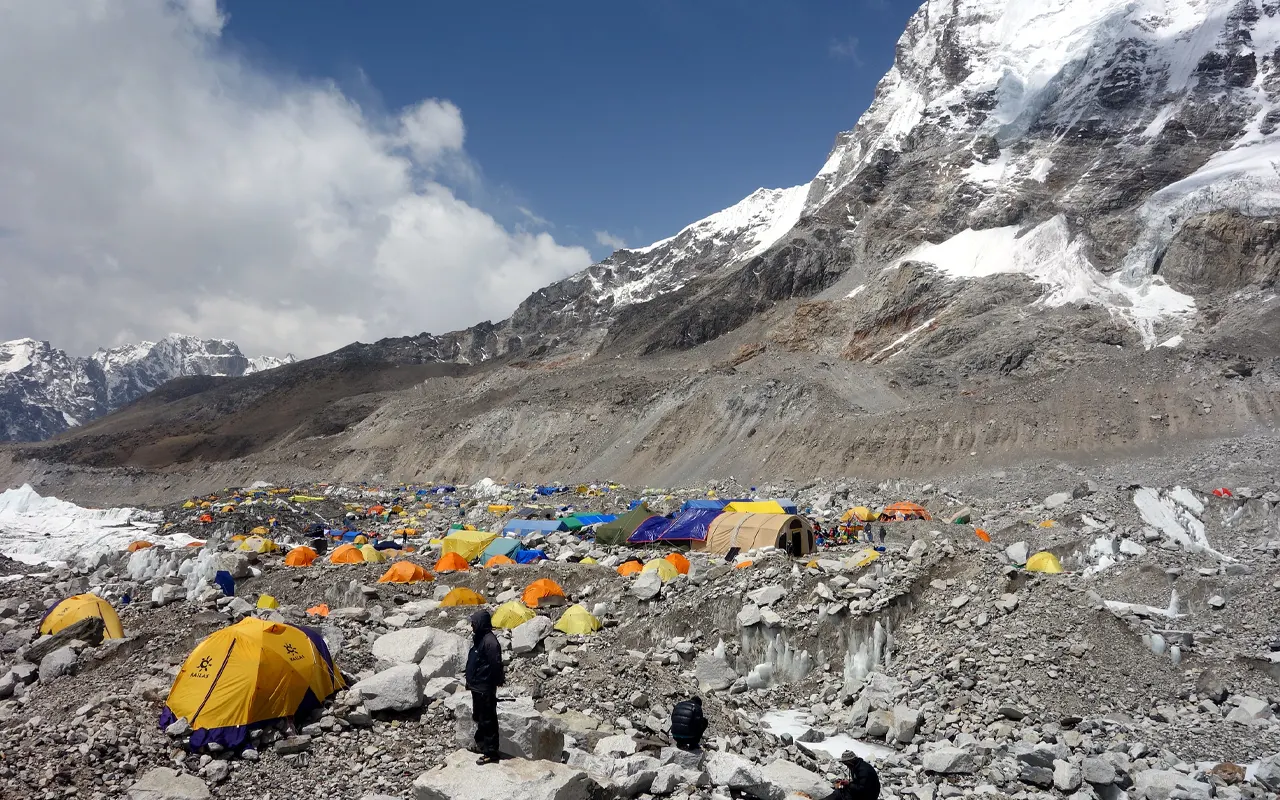
You reach the Everest Base Camp next to the Khumbu Glacier, and you enjoy these marvelous sceneries. It is a magical time, after days of tiring trekking. You spend some time there and then go back to Gorak Shep and have a night there.
It is a physically challenging and long day, and this is why it is important to keep yourself hydrated and talk to your guide.
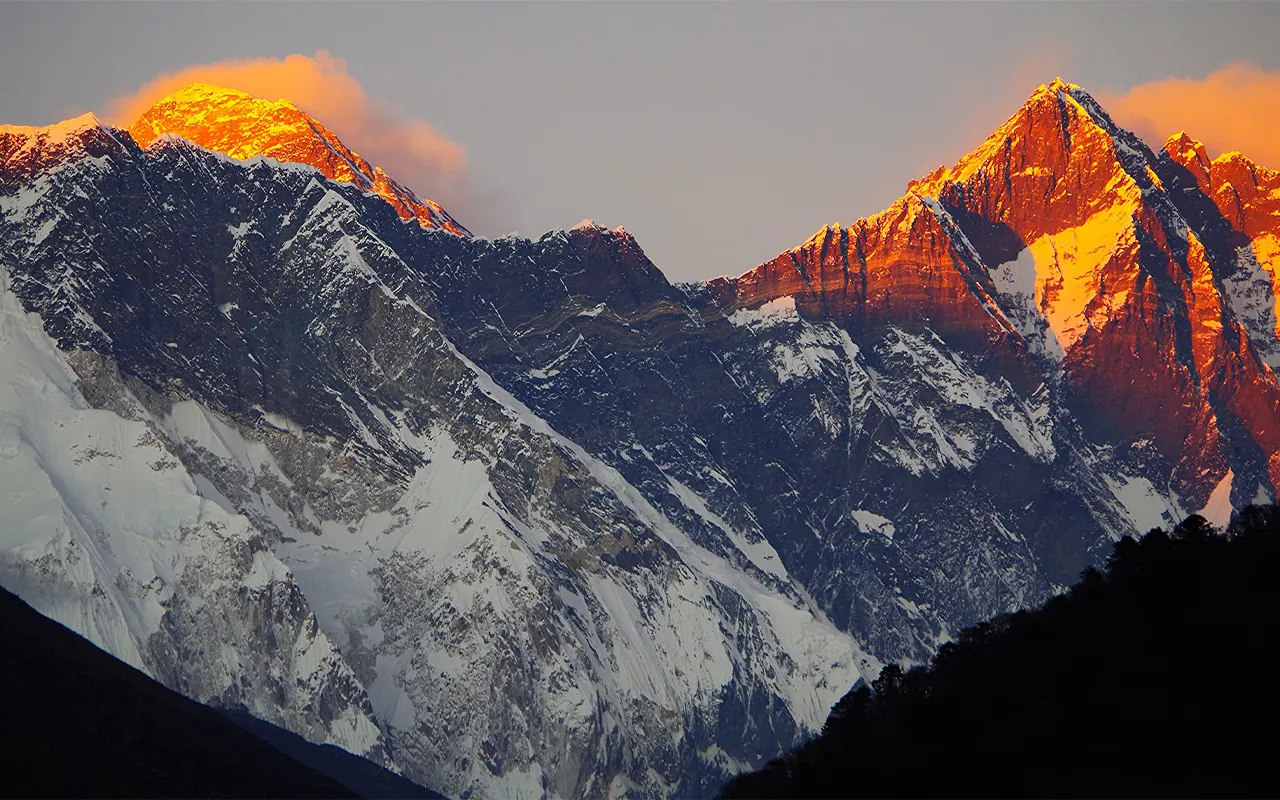
You wake up early for a hike to Kala Patthar (5,545 m / 18,192 ft). The ascent is not long but hard because of the cold weather and the elevated altitude. On the summit, you have a beautiful sunrise view of Mount Everest and other surrounding peaks.
Once you have seen the sights, you go back to Gorak Shep and have breakfast. You then fly back to Kathmandu on a helicopter. The mountain flight is an incredible experience as it provides spectacular aerial sights of the Himalayas.
This is where your Everest Base Camp Helicopter Trek journey ends. After the adventure, you arrive back in Kathmandu and have a comfortable rest in your hotel.
You have breakfast and then you are ready to leave. The Himalayan Pathways team organizes your transfer to the airport, depending on the time of the flight.
You can visit Kathmandu, shop or rest at your hotel in the event you have more time. It is a relaxing day, and you get time to look back on your experience on the Everest Base Camp Helicopter Trek.
This experience is completed with comfort and pleasant memories of the mountains, culture and adventure that you have encountered.


The weather plays an important role in planning the Everest Base Camp Helicopter Trek. Its most preferred seasons are spring (March to May) and autumn (September to November). These are the months when the skies are normally clear, the mountain views are spectacular, and the flying conditions are stable. During spring, the trails are colourful with blooming rhododendrons, and autumn offers cold air and great visibility.
During winter (December-February), it is colder, at higher altitudes such as 5,364 m (17,598 ft), but the skies may still be clear. Rain, clouds, and flight delays accompany the monsoon season (June to August), and trekking and helicopter trips are not so guaranteed.
It is better to select the appropriate season to enhance the safety and experience. When timely, you get to experience a breathtaking view of the Himalayas and a less stressful ride at the end of your Everest Base Camp Helicopter Trek.
During the Everest Base Camp Helicopter Trek, you will get simple and nutritious food. The teahouses offer most of the local food, such as dal bhat, a dish comprising rice, lentils, vegetables, and occasionally meat. This is quite a satisfying meal that gives great energy for trekking. There are also noodles, soups, fried rice, and potatoes.
As you ascend, particularly in areas around 4,410 m (14,469 ft), food choices can be smaller, though it is still warm and fresh.
It is quite important to drink enough water. You should drink boiled or purified water and not the untreated one. Hot beverages such as tea, coffee, and ginger lemon honey are also in demand and keep you warm. You should also not drink alcohol
at higher altitudes because it will interfere with the adaptation of your body. Eating healthy and staying hydrated are helpful to your energy and health during the Everest Base Camp Helicopter Trek.
One of the issues that is likely to arise when visiting the Everest Base Camp Helicopter Trek is altitude sickness. It may occur when your body fails to adapt well to elevations, particularly above 3,000 m (9,843 ft). The signs can be headache, nausea, dizziness, and fatigue. The danger is greater as you get higher, such as 5,364 m (17,598 ft).
To avoid this, one should walk slowly, keep hydrated, and observe appropriate acclimatization days. Your guide will monitor your condition and advise you if any symptoms appear. When the symptoms are severe, it is always safe to go to a lower altitude. Alcohol should be avoided, and one should have sufficient rest every day. It is important to listen to your body.
Through proper planning and awareness, the majority of trekkers would be able to cope with altitude and have a wonderful experience without significant issues during the Everest Base Camp Helicopter Trek.
The Everest Base Camp Helicopter Trek can be easily enjoyed when prepared well. It is not necessary to be an athlete, but a simple degree of fitness is significant.
You can enhance your stamina by walking, hiking, or performing light cardio activities. This will help you strengthen your legs and improve your breathing, particularly when trekking at higher levels such as 4,930 m (16,175 ft). Also, it is beneficial to walk several hours with a light backpack.
There is also the importance of mental preparation, whereby trekking needs patience and a progressively slow pace. It is important to pack the appropriate equipment such as warm clothes and good shoes. Himalayan Pathways advises on what and how to pack.
The appropriate level of fitness and preparation will help you to enjoy the Everest Base Camp Helicopter Trek and minimize the possibility of discomfort or tiredness.
Before the start of the Everest Base Camp Helicopter Trek, you must organize your visa and permits. In Kathmandu airport, most tourists can obtain a tourist visa to Nepal on arrival. It is easy, and you must be carrying passport-sized pictures and the necessary fee.
Trekking permits include the Sagarmatha National Park entry permit and a local Khumbu permit. These are necessary to get into the Everest region and they are normally organized by your trekking company. When you make a booking with Himalayan Pathways, we will take care of all the permit arrangements, which will be less of a hassle for you.
You must carry your permits with you always because they might be inspected at various points on the trail. The right documents will guarantee you a hassle-free experience during the Everest Base Camp Helicopter Trek.
The Everest Base Camp Helicopter Trek is very serious in terms of health and safety. Your body is tested when you move to new heights, such as 5,545 m (18,192 ft). Hydrating, eating well, and getting sleep are useful in keeping yourself healthy.
Guides are trained to check on you and address any problems. Their advice should be taken seriously at all times. There is basic first aid assistance, and evacuation can be done by helicopter in case of emergency.
The weather may change at any moment, and itinerary flexibility is a thing that is valued. It is necessary to wear appropriate clothes and keep yourself warm in cold weather. The Everest Heli Trek is a safer and easier way back, which makes the journey back less physical. The journey may be safe and enjoyable with proper care.
One of the major aspects of the Everest Base Camp Helicopter Trek is transport. The trip starts with your landing in Kathmandu and then a helicopter flight to Lukla. The flight provides a scenic aerial landscape of the Himalayas and is time-saving as opposed to the conventional flights.
The movement is all by foot during the trek, enabling you to get in touch with the natural environment and the local culture.
Once you have made it to the Everest Base Camp, you fly back to Kathmandu in a helicopter. This option of the Everest Helicopter Trek makes the trek less tedious and long, particularly during the return trip.
In Kathmandu, airport transfers and all other ground transportation are typically provided by Himalayan Pathways. Trekking and a helicopter give the combination of adventure and convenience.
The Everest Base Camp Helicopter Trek requires travel insurance. It should include high altitude trekking, emergency medical care, and helicopter evacuation.
Being a traveler, it is highly important to have appropriate coverage since you are going to such high places, 5,000 m (16,404 ft). Helicopter evacuation may be costly in the event of an illness or injury and is not covered by insurance.
Ensure that your policy explicitly covers high-altitude trekking. You should also have good insurance for delays, cancellations, and lost baggage on the trip. You must have a copy of your insurance with you on the trek. With proper insurance, you are at peace with yourself, and you can enjoy your Everest Base Camp Helicopter Trek adventure without any problem.
The Everest Base Camp Helicopter Trek is not the only way to experience the Everest region. Another alternative is the 12 Days Everest Base Camp Trek that involves the classic trekking path on either side without helicopter transportation. This is a more physical choice that gives a more in-depth trekking experience.
The other alternative is shorter walks with helicopter transfers between various locations, according to time and choice. Some routes are cultural, and others are mountain-oriented. Regardless of the decision, we are aiming to enjoy the beauty of the Himalayas in a safe environment. All the routes are different, and a trekker can select the one that is best in time, fitness, and interests.
The package does not cover some of the personal expenditures during the Everest Base Camp Helicopter Trek. These can be beverages, snacks, hot showers, Wi-Fi, and charging of electronic gadgets at elevated altitudes such as 4,410 m (14,469 ft). You can also use the money to buy souvenirs, guides, and porters’ tips, or more Kathmandu meals.
The higher you go, the higher the prices since goods are carried by porters or yaks. It is also good to have enough Nepali rupees because almost no one takes card payments in some isolated places.
These additional expenses have to be budgeted to make the process smooth and hassle-free. By making the preparations in advance, you will be able to have a good time on the trip, without worrying about the little daily costs you have to incur during the Everest Base Camp Helicopter Trek.
The process of communication in the Everest Base Camp Helicopter Trek is usually not an issue. The predominant language spoken by the locals is Nepali, although most individuals in the trekking area speak English. Guides and staff members tend to be conversant in English and assist in communication during the trip.
On the road, particularly in elevated villages, plain English is widely spoken in tea shops. It is possible to learn some Nepali words to make your communication less formal, such as Namaste (hello).
In the more remote parts, communication may be limited, but your guide will always help you. In general, language is not a significant issue, and you can have a valuable experience with locals in the course of your Everest Base Camp Helicopter Trek.
During the Everest Base Camp Helicopter Trek, Internet and mobile connectivity are available, but can become restricted. Lower down, you should be able to get a steady mobile signal; however, the higher you climb, the weaker the signal you will have, particularly above 4,930 m (16,175 ft).
Most of the teahouses provide Wi-Fi at an additional cost, but the connection is usually slow. You can also charge your gadgets at lodges, and normally at a minimal fee. To be on the safe side, a power bank is advisable to have your devices charged. Your phone can also be used in airplane mode to save your battery.
It is possible to remain connected, but it is better to anticipate fewer connections and appreciate nature without being overly dependent on technology.
When doing the Everest Base Camp Helicopter Trek, one should be able to adhere to some safety and respect guidelines. When hiking, take your time, particularly when the altitude is higher, because this may expose the individual to the risk of altitude sickness.
Do not drink alcohol or smoke, as this influences the adjustment of your body. Always keep the natural environment clean, and do not litter on the trails. Avoid touching religious objects or entering monasteries without permission.
It is also necessary not to disregard the advice of your guide since they are trained to be safe in the mountains. By remembering these few rules, it is possible to guarantee a safe, respectful, and enjoyable journey for all.
Everest Base Camp Helicopter Trek is an activity that should be taken by moderately fit beginners. No previous experience of trekking is required, but you must be ready to walk for a few days at higher elevations. The rhythm is quite constant, and acclimatization days are provided to leave your body some time to adjust.
The helicopter return simplifies the process of traveling as opposed to more exhausting routes. This is a good Everest Heli Trek where a person will be able to explore Everest without having to finish the round-trip trek. With correct training, instruction, and attitude, beginners will accomplish this trek with relative ease and without incident.
Once you have done the Everest Base Camp Helicopter Trek, you will have the opportunity to see more of Nepal. The most popular ones are sightseeing in Pokhara, Chitwan National Park, or going on a cultural trip around Kathmandu Valley.
These extensions will enable you to enjoy the variety of trees, animals, and the culture of the locals. A few additional days allow your body to rest and recover even after you are back from high altitudes such as 5,545 m (18,192 ft).
Himalayan Pathways will be able to help you with the organization of these extensions according to your interests and time. By simply extending the number of days you spend in Nepal, you will have a more encompassing experience of Nepal outside the mountains.
One of the attractions of the Everest Base Camp Helicopter Trek is photography. The local culture, mountains and landscapes present lots of good photo opportunities. Most places permit you to take photos. Nevertheless, one should seek permission before taking photographs of individuals.
In Nepal, the use of drones is limited, particularly in sensitive places such as Sagarmatha National Park. Drones require special permits and in most instances, it is prohibited. By observing these regulations, one will conserve the environment and the local communities. Always bring spare batteries because there might be no power to charge them throughout the trek.
When you are on the Everest Base Camp Helicopter Trek, you get exposed to local cultural festivals at the right time of the year. There are festivals like Mani Rimdu, which are celebrated in monasteries like Tengboche, which are situated at an altitude of 3,867 m (12,687 ft).
These festivals involve traditional dances, prayers, and rituals, which are indicative of the Buddhist culture. The locals come together to celebrate, and visitors are always allowed to watch with respect.
Attending such festivals will give your trek a unique cultural feel. It allows you to know better the mountain communities’ traditions and beliefs. Your trek can be even more memorable when you plan your trip during a festival.
If this is your first time on the Everest Base Camp Helicopter Trek, a few simple tips can make your journey easier and more comfortable. Move slowly, and one should walk at a steady pace, particularly in high altitudes. Be well hydrated and follow the instructions of your guide.
Pack light, but make sure to carry essential items like warm clothing and comfortable shoes. Respect local culture and traditions during the trek. The Everest Helicopter Trek will render the journey back less tiresome. Be adaptable because the weather may interfere with plans.
First-time visitors may have a safe and memorable experience in the Everest region with the right preparation and attitude.

Helicopter flights are weather and visibility-based; they can be delayed, yet professional pilots are concerned about their safety and observe strict aviation rules.
If there is a delay, alternative arrangements or rescheduling are made, and at the same time, safety and continuity of the entire trekking experience are preserved.
Yes, the helicopter flights have very strict weight limits, and passengers can be grouped or carried in several shuttles depending on the total weight.
Helicopter evacuations are carried out by guides and insurance providers, and as a result, in case of a serious illness or injury, they would have to respond fast.
In basic teahouses with twin-sharing rooms, accommodation is provided with very basic beds, blankets, and shared bathroom amenities in most of the trekking sites.
Single rooms are limited and might not be provided at higher altitudes; this again is subject to location, time of the year, and lodge size.
The water to be used should be safe drinking water, which can be obtained by boiling or purification; trekkers should not use untreated water and instead carry filters or tablets to purify the water.
Duffle bags are carried by porters, and the trekkers walk comfortably with daypacks that are not too heavy, adhering to the perfect trekker-porter ratio of 2:1.
Each trekker is allowed a limited weight for porters, typically around 10–12 kg, while carrying essential personal items in a daypack.
In certain villages, the basic medical services are provided, but severe cases have to be evacuated to Kathmandu, where advanced treatment and care can be offered.
There will be acclimatization days at strategic stages to enable the body to adapt to the high-altitude trekking slowly and minimize the risks involved.
The trail consists of the rocky trails, the suspension bridges, the forest, and the glacier landscape, which demand constant walking and attentive footing at the elevated levels.
Tipping is optional, although it is a usual custom and is welcome as a reward for the efforts and assistance given in the trek.
Yes, the itinerary can change according to the weather, health, or any logistical reasons, and the changes will be implemented in order to guarantee the safety and comfort.
The safety is ensured by having skilled leaders, adequate acclimatization, medical check-ups, and emergency evacuation if the need arises.

