Weather and Best Season
The weather is crucial for deciding the best time for the Everest base camp trek with heli return. Ideal times of the year are spring (March-May) and autumn (September-November). At this time, the weather is generally sunny and the views of the mountains are excellent.
Namche Bazaar at 3,440 m (11,283 ft) has cool days and cold nights but it’s colder at higher altitudes, such as Lobuche at 4,940 m (16,203 ft).
Winter is cold and snowy, while the monsoon is rainy which leads to poor visibility, making it harder to trek.
The best time to visit is when there are clear skies and safe treks. Everest base camp trek with heli return is more dependable with good weather, as helicopters can only fly when it is clear.
Foods and Drinks
The food of the Everest base camp trek with heli return is basic, fresh and trekking-friendly. Food is provided in tea houses. Breakfast, lunch and dinner are typically served daily. Menus may include dal bhat, rice, noodles soup and some simple international food items. These will give you the fuel you need for a day of walking.
At higher altitudes, such as Dingboche (4,410 m / 14,465 ft), food choices are less diverse but the food is still warm and nutritious. Tea, coffee and soup are readily available and will keep you warm when it’s cold.
Staying hydrated is crucial. There is safe drinking water available but it is advised to treat or filter it. Proper food and water help maintain energy and acclimate to the altitude.
Altitude Sickness
Altitude sickness is important to consider for the Everest base camp trek with heli return. The amount of oxygen in the air reduces as you ascend. This may cause symptoms, particularly above Namche Bazaar (3,440 m / 11,283 ft). The symptoms are quite common and include headaches, fatigue, dizziness and loss of appetite.
Acclimatization is important to prevent severe issues. Acclimatization stops such as rest days at Dingboche (4,410 m / 14,465 ft) allow time for your body to adapt. Also, gradual acclimatization and staying hydrated.
It’s very important to descend if your symptoms are too bad. Your guides monitor your health. The Everest base camp helicopter trek allows for a faster descent if needed. Listening to altitude for safe and happy travel is vital.
Preparation and Fitness
Preparation is key for the Everest base camp trek with a helicopter return. You will spend days trekking at high altitude so some level of fitness is needed. You do not have to be a champion but you need to be able to walk 5-7 hours a day uphill and downhill.
Pre-trek preparation is beneficial. Hiking, walking, or light aerobics are helpful. The trek becomes more difficult at higher altitudes due to less oxygen, such as at Gorakshep (5,150 m / 16,896 ft).
It’s best to have warm clothes, hiking boots, personal supplies and also proper equipment. Himalayan Pathways can suggest how to prepare. Physical and mental preparation will help make the journey more pleasant.
Visa and Permits
Everest base camp trek with helicopter fly back requires a visa and permits. A Nepal tourist visa is required which can be obtained at the airport or before your trip. This is a straightforward process and takes little time.
Permits for trekking are also required. These are the Sagarmatha National Park permit and the Khumbu region permit. These permits allow you to enter conservation areas and contribute to the local economy and communities.
There are several checkpoints along the way to inspect permits. For instance, an entry point into the Sagarmatha National Park is at Monjo (2,835 m / 9,301 ft). These must be carried at all times.
Himalayan Pathways helps you get permits. The right documents allow a hassle-free experience.
Health and Safety
Safety and health are a priority for the Everest base camp trek with heli return. The trek takes you to high altitudes so you will need to look after yourself and trek at a comfortable pace.
Staying hydrated, healthy and getting rest keeps you healthy. At higher altitudes such as Gorakshep (5,150 meters / 16,896 ft) there is less oxygen which makes it harder to breath.
Listen to your guide and tell them if you feel sick. There is limited medical support on the trek and guides are well versed in dealing with common problems. Paths are well defined but the weather may be unpredictable.
The Everest base camp trek with helicopter return offers an additional safety measure by avoiding the descent. Attention, care and support from your team make your trek safer and more enjoyable.
Transportation
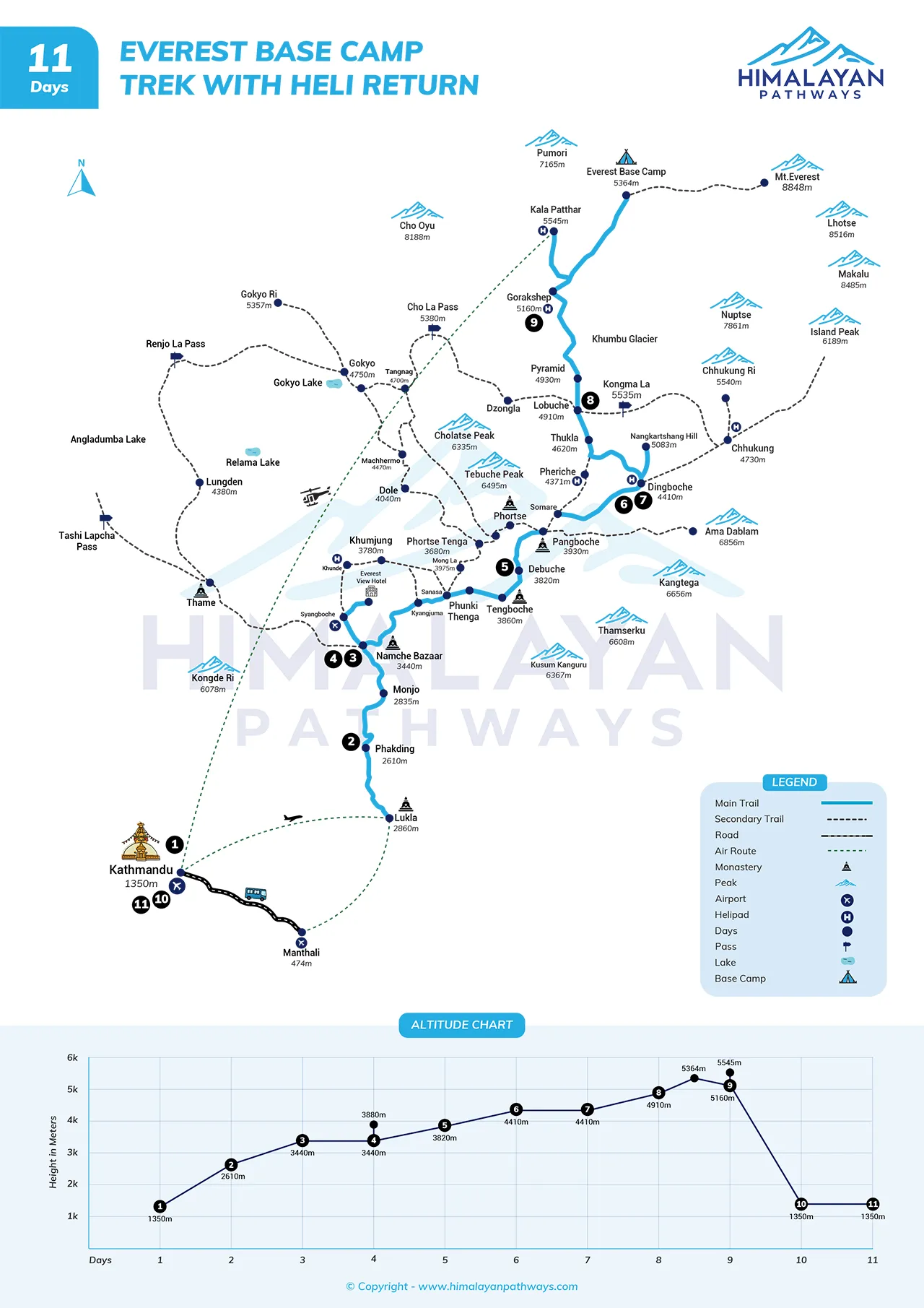
EBC with heli return is well-connected for transportation. It begins with a flight from Kathmandu or Manthali to Lukla (2,860 m / 9,383 ft). You will be able to enjoy the view of the mountains and surroundings.
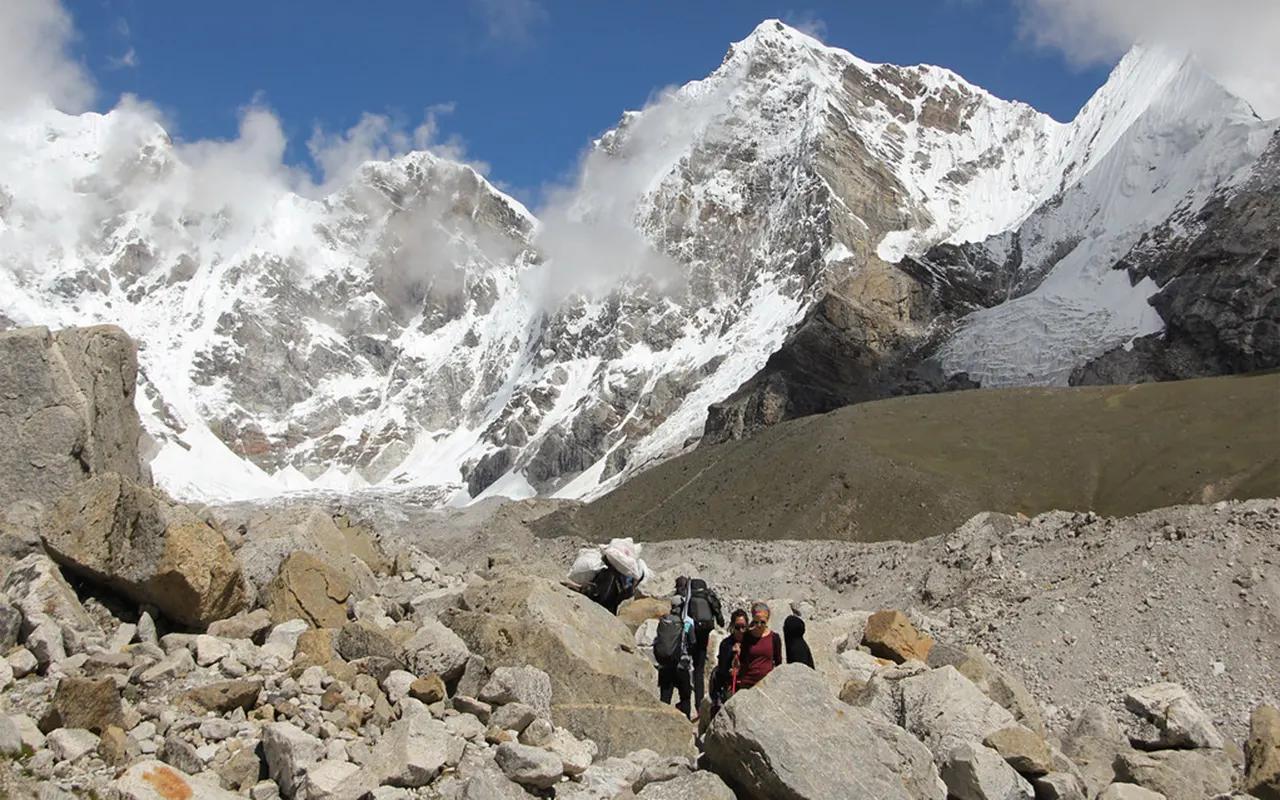
Then the trek is done by walking on well-marked trails from Lukla. Trekking is the primary mode of transport and the trek leads through villages, forests and river valleys. The trek progresses every day from lower altitudes to higher altitudes.
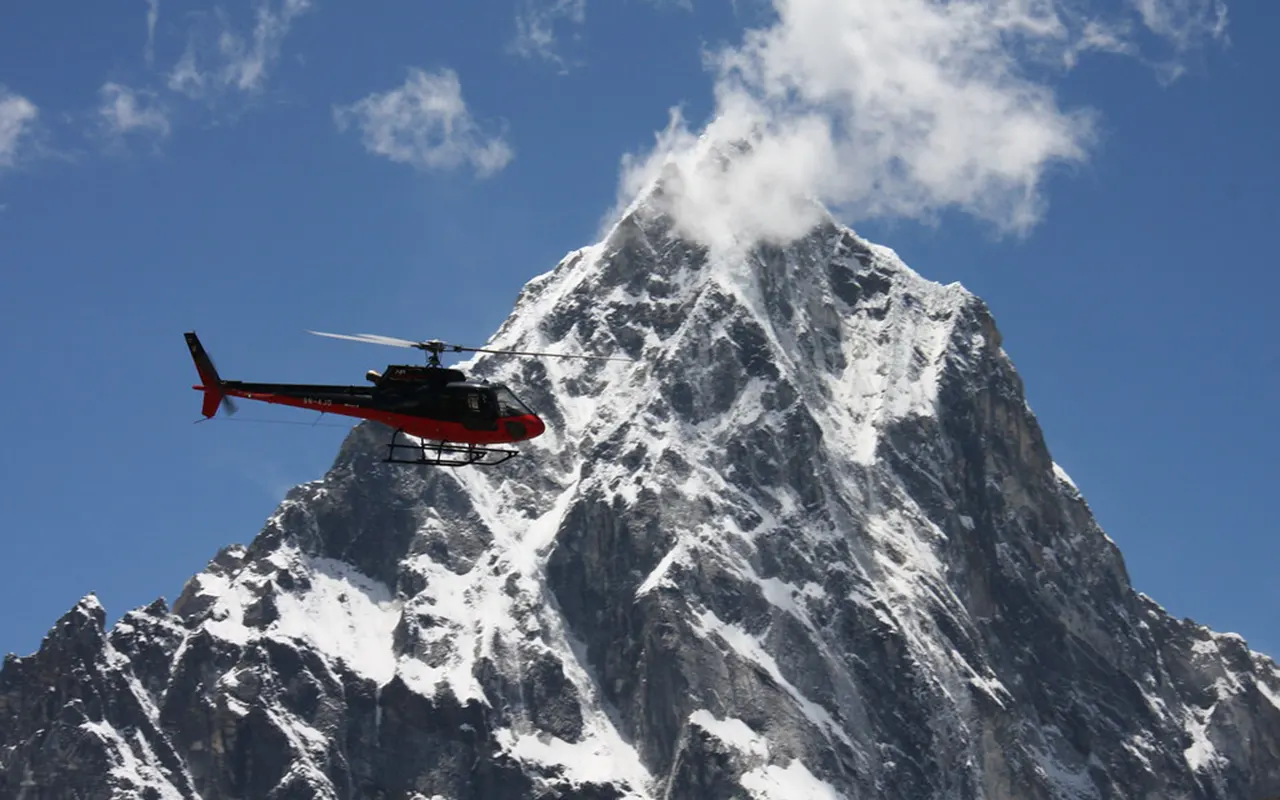
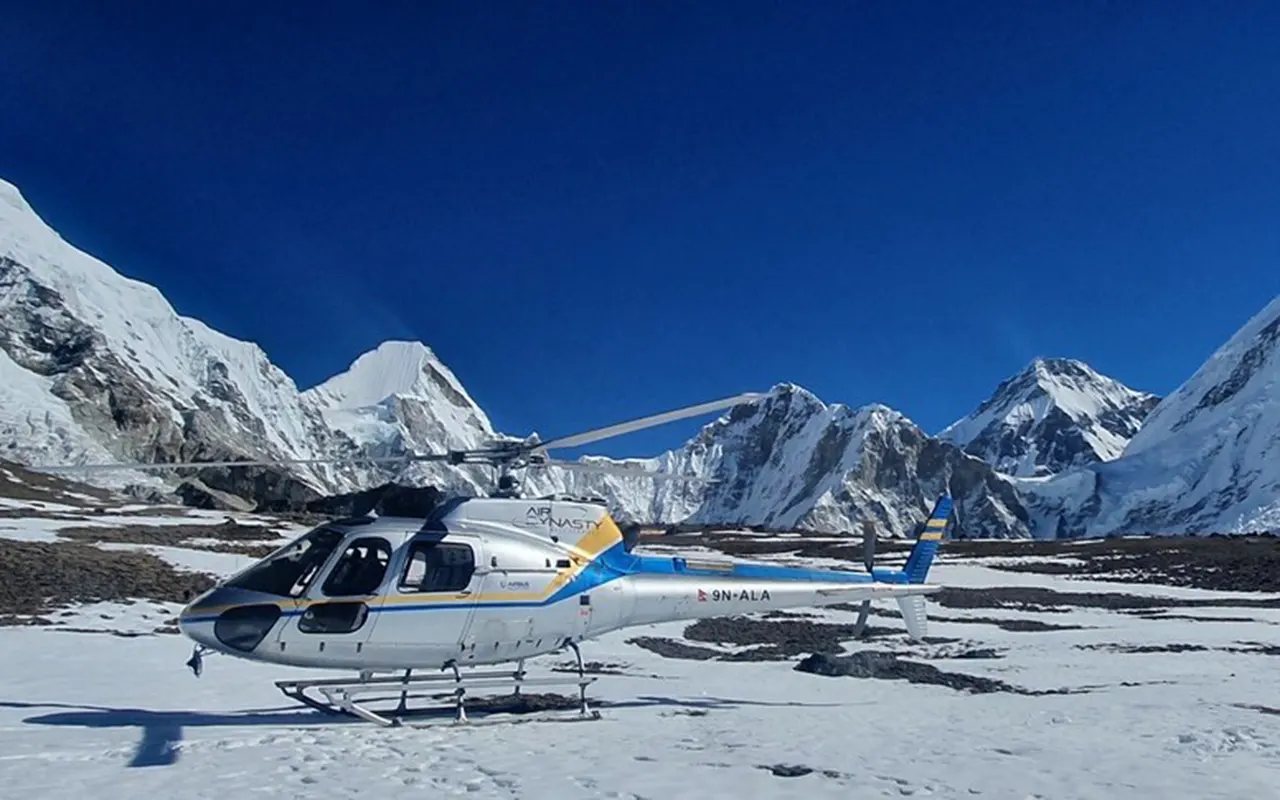
The trek concludes with a helicopter ride returning from Kala Patthar (5,545 m / 18,187 ft) or Everest Base Camp back to Kathmandu. It’s more comfortable and you can also enjoy the wonderful view of the Himalayas before coming back to Kathmandu in the Everest base camp helicopter trek.
Travel Insurance
It’s advised to get travel insurance for the Everest base camp trek with helicopter return. It’s a high-altitude trek so you need cover for emergencies. Evacuation, medical treatment and cancellation should be covered.
There are few medical facilities at higher altitudes and you may need to be evacuated by helicopter for serious illness. It’s also recommended that you take a copy of your insurance policy on your trek.
Having the appropriate insurance coverage will give you peace of mind when travelling and trekking, knowing that you have an insurance cover for the journey.
Alternative Routes
There are some variations to the Everest base camp trek with heli return itinerary. People may choose to take different routes for time, weather and preference. These paths will still intersect with the main route but might give you alternative perspectives.
For instance some alternatives to the standard route may include detours or different stops. However, all routes eventually lead toward Everest Base Camp (5,364 m / 17,594 ft) and Kala Patthar (5,545 m / 18,187 ft).
These variations do not affect the overall experience but can give you options. Everest base camp helicopter return trek is the same in terms of ending the trek with a helicopter. The path you choose will depend on your preference, time and comfort.
Your Extra Expenses
There are some extra expenses you will have to bear during the Everest base camp trek with heli return. These extra expenses should be considered. These additional costs include beverages, snacks, internet, device charging and personal items.
At places such as Dingboche (4,410 m / 14,465 ft), the cost of goods and services is higher because of the hard-to-access places. Tea houses may also charge for hot showers, internet and charging devices.
You may also pay for tips to guides and porters, if that is your choice. Essentials, insurance and souvenirs are also not covered in trekking packages.
Having an extra budget ensures you don’t get stranded during the trek. Planning these costs well helps you have a stress-free trip.
Language and Communication
The Everest base camp trek with heli return is not difficult in terms of language and communication. English is spoken by most guides, porters and tea house staff in the trekking areas. This allows easy communication of needs and instructions for visitors. Your trek guide will help you communicate and give you information about the local people.
Communication is easy and English-speaking people are more common in villages such as Namche Bazaar (3,440 m / 11,283 ft). The further up you go, the more limited the communication but it is still possible.
The locals are helpful and a bit of small talk is sufficient. You can also use gestures and some words. Effective communication helps to make the trek more enjoyable, particularly when helped by your guide.
Internet, Gadget Charging and Mobile Network
Wi-fi and mobile network are possible during the Everest base camp trek with helicopter return but it’s not always stable. At lower altitudes such as Phakding (2,652 m / 8,699 ft) and Namche Bazaar (3,440 m / 11,283 ft), you can get Wi-Fi in tea houses, which often comes with additional charges.
At higher altitudes, such as Lobuche (4,940 m / 16,203 ft), the signal may be weak or non-existent. You may have limited mobile phone coverage and it may be spotty.
Tea houses will charge your electronic devices but this may be at additional cost. It’s advisable to bring a power bank. Battery life can also decrease due to cold temperatures so it is useful to keep devices warm.
There is limited connectivity but it is not recommended to rely on it while trekking.
Don’ts of This Trip
Here are a few don’ts for the Everest base camp trek with heli return for safety and cultural considerations. Don’t rush, particularly at high elevations such as Dingboche (4,410 m / 14,465 ft), for it can lead to altitude sickness.
Do not consume non-boiled water and make sure to stay hydrated. And don’t ignore any illness. Let your guide know if you’re unwell. Observe local practices and customs. Don’t litter or take photos of sacred places. Keep the trails clean and be safe while trekking.
Internet and power services are scarce so they aren’t guaranteed. These guidelines will keep you safe and help you have a better trip.
Is this trek Beginner-Friendly?
You’ll be walking for several days but this is at a comfortable pace. No trekking experience is required but you must be ready to walk 5-7 hours each day.
The trek is more difficult at higher altitudes, such as Everest Base Camp (5,364 m / 17,594 ft). But you have acclimatization days to allow your body to adapt.
This trek is less challenging than the classic EBC trek because you return by helicopter. This makes it less physically demanding and quicker. With some preparation, support and a positive attitude, beginners can complete this trek and enjoy it.
Trip Extension
Adding on to the Everest base camp trek with heli return can be an excellent way to see more of Nepal. Once you reach Kathmandu (1,400 m / 4,592 ft), there are other places in Nepal you can visit.
Some tourists head to Pokhara to see the mountains and lakes or just explore the Kathmandu Valley.
You can visit Chitwan National Park for animals as well. You can plan an extension according to your time and preference. This will give you time to relax and enjoy more of the country after the trek.
Photography and Drone Rules
Taking photos is permitted and, in fact, encouraged on the Everest base camp trek with heli return. There are many subjects to photograph, including the landscapes, mountains and villages.
You can photograph the trail but please be aware of the culture and people. Ask for permission for taking people’s photos, especially in villages and holy places. When visiting in monasteries and other sacred places, abide by the rules and avoid using flash. In monasteries and other holy places, respect their rules and do not use flash. Photography may not be allowed in some locations so ask your guide.
Drones are highly regulated in Nepal. You must obtain official approval, such as from the Nepal Civil Aviation Authority. It is illegal to fly drones without permission, particularly in restricted areas such as around Everest Base Camp (5,364 m / 17,594 ft). It is best not to bring one unless you have obtained permission in advance.
Cultural Festivals on the Trails
The Sherpa people live in the Everest region and festivals are significant. On the Everest base camp trek with heli return, you may witness local festivals, depending on the time of year.
A significant festival is Mani Rimdu at Tengboche Monastery. This involves masked dances, prayers and rituals by the monks. It is usually in the autumn and locals and foreigners gather.
You can also observe some small festivals and events in towns like Namche Bazaar (3,440 m / 11,283 ft). These festivals are a glimpse into their culture and beliefs.
Participating in these festivals adds to your experience in the Himalayas.
Travel Tips for First-Time Visitors
It’s important for first-time visitors that they plan an Everest base camp trek with heli return trek for a comfortable and pleasant experience. Trekkers must be slow and not rush, especially at higher elevation like Dingboche (4,410 m / 14,465 ft).
Make sure your backpack is not too heavy, but you have warm clothing, suitable walking shoes and medicines. Stay well hydrated and eat nutritious food. Listen to your guide’s directions. Don’t forget to take acclimatization days. Have some cash on hand, credit cards may not always be accepted.
Have back-up plans and be adaptable to the weather and climate.
 Unbeatable Holiday Offers - Save Up to 20% on Your Next Adventure!