Duration
17 Days
Unbeatable Holiday Offers - Save Up to 20% on Your Next Adventure!
Duration
17 DaysTrip Difficulty
ModerateMax. Altitude
5545 MetresGroup Size
2-10 PeopleBest Season
Spring (March to May) and Autumn (September to November)Transportation
Flight, Private busAccommodation
Teahouse, Hotel, LodgeMeals
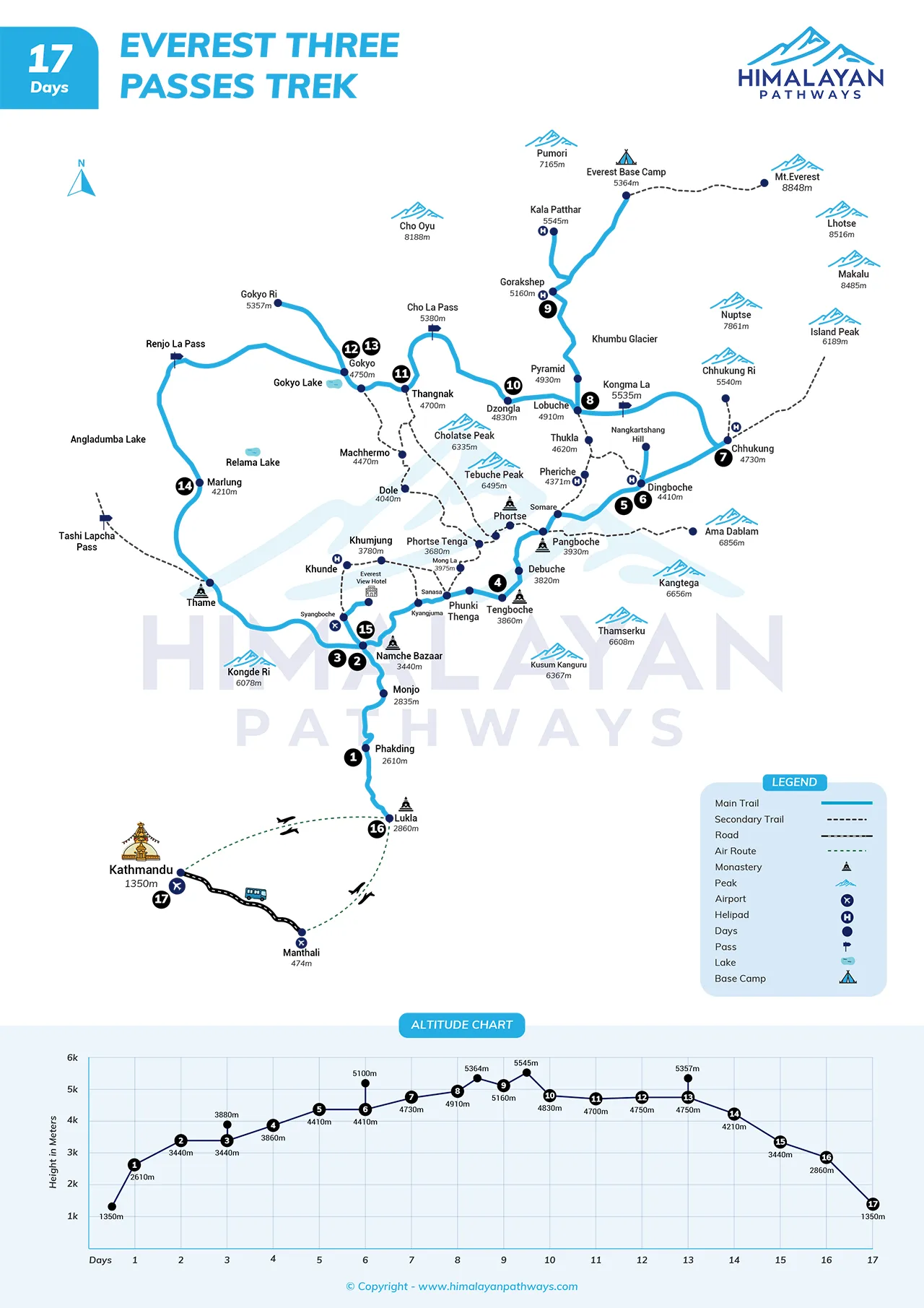
Breakfast, Lunch and DinnerThe Everest Three Passes Trek is one of the most adventurous high-altitude trekking routes in Nepal, comprising the Everest Base Camp Trek, the blue Gokyo Lakes, and three spectacular passes across the Himalayas: Kongma La (5,535 m / 18,159 ft), Cho La (5,420 m / 17,782 ft) and Renjo La (5,360 m / 17,585 ft). It is a trekking route aimed at those who desire more than the usual trek, and it provides the stunning mountain views, less-travelled trails and the feeling of adventure, whilst still being able to feel the comfort of the teahouse accommodation.
Your Everest Three Passes Trek starts with a beautiful ride from Kathmandu to Ramechhap (Manthali) and a brief mountain flight to Lukla (2,840 m / 9,317 ft), the entry point to the Khumbu region.
You pass the Dudh Koshi River and slowly ascend Sherpa villages, prayer-flag-covered bridges, mani stones, and pine forest to the bustling trading centre of Namche Bazaar (3,440 m / 11,286 ft).
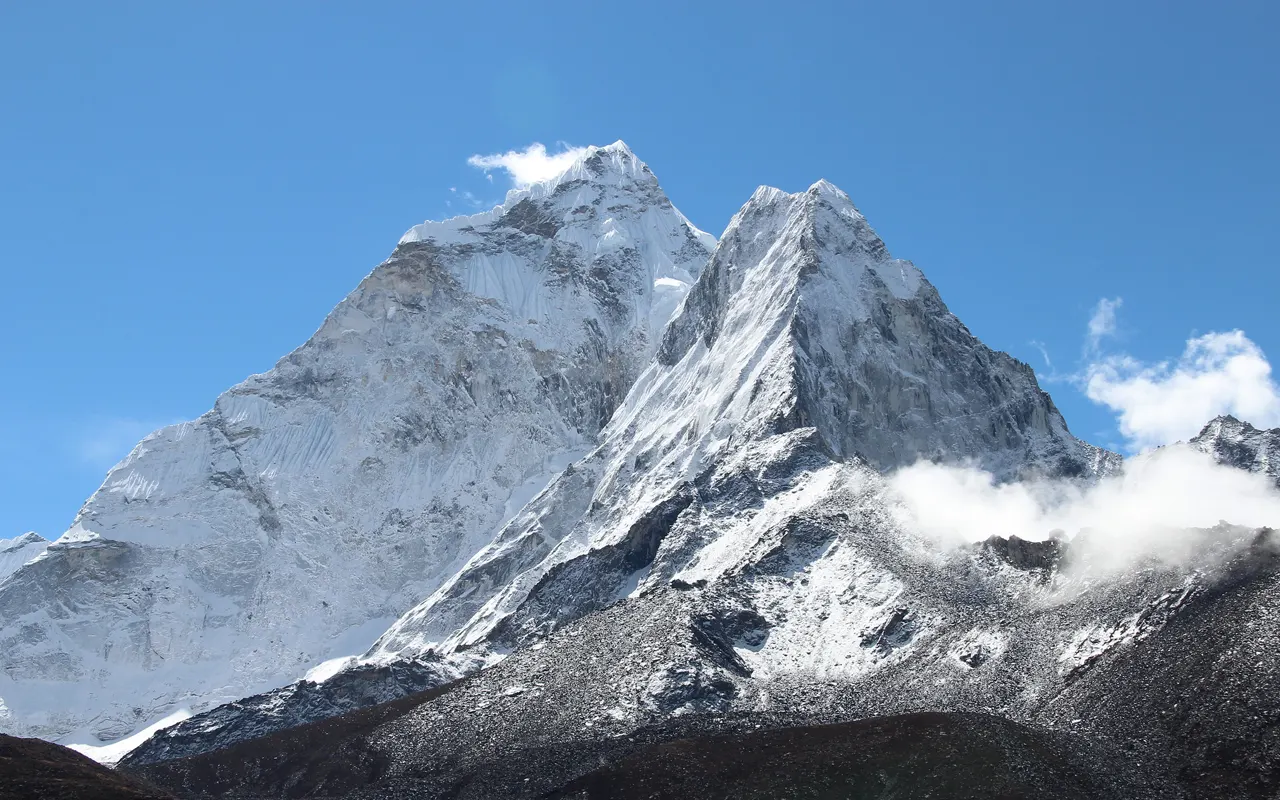
Having acclimatisation days in Namche and Dingboche, you will acquire the altitude in a safe way, and see the legendary peaks such as Ama Dablam (6,814 m / 22,349 ft) and the tallest mountain in the world, Mount Everest (8,848.86 m / 29,031.7 ft).
The trek is characterised by its three high passes, wild, remote and brutally rewarding. The crossing of Kongma La leads to the entrance of Khumbu Glacier and the classic path to the Everest Base Camp (5,364 m / 17,598 ft).
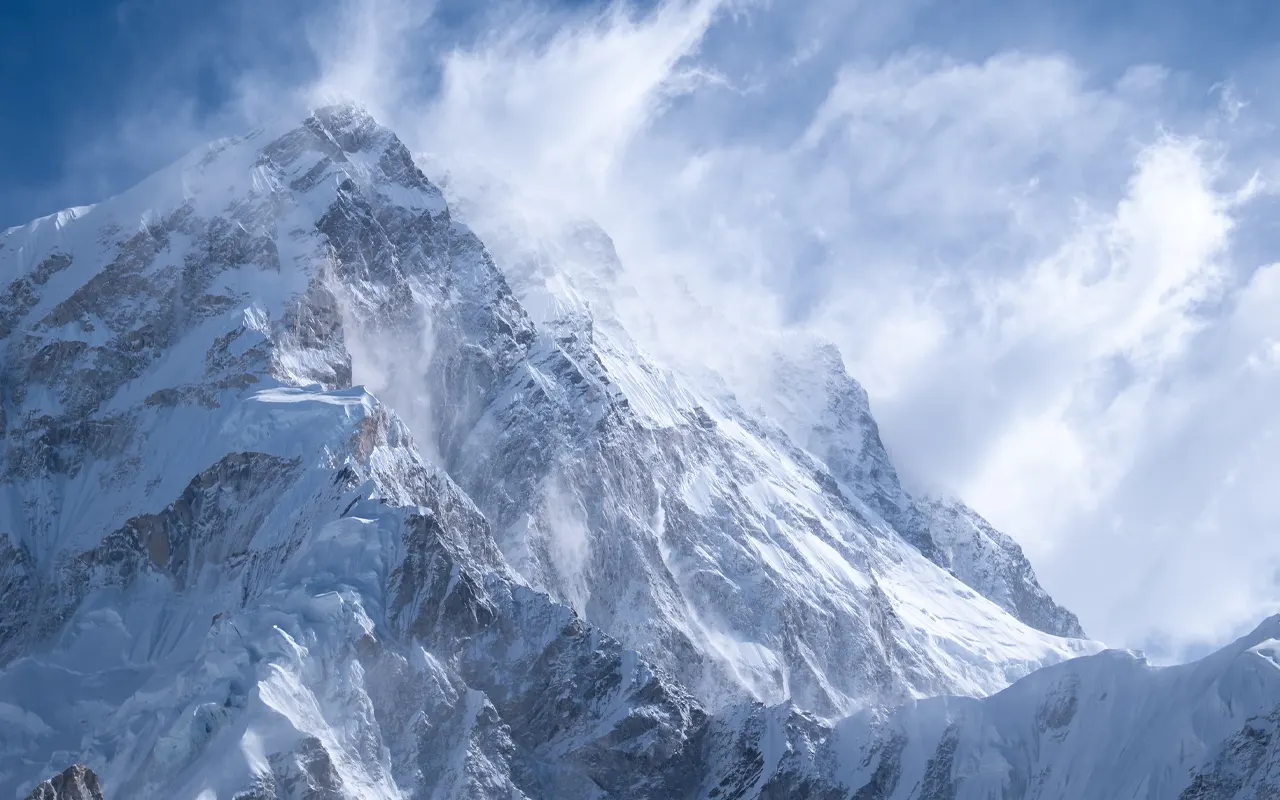
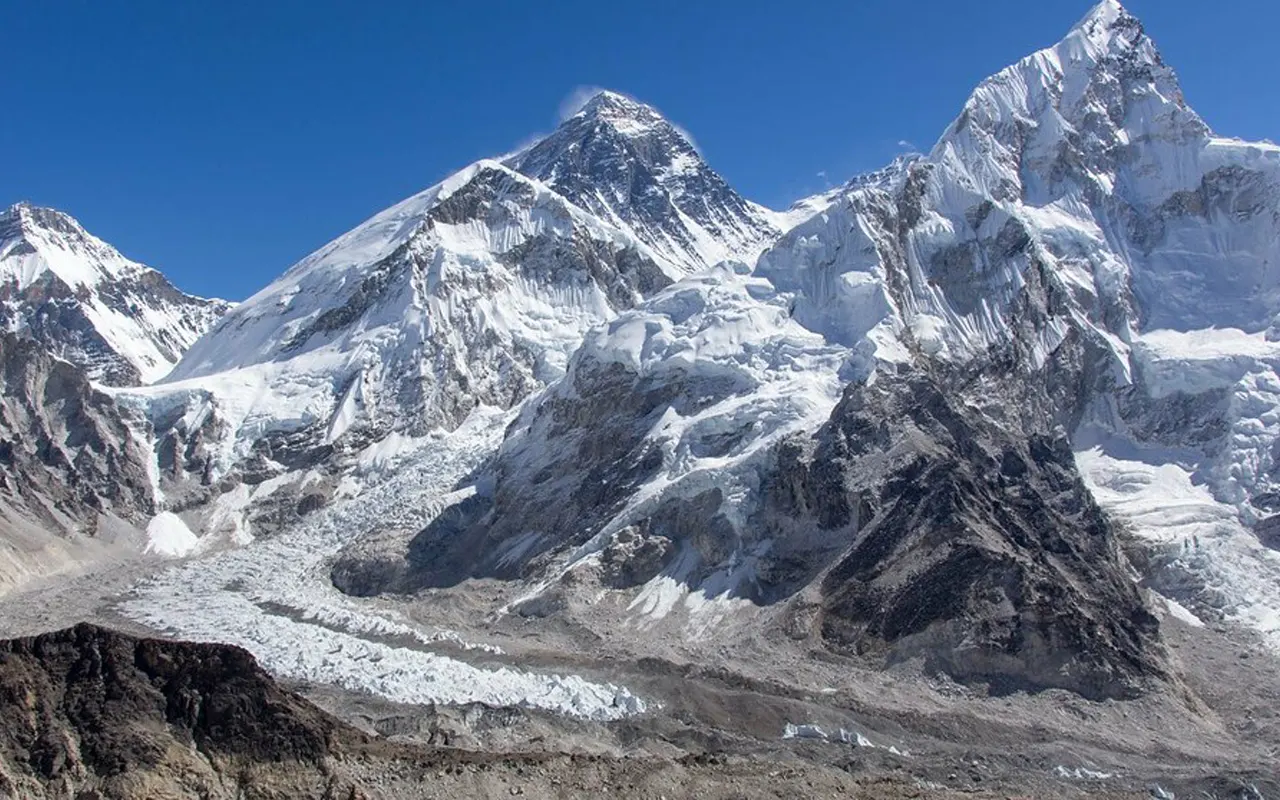
The sunrise hike to Kala Patthar (5,545 m /18,192 ft ), the highest point of the trek, provides memorable views of the sunlight touching Everest, Lhotse, Nuptse and Pumori.
You then move on to Cho La Pass and the enchanted Gokyo Valley, where the glacial lakes reside, below Mount Cho Oyu (8,188 m / 26,864 ft). An ascent of Gokyo Ri (5,357 m / 17,575 ft) is rewarded with one of the most outstanding Himalayan perspectives in Nepal. Lastly,
The Everest Three Pass Trek is one of the best treks in the Himalayas of Nepal that takes you close to not just Mount Everest but the other gems of the Khumbu region like Gokyo Lakes, alpine passes and the authentic traditional and cultural values.
Your Everest Three Pass trek starts very early in the morning. You drive out of Kathmandu before the sun comes up, for approximately 4 hours to Manthali Airport in Ramechhap. You pass remote villages, rivers, and terraced agricultural lands, giving you an initial impression of rural Nepal.
You take a short and thrilling flight from Manthali to Lukla (2,840 m / 9,317 ft). These 25-30 minutes in the air offer you priceless scenery of snow-covered Himalayan mountains, and then you arrive on the short-runway landing field of Lukla.
Once you have met your trekking crew in Lukla, you officially begin to walk on the Everest Three Passes Trek. The hike is smooth and mostly downhill. The path goes through pine woods and Sherpa villages, which are adorned with prayer wheels and mani stones, along the Dudh Koshi River.
You arrive after 4 hours at Phakding (2,610 m / 8,563 ft). You can rest at a cosy teahouse, have a nice meal, and sleep after a wonderful, yet exhausting day.
On the day, the trail is more exciting and challenging. Following breakfast at Phakding, you walk to the north of the Dudh Kosi River, through pine and rhododendron woods. The trail climbs and descends, passing through a number of suspension bridges, with the most notable one being the Hillary Bridge high above the river.
On your way, you wind up at Monjo (2,835 m / 9,301 ft), where permits are checked at the entry gate to Sagarmatha National Park. It is a more dramatic view here, with the valley getting narrower and the mountains becoming taller.
After some elevation, you can have your first glimpse of Mount Everest (8,848.86 m / 29,031.7 ft) on a clear day. You keep climbing up and up, which leads you, finally, to Namche Bazaar (3,440 m / 11,286 ft). This bustling Sherpa town is the centre of trade in the Khumbu region.
After a hot meal, you relax in your lodge and have a good sleep.
This day is spent in acclimatisation. You make a short and light hike to allow your body to adapt to the elevation. In the morning, there is a walk uphill to the Everest View Hotel (3,880 m / 12,730 ft), which offers one of the best views in the area. Here, you can have panoramic views of Mount Everest (8,848.86 m / 29,031.7 ft), Ama Dablam (6,814 m / 22,349 ft), Lhotse and other high mountains.
On your way, you can stop at the Sherpa Culture Museum, where you can learn about the local customs and the history of mountaineering. There are also other hikes like the nearby village of Khumjung and Khunde, which have monasteries, schools and traditional stone houses. It takes you a couple of hours of sightseeing and walking, which is followed by lunch at Namche Bazaar.
Afternoon is free to rest. You may visit local stores, have a pastry in the bakery or just rest in your lodge. Another night at 3,440 m /11,286 ft gives you a good chance to acclimatise before proceeding to greater heights in the Everest Three Passes Trek.
You proceed to Tengboche after breakfast in Namche. The route begins with the easy stroll on the hillside, which provides the beautiful sight of Everest, Ama Dablam, and Thamserku. Reaching Kyangjuma, the trail goes down through the forest to Phungi Thanga (3,250 m / 10,663 ft) by the river.
In the middle of the afternoon, you reach Tengboche (3860 m /12664 ft), a small village with a monastery. Tengboche Monastery is located on a ridge where there are amazing sceneries of Everest (8,848.86 m / 29,031.7 ft) and the surrounding mountains.
Once you check into your lodge, you can go to the monastery and have a chance to see the evening prayer ritual.
You wake up in Tengboche and enjoy beautiful mornings, and then proceed on your Everest Three Passes Trek to even greater altitude. The path leads down into the woods into Debuche and crosses the Imja Khola River on a suspension bridge. Then it starts to rise gradually, before reaching Pangboche (3,985 m / 13,074 ft), which is among the oldest Sherpa villages in the area, home to an ancient monastery.
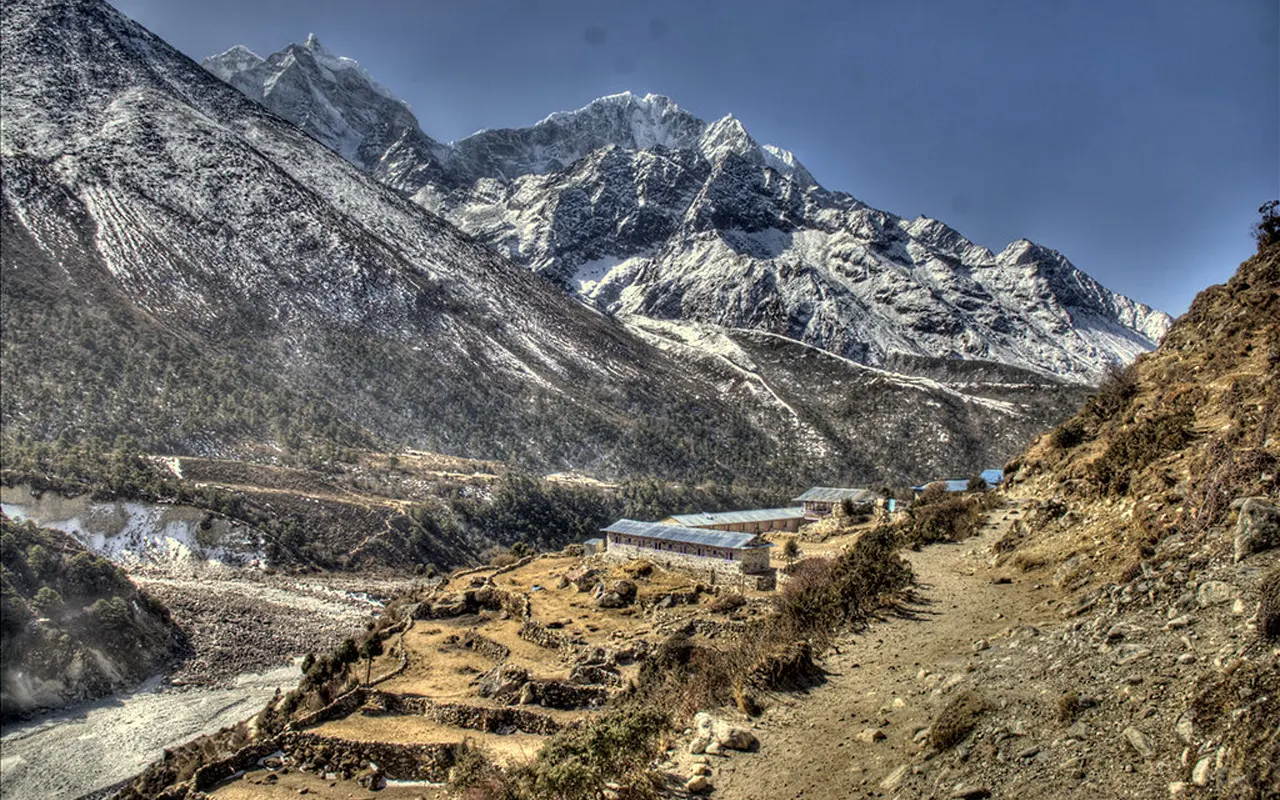
Beyond Pangboche, trees are lost and substituted by shrubs of the alpine, mountainous landscapes and expansive valleys. You arrive in the afternoon in the village of Dingboche (4,410 m / 14,468 ft), which is a beautiful village with stone houses and amazing mountain views.
Once you are settled in your lodge, you can go around to explore the village or just rest in your cosy room.
The day of acclimatisation will assist your body to get used to the higher elevation of the Everest Three Passes Trek. Nagarjun Hill, also known as Nangkartshang peak, is a steep ascending hill after which you start your breakfast. The trail ascends above Dingboche, and you are put to the test.
In several hours of constant climbing, you reach the peak at about 5,100 m / 16,732 ft. The views are spectacular at this point. It is close up of Ama Dablam (6,814 m / 22,349 ft), the gigantic south side of Lhotse, Makalu in the background, and Island Peak (Imja Tse).
Once you have had a glimpse of the views, you gradually walk back to Dingboche, where you have lunch. Afternoon is the time to rest, drink, and do some light walking in the village.
The Everest Three Pass Trek is shorter and less difficult today, and your body has time to relax before the first high pass. You start the hike after breakfast in Dingboche and head eastwards in the Imja Valley.
The landscape is more dramatic as you walk. The Island Peak (6,189 m / 20,305 ft) is a steep rise in front, and the south side of Lhotse is very huge and dominates the skyline. You go through the Imja Khola stream over broad open fields where the yaks graze in the summer season.
When you walk for about 4 hours, you arrive at Chhukung (4,730 m / 15,518 ft), a small village where there are a few lodges and gear stores. If you feel strong, you can have an optional hike to Chhukung Ri (5,550 m / 18,209 ft) to acclimatise. Otherwise, rest and look out tomorrow with its hard pass crossing.
It is among the most challenging and the most rewarding days of the Everest Three Passes Trek. You begin exceptionally early at Chhukung (4,730 m / 15,518 ft), and gradually make your way to Kongma La Pass. The trail is sharp and rough, and the thin air renders each stride difficult.
After many hours of gradual ascent, you get to the top of Kongma La Pass (5,535 m / 18,159 ft). You have reached the point where the prayer flags are fluttering in the wind. At the pass, there are unbelievable sights of Makalu (8,485 m / 27,838 ft), Ama Dablam, Lhotse, and Nuptse, and the large Khumbu Glacier is at the base.
A brief rest is followed by a long and cautious descent. The path is sharp and rocky, and you proceed very slowly. The route then leads eventually to the main Everest route and ends up in Lobuche (4,910 m / 16,109 ft).
To arrive at the lodge late afternoon is like a great triumph, and you have conquered the greatest challenge of the Everest Three Passes Trek.
It is one of the most exciting days of the Everest three pass trek as you visit the Everest base camp today. Breakfast in Lobuche (4,910 m / 16,109 ft) is followed by the rocky path along the Khumbu Glacier. The stroll is slow but strenuous as regards the elevation and ruggedness of the ground.
It is a matter of about 3 hours to get to Gorak Shep (5,140 m / 16,864 ft), the final settlement on the trail. You drop your bags after a quick lunch at Goreakshep and go on to Everest Base Camp (5,364 m / 17,598 ft). The trail passes through ice debris, rocky ridges and frozen creeks.
It is amazing to arrive at the Everest Base Camp. You are surrounded by prayer flags, rock cairns and the Khumbu icefall, which provides a dramatic scene at the base of Mount Everest (8,848.86 m 29,031.7 ft). Even though the summit is not seen, it is a memorable experience to stand here.
Having photographed and had a wonderful time, you go back to Gorak Shep, where you spend your night feeling very proud that you have managed to get to this historic location in the Everest Three Passes Trek.
You hike early in the morning before sunrise to Kala Patthar. The trek up the mountain, starting at Gorak Shep (5,140 m / 16,864 ft), is difficult and uphill in the chilly morning. And after about 2 hours, you arrive at Kala Patthar (5,545 m / 18,192 ft).
Mount Everest (8,848.86 m / 29,031.7 ft) shines with the golden light of the sun, as do Nuptse, Lhotse and Pumori. It is among the most spectacular views of the whole trek. You take photographs and head back to Gorak Shep, where you have breakfast.
You later find yourself going down the same path and beyond Lobuche, and then you deviate off the main trail to Dzongla. This less hectic part is slightly serene following the hectic Everest Base Camp trail.
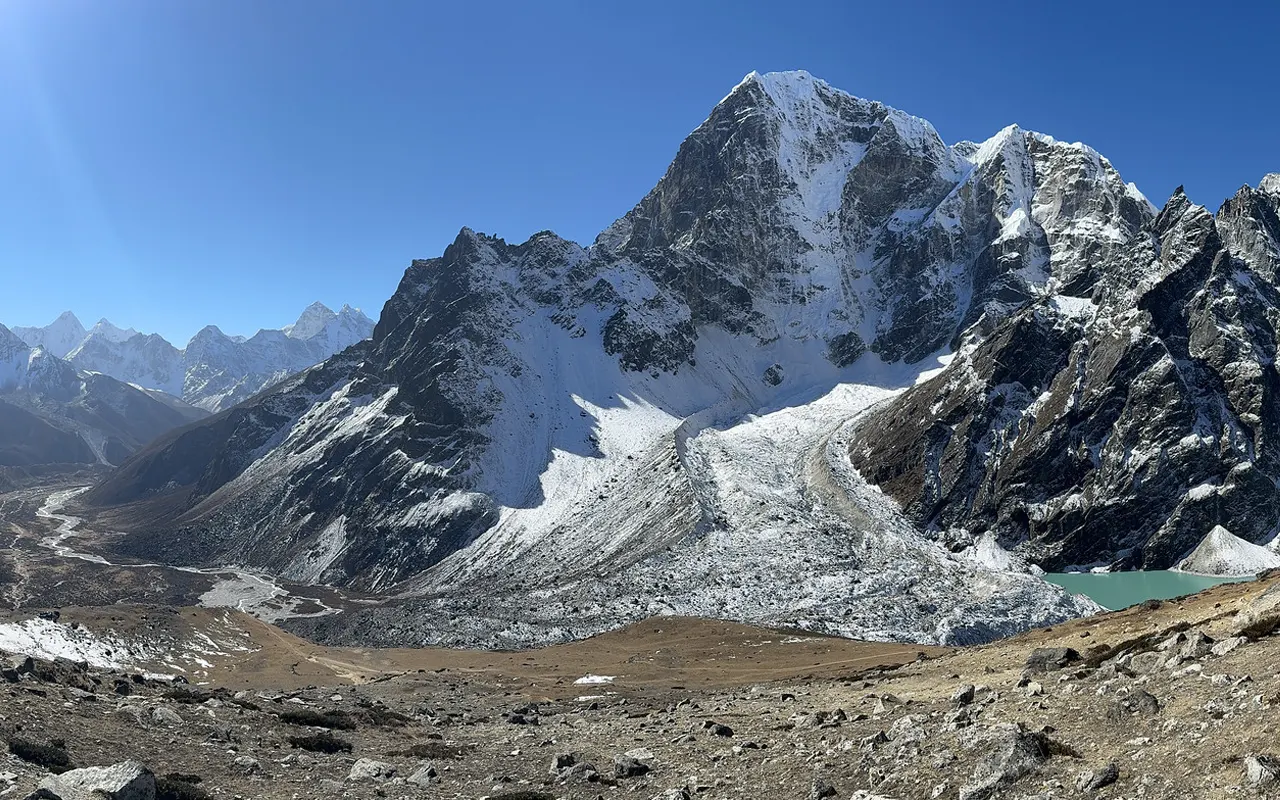
You pass through the open and have a sight of the high north face of Cholatse. At afternoon, you reach Dzongla (4,830 m / 15,846 ft). You do get to bed early, and you are getting ready to do another high pass tomorrow on the Three Passes Trek in Everest.
The next day is another strenuous one in the Everest Three Passes Trek when you cross Cho La Pass. You come down early out of Dzongla (4,830 m / 15,846 ft) by rocky roads and through narrow valleys. The path is steeper, leading to Cho La Glacier.
The last is over icy terrain, and good grip is very important here. A few more hours later, you have reached Cho La Pass (5,420 m / 17,782 ft) with its prayer flags and stone cairns. At the summit, you get views of Cholatse, Lobuche East and the Gokyo in the distance.
It is a steep and rough way down, particularly when it is snowing. You cling to the slopes at a slow pace and gradually enter a broad valley, where the road gets less torturous.
In the afternoon, you arrive at Thangnak (4,700 m / 15,420 ft), a small settlement close to the Ngozumpa Glacier. You take a rest at the lodge fulfilled to have made the second big pass in the Everest Three Passes Trek.
You leave Thangnak (4700 m/15420 ft), cross the huge Ngozumpa Glacier, the Himalayas’ longest glacier and move forward. The path cuts through glacial debris, and there are continuous rises and falls.
You walk across the glacier very carefully and then up the moraine, which is the far side. You can see the beautiful blue Gokyo lakes. The difference between the blue water and the mountains around is impressive. Before long, you reach Gokyo (4,790 m / 15,715 ft), which is located next to the third Gokyo Lake.
You arrive at lunch and get into your lodge. Afternoons are at liberty to rest on the lake, or to walk about the village, or to a little way towards the lakes. The valley is an attractive and serene place dominated by Cho Oyu (8,188 m / 26,864 ft).
It is an acclimatisation day and a discovery day on the Everest Three Passes Trek. In the morning, you start the hike up Gokyo Ri, which is located at 4,790 m (15,715 ft). The path is rugged and strenuous, and the rewards are worth it.
After 3 hours, you arrive at the top of Gokyo Ri (5,357 m / 17,575 ft). Here you have one of the best panoramic views of the trek. The horizon is filled with Mount Everest (8,848.86 m / 29,031.7 ft), Lhotse, Makalu, Cho Oyu, and numerous other mountains. In the following, the Gokyo Lakes are basking in the rocky terrain.
Then you take your time coming down to Gokyo to have lunch after enjoying the scenery. The remaining part of the day is rest and recovery. Another night here makes your body ready for the last high pass to come.
Today, you will cross the last high pass of the Everest Three Passes Trek, which is Renjo La Pass. Renjo La is the simplest of the other passes, and one of the prettiest. You start a gradual but continuous climb on a clear path after breakfast in Gokyo (4,790 m / 15,715 ft). It is not a steep climb, and you can take your time.
The higher you are, the more scenic the views. Mount Everest (8,848.86 m / 29,031.7 ft) and Lhotse and Makalu, and the beautiful blue Gokyo Lakes, all below you. The pass is also marked by prayer flags, which give an ideal spot to rest and rejoice at having gone through all three passes of the Everest Three Passes Trek.
The drop off of the Renjo La is not very steep. The road goes down to a less busy valley, with rocky hills and scenery. Towards the end of the afternoon, you reach Marlung (4,210 m / 13,812 ft), where you take a good rest after an unforgettable day.
The Everest Three Passes Trek today will largely be a trek on the downslope. The trail runs by the Bhote Koshi valley after breakfast in Marlung (4,210 m / 13,812 ft). The trail is broad and easy and takes you through stone houses, prayer wheels, and little farms.
A couple of hours later, you come to Thame (3,820 m / 12,533 ft), a quiet village of Sherpas, whose ancient monastery is a tourist attraction, and the birthplace of the great Everest climbers. You also go to Thame Monastery, where you can see the monks’ chanting prayers in a serene and religious atmosphere.
You keep on going downhill after lunch to Namche Bazaar (3,440 m 11,286 ft). The path is rewarding as you see how far you have travelled. By afternoon, you are in Namche again. The night is easy and cheerful.
You may go shopping for souvenirs, have a treat at the bakery or just enjoy the accomplishment of the most challenging part of the Everest Three Passes Trek.
This is the last day of trekking of the Everest Three Passes Trek. Having breakfast in Namche Bazaar (3,440 m / 11,286 ft), you will be starting the long way down to Lukla. The path is at first steep, and you go slowly on and on. In a short time, you are on great suspension bridges over the river, the Dudh Koshi, with your usual accompaniment of water rushing down below.
You go through villages like Monjo (2,835 m / 9,301 ft), Phakding (2,610 m / 8,563 ft), and Ghat, where you travelled at the start of the trek. The landscape shifts once more, and the rocky high-altitude landscape is substituted by green trees, waterfalls, and a warmer climate.
The route has a final climb above Lukla following lunch along the way. This final climb is exhausting, but it is worth it. Towards the end of the afternoon, you arrive at Lukla (2,840 m / 9,317 ft).
During the evening, you celebrate with your guide and the trekking crew. It can be laughter, music, and Sherpa dancing, and you are thinking that you successfully passed the Everest Three Passes Trek.
The Three Passes Trek of Everest officially finishes today. You fly back after having breakfast in Lukla (2,840 m / 9,317 ft) to the small mountain airport. You have one last glimpse of the valleys, rivers, and mountains that you have explored in the last few weeks with the short flight to Ramechhap.
Once you have landed at Manthali, Ramechhap, you start the scenic drive towards Kathmandu (1,400 m / 4,593 ft). The road cuts across hilly landscapes, riverbanks, villages and progressively transgresses into the bustling city.
In the afternoon, you reach Kathmandu and come back to your hotel. Hot shower, a bed, and city comforts are extremely rewarding after a couple of days spent in the mountains.
You can have a party in Thamel during the evening with a final dinner. The trek has ended, but the experience of high passes, Everest sights and Sherpa culture of the Everest Three Passes Trek will never leave you.
Everest Three Passes Trek has been rated one of the most demanding treks in Nepal. It is more difficult than the normal Everest Base Camp trek because you pass three high passes, namely, Kongma La, Cho La, and Renjo La, all of which are above 5,300 m / 17,388 ft.
Most of the trekking days are very long, most of the time 6-9 hours and have steep ascents, rocky roads, and cold winds. The air that is above 5,000 m / 16,404 ft thick will make you walk slower and breathe harder.
The tracks are not technical, though they might be rough and tiresome. It is important to be fit, have strong legs and good endurance. Under the right conditions of acclimatisation, gradual speed and psychological strength, many ambitious trekkers make it through the Everest Three Passes Trek in a safe way.
The time of the year selected determines the safety and fun of the Everest Three Passes Trek. Autumn (October-November) and spring (March-May) are the most appropriate due to the normal weather conditions, and the mountain scenery is clearer. Autumns are usually sunny, and visibility is very good, which is desirable when traversing high passes over 5,300 m / 17,388 ft. Days are cool, nights cold, particularly at higher villages such as Gokyo at 4,790 m / 15,715 ft.
It is a little warmer in the spring, and hillsides may be colourful with flowering rhododendrons. In the morning, the weather is always clear, but in the afternoon, it might be cloudy towards the end of the season.
Monsoon (June-August) is not the best because of rains, muddy roads and flight delays of flights. Winters (December-February) may include clear weather but with extremely low temperatures and massive snow, which may block certain passes.
During the Everest Three Passes Trek, have meals in teahouses on the way. Most of the villages have similar menus with simple yet satisfying meals. One of their favourites is dal bhat (rice, lentil soup and vegetables), with a free refill, to have after a hard day of activity.
Other available options are noodle soup, fried rice, pasta, pancakes, porridge, omelettes, and momos. On the mountain, vegetarian food among trekkers is more common.
It is important to remain hydrated at altitude. You can purchase boiled water in lodges or treat tap/streams with purification pills. It would be best to carry a reusable bottle, as bottled water becomes costly, which causes plastic waste.
Hot beverages such as hot chocolate, ginger-lemon tea or black tea can assist you in rehydrating and keeping warm. Alcohol is not advisable when trekking as it is a dehydrating beverage that may speed up the symptoms of altitude.
One of the largest problems on the Everest Three Passes Trek is altitude. Above 3,000 m / 9,843 ft, there is less oxygen in the air, and it will take you time to become used to it. Mild AMS can include headache, nausea, dizziness, fatigue or poor sleep.
Slow ascent and acclimatisation days are the best preventive measures. Take plenty of fluids, have enough foods and walk at a constant pace. Avoid smoking and alcohol. Others use acetazolamide (Diamox); however, this should be taken only after consulting a doctor.
In case the symptoms worsen, including vomiting, confusion, walking difficulties, or difficulty breathing during rest, it is an emergency. The sole cure is to come down to a lower elevation.
You should tell your guides how you feel. Most individuals complete the Everest Three Passes Trek with a great deal of safety and satisfaction due to intelligent pacing and attention to elevation.
The Everest Three Passes Trek is made to be a lot of fun with good preparation. Begin training 8-12 weeks before the trip. Train cardio and leg strength, as you will be hiking a lot on steep trails, which may take hundreds of miles. Running, cycling, swimming, and long brisk walks develop stamina.
Climbing up and down stairs and mountains is the best exercise to strengthen your legs. Attempt to walk 6+ hours a day, and go for long hikes.
Practice with the pair of boots and backpack that you will be wearing on the trek. This will make your body ready to bear some weight, and it will stop the blisters. Stuff a bag with 5-8 kg to represent water, additional layers and snacks. Exercises such as squats, lunges and step-ups are considered strength exercises that help in protecting the knees against the rocky downfalls.
It is also important to be mentally strong. Be positive and celebrate small achievements. The more fit you are, the more secure and rewarding the Everest Three Passes Trek is.
In order to complete the Everest Three Passes Trek, one requires a Nepal tourist visa and two primary trekking permits. A majority of the tourists are issued a visa at Kathmandu airport. The usual visa costs are USD 30 (15 days), USD 50 (30 days) and USD 125 (90 days). The trek is usually done within a 30-day visa, although longer periods can provide certain flexibility.
For permits, you need the Sagarmatha National Park Permit and the Khumbu Rural Municipality Permit. These are inspected along the route at checkpoints.
WE will obtain all the necessary permits for you, except your Nepal Visa.
Carry your permits around because they might be needed at any time. Your Everest three passes trek starts without any hassles and is ready with the right documents.
To have a pleasant time at the Everest Three Passes Trek, the most important thing is to be healthy. Other than the problem of altitude, other prevalent issues are stomach illness, colds, blisters and slight injuries. Wipe hands frequently, apply sanitizer and consume freshly cooked meals. Always consume boiled or purified water.
Sun rays are intense at elevation; use sunglasses, a hat, and high-SPF sunscreens. Meanwhile, both mornings and evenings are freezing, so wear several warm layers of clothes, do not wet gloves and socks.
Suspense bridges are to be crossed carefully, and as the yaks or mules pass along narrow paths, move to the upward side. Passes might be icy and slippery, walk slowly at a slow pace.
The benefit of having a guide on a trek is that he or she keeps an eye on the weather, the path, and your health. The Everest Three Passes Trek can become a safe and memorable experience with good habits.
The Everest Three Passes Trek will start with a fun ride to Manthali and to Lukla with the picturesque mountain flight. The landing on the short runway of Lukla is your initial sight of the Himalayas during this flight.
Upon arrival, no transportation takes place other than walking. Lukla is the last village from which there are no further roads, and trekking is the only means of transportation between the villages.
This trek is completed when you fly back from Lukla to Ramechhap (or Kathmandu in case of bad conditions), and then drive back to the city. There is always a possibility of delaying flights due to weather, so carving out an additional day after the trek would be prudent.
The Everest Three Passes Trek is a high-altitude and remote location that requires travel insurance. Trekking, as far as 5,600 m / 18,373 ft, and emergency helicopter evacuation must also be covered by your insurance. In the absence of insurance, you would have to pay this amount before they can come to your rescue.
In selecting the insurance, ensure that high-altitude trekking has been covered. Most simple policies will not go farther than 3,000-4,000 m, which is inadequate for this trek. Seek such phrases as trekking up to 6,000 m.
Medical treatment, trip interruption and lost baggage should also be covered by insurance. It can be done by organising insurance before going to Nepal and packing a copy during the trek, just in case of accidents and concerns.
The Three Passes Everest Trek has been the largest circuit around the Everest area, and there are equally magnificent substitutes for various levels of fitness and schedule.
The traditional Everest base camp Trek is aimed at reaching Everest Base Camp (5,364 m / 17,598 ft) and Kala Patthar (5,545 m / 18,192 ft) without high passes. It is brief and less challenging.
The other alternative is the Everest Base Camp and Gokyo Trek over Cho La Pass (5,420 m / 17,782 ft). This is a one high pass trail that links the beautiful Gokyo Lakes with the Everest Base Camp, bypassing three high passes.
Those who want to avoid as many people as possible can also consider the Gokyo Lakes and Renjo La Pass (5,360 m / 17,585 ft) route, which is dedicated to the alpine lakes and the panorama without going to the Everest Base Camp.
All the routes are different ways to enjoy the Himalayas, and it depends on the purpose and level of comfort.
Most of the necessities are included in the package, although the Everest Three Passes Trek has some personal costs. You will have to spend on your Nepal visa and insurance. At Kathmandu, the pre-trek and post-trek meals and hotels are additional.
Along the trail, you may have to pay for snacks, beverages, bottled water, or hot showers.
Gadget charging is normally an additional fee at teahouses with higher rates at higher altitudes. Wi-Fi is also charged, usually using Everest Link cards.
Guides and porters are used to being tipped at the end of the trek, and it is welcome. It is also possible to purchase souvenirs in Namche or Kathmandu.
One should bring a certain amount of Nepali cash, around USD 15-20 per day, for personal expenses, because there are no ATMS after Namche.
Communication in the Everest Three Passes Trek is not difficult. Sherpas are local to the region, and their language is Sherpa and Nepali, although English is also very common in the trekking centres. There are good English speakers in the villages. Your tour guide will be a native and guide you in translation.
It is better to learn a couple of words in Nepali. Namaste means hello, and Dhanyabad means thank you. You can encounter such a greeting as Tashi Delek, which literally translates to good luck and blessings among Sherpa communities.
There are limited Internet connections in the Everest Three Passes Trek. Most of the villages have cell phone coverage available with Ncell and Nepal Telecom. Signals in the data form can be up to Gorak Shep (5,140 m / 16,864 ft), although they tend to be slow or unreliable.
The majority of lodges have paid Wi-Fi. Prices are higher in the mountains, and the speeds are not fast. At teahouses, one can charge his/her electronic devices, and the cost is usually per device. The cost increases towards the upper part of the trail, particularly around the Everest Base Camp.
It is strongly advised that a power bank be carried along. To conserve energy, place phones on aeroplane mode and preserve batteries against cold. Internet connectivity is to be regarded as a blessing, but not as a guarantee on the journey.
To be safe and respectful, there are several things that one should avoid on the Everest Three Passes Trek. Do not disregard the symptoms of altitude or hurry up the itinerary. Above 3,500 m / 11,483 ft, travelling at excessive speed exposes one to the dangers of altitude sickness. Alcohol and smoking should be avoided in high altitudes because they exacerbate the problem of dehydration and difficulty in breathing.
Littering and polluting the trails should be avoided. The Everest area is a sacred site and a reserve that is preserved by locals. Always bring garbage to the right disposal. Never disrespect local culture, walk clockwise around stupas, take off shoes before entering monasteries and don’t take photos or take photos of people without permission.
The weather is also unpredictable and can change within minutes, hence always listen to the guide and apply common sense.
Following the successful completion of the Everest Three Passes Trek, some of the travellers opt to have an extension of their journey. Chitwan National Park is a good alternative, and here people can take jungle tours and wildlife after spending weeks in the mountains.
Another popular one is Pokhara, a scenic city at the lakeside with the sight of the Annapurna range and other facilities such as boating and paragliding.
To experience the culture, a Kathmandu Valley tour is an opportunity to visit the UNESCO World Heritage Sites like Boudhanath, Swayambhunath, and Bhaktapur Durbar Square. These extensions offer an opposition to the trekking atmosphere that is above 5,000 m / 16,404 ft.
The Everest Three Passes Trek provides unlimited access to photography, mountain peaks, and Sherpa villages. Never take photographs without seeking permission from people, particularly monks or the elderly. Photography can be limited within monasteries, and in this case, observe local regulations.
The use of drones on the Everest is highly regulated. The Sagarmatha National Park and locations around Lukla Airport (2,840 m / 9,317 ft) are areas that require several authorities to be provided with special permits for the drone. It is hard to get these permits, and they are normally restricted to professional crews. Any kind of drone flying might result in confiscation and fines.
Preparation is vital in case it is your first Everest Three Passes Trek. Train your body with gears and your hiking boots. Carry enough cash as there are not many ATMs above Namche Bazaar (3,440 m / 11,286 ft).
Keep hydrated, eat, and walk slowly, so that your body can adapt to the elevation. Follow your guide and do not compare the speed with others. Wear shoes that do not cause blisters, and keep electronics warm to sustain battery life.
Above all, have fun with the trip. You should have time to relax, communicate with other travellers, and enjoy the amazing landscape. The journey is not easy, and with time and a positive attitude, the journey becomes one of the most fulfilling life experiences.
You should be in good shape. It can be completed by regular hikers or individuals who train for a few months.
Not strictly, but it helps. Beginners will do it – you just need to train hard and listen to your guide.
The highest areas are Gokyo (4,790 m / 15,715 ft) and Gorak Shep (5,140 m / 16,864 ft), where the individuals stay overnight.
Yes. You can see Everest in many different positions (Namche viewpoint, Tengboche, Gokyo Ri) and, in particular, Kala Patthar in the base camp.
No, not for this trek. You will have teahouse lodges all night long – it has a bed and blankets.
The majority of the rooms are twin share (two beds per room). Single travellers tend to share the room with another trekker of the same gender.
Sometimes. Hot showers (paid) are available in a few lodges below Namche.
Foods such as rice, noodles, potatoes, pasta and soups should be expected. One of the staples is Dal Bhat (rice and lentils).
Yes, there is vegetarian food. Vegan food can be had as well, although the selection might be smaller.
Not without treatment. Boiled water, purification tablets, and filters are suggested.
You need not be in a hurry. A buffer day is recommended. Helicopter flights can be made, though costly.
During winter in high lodges, it may get down to -10 °C or even lower.
Yes, the majority of lodges are electric and have power outlets, which, most of the time, are solar, but power is usually a limiting factor.
Yes. Carry a sleeping bag with a negative temperature of at least -15 °C. Blankets are also provided in lodges; however, additional warmth is essential.
Yes. Sleeping bags, down jackets, and trekking poles, among others, are easily hired at affordable rates.
The plan is going to be adjusted by your guide. You are free to skip or downgrade a pass when it is necessary to do so.
This can be permitted, although it is highly advisable to have a guide due to safety reasons on this difficult path.
ATMs are at Namche Bazaar, and they do not necessarily work. Draw sufficient cash in Kathmandu.
The groups tend to be small, approximately 2-8 trekkers, and flexible and safe.
Namche has a pharmacy, a clinic, and a medical post of Pheriche. Otherwise, the medical assistance is rudimentary.
Most of the lodges have Wi-Fi at a small fee, which is slow and unreliable at elevated altitudes.
Kongma La Pass is believed to be the most difficult pass, though it all depends on the person.
No. It is trekking only. Nothing technical, climbing skills are required.
It is not compulsory, but a welcome tradition at the end of the trek.
The majority of individuals experience some impacts. Symptoms that are severe are highly minimised through proper acclimatisation.
The guide has a satellite phone with them in case of an emergency.
The Everest Base Camp Trek with Helicopter return is a popular trek that takes you to the base camp of Mount Everest, the highest mountain in the world. Everest Base Camp Trek (5364m) usually takes about 14 to 15 days on foot, but with the added convenience of a helicopter return, you can complete the journey in 11 days.
David James, USA
Purchase Verified
The Everest Base Camp Trek with Helicopter return is a popular trek that takes you to the base camp of Mount Everest, the highest mountain in the world. Everest Base Camp Trek (5364m) usually takes about 14 to 15 days on foot, but with the added convenience of a helicopter return, you can complete the journey in 11 days.
David James, USA
Purchase Verified
The Everest Base Camp Trek with Helicopter return is a popular trek that takes you to the base camp of Mount Everest, the highest mountain in the world. Everest Base Camp Trek (5364m) usually takes about 14 to 15 days on foot, but with the added convenience of a helicopter return, you can complete the journey in 11 days.
David James, USA
Purchase Verified
The Everest Base Camp Trek with Helicopter return is a popular trek that takes you to the base camp of Mount Everest, the highest mountain in the world. Everest Base Camp Trek (5364m) usually takes about 14 to 15 days on foot, but with the added convenience of a helicopter return, you can complete the journey in 11 days.
David James, USA
Purchase Verified