Difficulty Level
Mardi Himal Trek is rated as moderate by the majority of trekkers as it includes long days of walking and gradual yet consistent elevation gains. Hiking usually takes about 6 hours a day, and the higher stretches of the ridge around the High and Base Camp will provide additional difficulty.
Technical climbing experience is not necessary; however, constant endurance and mental concentration are valued. Trails are of various types, such as irregular stone steps and forest roots, ridge paths, and rocky areas at the upper end. The High Camp to Low Camp distance might be harder than the distance.
In the case of first-time trekkers, there is usually no need for heavy preparation at home. Guides are used to control the pace and rest intervals, and optional porters provide less weight to carry to enjoy the trek. You need to be mentally prepared because the tea house lodging is cold, the weather is unpredictable, and nights may be chilly.
This simple mountain life is something to be embraced so that you can enjoy the views of the sunrise, the Himalayan scenery, and the feelings of accomplishment. The combination of ease, scenery, and difficulty makes the Mardi Himal Trek a perfect adventure that a trekker will have in a manageable time frame.
Weather and Best Season
Autumn (September-November) and spring (March-May) are the best seasons for the Mardi Himal Trek, as the views and conditions are the most stable during this time. The spring season is specifically colourful. It is warmer during the day, and the rhododendrons show colours on the wooded paths. Evenings in higher camps, particularly at places close to High Camp, are cold; warm clothes are necessary.
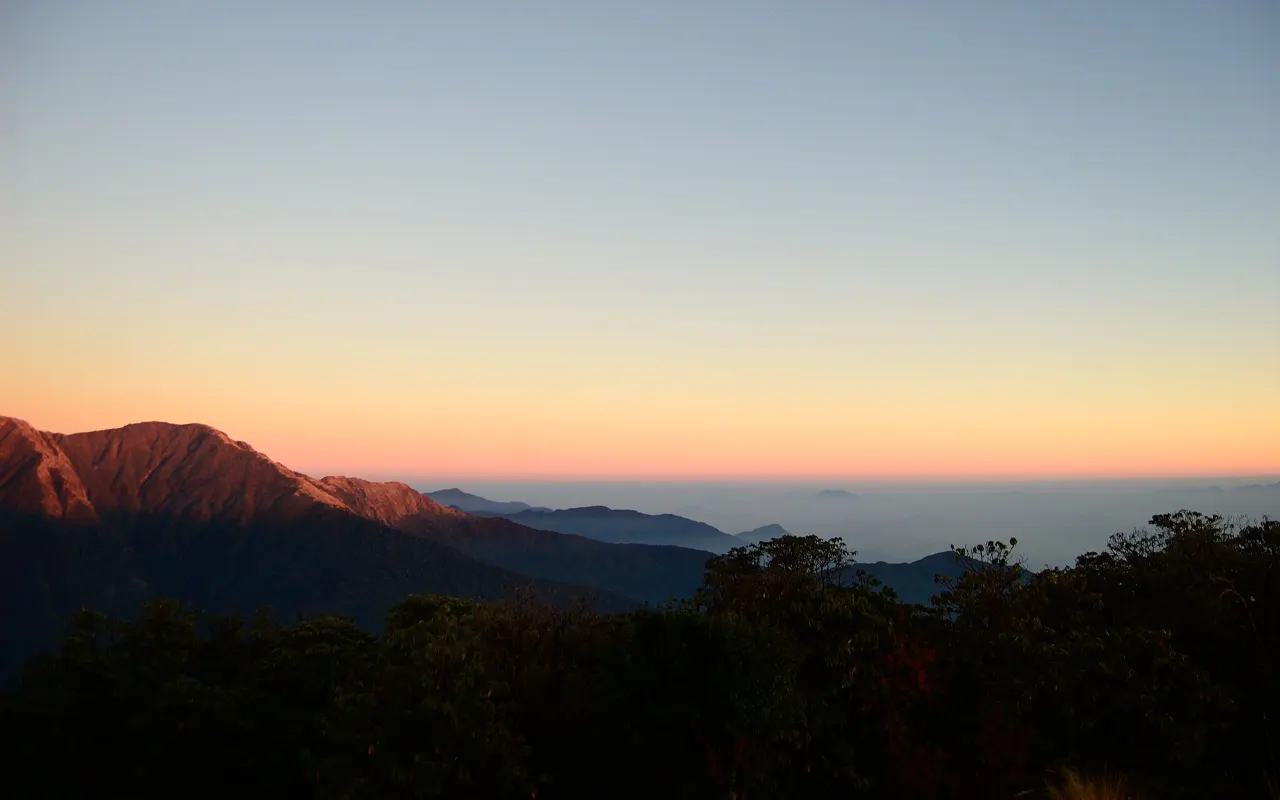
The autumn season is cool, clear, and gives beautiful mountain scenery. This season is likely to have early-morning ridge views, hence it is good for photography and scenic enjoyment.
Strong and well-prepared trekkers would be fine during winter (December-February), although more extreme temperatures, snowfall, and fewer services at lodges may pose a challenge.
Months June and August have plenty of greenery as it is monsoon season; however, there are also clouds, rain, and muddy tracks. There can be leeches in the lower forest, and it can be foggy on the higher ridges.
It is advisable to make arrangements flexible in terms of the days of travel, especially from Kathmandu to Pokhara, where road transfers may be influenced by weather conditions and traffic.
To find smaller crowds and less noisy lodges, look later in the month of November, early December, or early March. Finally, the most suitable mix of safety, comfort, and amazing mountain scenery is to be offered in autumn and spring.
Food, Hydration, and Altitude
Meals on the Mardi Himal Trek are simple, filling, and high in energy to support long walking days. Dishes that are served in tea houses include dal bhat, noodles, fried rice, soups, momos, eggs, pancakes, porridge, and tea or coffee.
Foods known to be particularly nutritious are Dal bhat, which provides balanced carbohydrates and protein in large amounts. There are a lot of vegetarian choices, and lodges are able to change the level of spices upon demand.
Proper hydration is important, especially on the days when the trekkers may become dehydrated due to the dry air that circulates in the high altitudes. One should take small and frequent sips of purified or boiled water. Bottled drinks are expensive at high altitudes because transport is difficult, so using water purification pills helps save money and reduce plastic waste.
Going above about 2,750–3,000 meters can increase the risk of altitude sickness. The symptoms will include headache, nausea, fatigue, dizziness, and disruption of sleep. The most reasonable course of action is the gradual pace, frequent pauses, frequent rehydration, and warm sleep. Treatment can best be addressed by descent in case of symptom aggravation.
One should not take alcohol during trekking nights because it may affect sleep and make the effects of the altitude worse. The Mardi Himal Trek can be enjoyed safely by taking care of food, water, and acclimatization to enjoy breathtaking mountain views.
Preparation and Fitness
Mardi Himal trekking would need both physical and logistical preparation. Begin 3 to 6 weeks of training with the emphasis on uphill walking, stair climbing and consistent cardio. Training of legs and core is necessary as downhill can cause strain to the knees, hips and back.
Try and test the footwear and backpack you are going to carry and break in your shoes before the trip. Pack a day pack that will simulate the weight you will have during the trek. When employing a porter, the day pack can be light.
The range of temperatures between sunny ridges and shadowy woods is the reason why layered clothing is necessary. Carry a warm layer, an insulated down jacket, gloves, a warm hat and a rain layer even in dry months.
Additional items like headlamps with spare batteries, water purification equipment, personal medication, trekking poles and sleeping bags make higher camps more comfortable.
Arriving in Nepal one day before the trek gives you time to relax, acclimatize and buy the final equipment. Through regular practice, correct packing, and the right state of mind, one can experience the beauty and challenge of the Mardi Himal Trek fully without undue stress and haste.
Permits and Visas for the Mardi Himal Trek.
You must have the right visa and permits in order to go to Nepal and trek in the Annapurna region. Tourist visas are provided at USD 30, USD 50, and USD 125 in Nepal for 15 days, 30 days, and 90 days, respectively, at Tribhuvan International Airport or overland border.
In the case of trekking, you are required to have an Annapurna Conservation Area Permit (ACAP) to facilitate conservation and local management. You will also need a TIMS card (Trekkers’ Information Management System) for this trek.
Himalayan Pathways will obtain all the necessary documentation for you so you don’t have to hassle over it. Rules can change, so share your passport details early to confirm all requirements during booking.
Always keep printed or electronic copies of your permits in your daypack because rangers or staff might demand to view them during the trek.
Under systematic permit management, you will have a chance to spend more time in the mountains, to concentrate on acclimatization, to wake up each morning, knowing that all the legal and conservation regulations are complied with.
Health & Safety
The safety during the Mardi Himal Trek is an everyday thing, not an emergency response. Guides maintain a slow speed, monitor your health, water, and food intake. The trek will consist of health gadgets like pulse oximeters and first aid kits.
The discomfort during the trek includes dehydration, blisters, and stomach tenderness. Drinking water regularly, washing hands, and treating blisters early are the most frequent preventive measures to avoid the majority of problems.
The weather in the mountains is quick to change. Keep your essentials easily accessible in your backpack, and stay close to your group if visibility is low due to clouds or fog. Keep out of the way and never walk by yourself at night.
The road travel needs also to be considered; the buses and jeeps are capable of being long and bumpy. Bring a light snack, water, and valuables.
In case of medical conditions, you should tell the guide about them and bring additional prescription medication. During the trek, choices are more valuable than equipment; sleep when you become tired, report early, and adhere to the slow and steady pace. This way, you can enjoy the full Mardi Himal Trek safely without risking your health.
Transportation
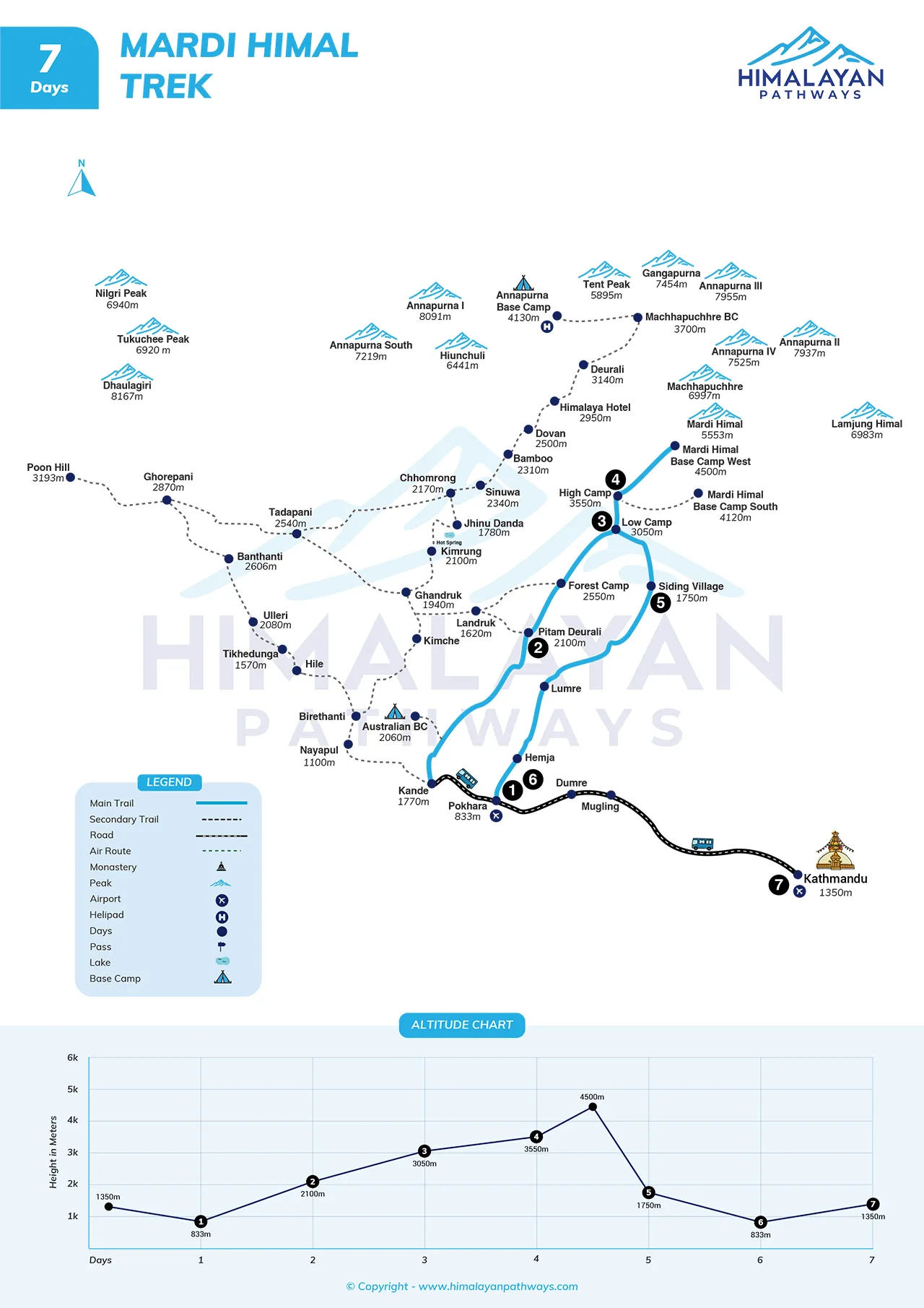
The 7-day Mardi Himal Trek is based on land transfer and short local drives so that it keeps its costs within reach. The tourist bus is normally used from Kathmandu to Pokhara, and this route covers 200km in about 7-8 hours, depending on road conditions and traffic. It takes approximately an hour to travel 27 km to Kande from Pokhara, where trekking begins.
After the high point day, trekkers descend to Siding and then return to Pokhara by shared jeep. Travel may be rough even over short distances, and hence the drive takes 3-4 hours.
There are flight options that can be made between Kathmandu and Pokhara, and they take 25-30 minutes and provide additional rest or acclimatization. Private vehicles can offer more comfort, flexible stops and a smoother ride with less motion discomfort.
Overland transfers make the Mardi Himal Trek affordable and, at the same time, enable you to enjoy local scenery, including village scenery. The selection of a suitable mix of bus, jeep, or flight will bring in the nice beginning and ending of the trek. Effective transport planning by Himalayan Pathways lessens fatigue, assists during acclimatization, and enables the you to concentrate on the Mardi Himal Trek experience and not the logistics.
Travel Insurance
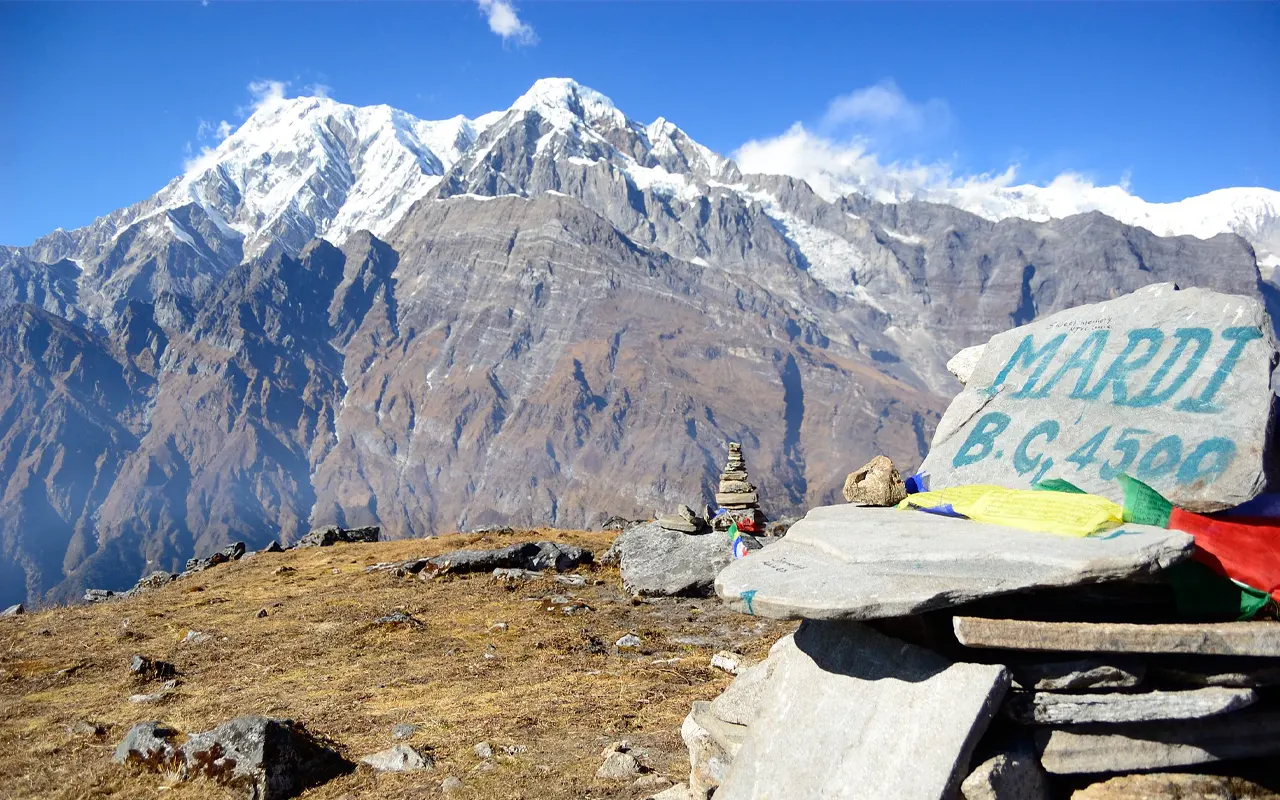
The Mardi Himal Trek requires travel insurance. The trek goes to 4,500 meters and involves remote areas of the mountains. The insurance has to cover medical expenses, emergency evacuation, and helicopter rescue in case of necessity.
It has to be made clear that the policy covers high-altitude trekking of a minimum of 4,500 meters and above, because not all adventure or low-cost insurance covers high-altitude trekking.
The insurance should also cover interruptions of a trip, additional nights, or loss of baggage, and in particular, in case of special trekking equipment.
Keep your policy number, emergency contacts, and claim instructions on your phone and print them in case of insufficient Internet access. Disclose this information to a close family member.
When properly covered, you will be able to explore the Mardi Himal Trek without any fears of financial and medical expenses, as you get to explore the mountains without any worries of issues.
Alternative Routes
The Mardi Himal Trek starts at Kande and finishes at Siding, which gives a neat ridge up and valley down experience. There are also optional options like beginning with Phedi or Dhampus, cultural villages, and an easy warm-up land. In order to increase elevation gradually, some trekkers stay overnight either at Forest Camp or Badal Danda.
You can visit Mardi Himal Viewpoint at about 4,000 m instead of Base Camp for a shorter hike with great mountain views. You can descend to Lwang village to experience the culture and to have a view of the tea garden.
Himalayan Pathways offers you to make your route as per your time, fitness, or weather.
Irrespective of the trail, a safe pacing and acclimatization are the priority, and all trekkers are going to enjoy the sunrise sights, and high-mountain vistas, which are the main characteristics of the Mardi Himal Trek.
Extra Expenses
There might be additional expenses for drinks, snacks, showers, charging, and Wi-Fi, even with full board trekking. USD 1-3 per device charge or Wi Fi session, and a few dollars to take a hot shower are common practices in tea houses, and the price is higher with the increasing elevation.
It is necessary to carry a small amount of cash in Nepali rupees, because there are no ATM and card transaction is not always accepted in the trail. The use of power banks, phone airplane mode, and water purification tablets will save on unnecessary expenses.
Additional services, such as porter upgrades, personal transportation, increased hotel stays at Kathmandu or Pokhara, and guide or porter tips, are optional.
At the more advanced camps, budgeting for small comforts such as additional tea, a warm dessert, or a blanket rental can enhance the quality of sleep. Having a realistic financial plan will make the Mardi Himal Trek comfortable without any stress, and you will be able to concentrate on the scenery, the ridge views, and the high-mountain experience.
Language & Communication
Nepali is the main language on the Mardi Himal Trek, and local ethnic languages are also spoken in the villages. Simple English is common in trekking lodges, and you can order food, hot water, and ask questions in English. Such small expressions as Namaste (hello) and Dhanyabad (thank you) make people feel comfortable and smile.
Knowing numbers between one and ten is useful in making purchases or counting time, and talking fluently and with very short sentences will make communication easier. Guides facilitate communication between the language of the lodge owners, jeep drivers, and porters, which is especially beneficial during the Mardi Himal trek.
The reception of mobile is low in the higher camps, so maintain important details in written form and store guide and hotel contacts. Interactions are facilitated by patience, friendliness, and courtesy in communication that bring genuine experiences.
Clearly, positive interactions will increase the village interaction, facilitate ease in the logistics, and make the Mardi Himal Trek more fruitful.
Internet, Charging Facilities, and Mobile Network.
The Mardi Himal Trek is a place where connectivity is an extremely variable aspect depending on altitude. There are good mobile signals in Pokhara, but they become patchy as you ascend to the higher camps. The leading network providers are NTC and Ncell, which have quality services in the lower sections but no coverage at the High Camp or Base Camp.
Wi Fi is often paid for by the lodges, but it may be influenced by the altitude, weather, and network instability, as well as the power supply.
Availability is also different in terms of charging devices. There are numerous tea houses where it is possible to charge the devices with electricity or solar power, and sometimes it is free, but mostly it comes at a small fee. The cold reduces battery performance, and therefore, when sleeping, keep phones and power banks in jackets or sleeping bags to keep them warm. Battery life can be increased with the use of offline maps, dimming screens, and shutting off backgrounds.
Himalayan Pathways recommends that people consider connectivity as an added value and not a need. Purchase a local SIM to have basic signal and rely on lodge Wi Fi as a backup. In this style, you will be close enough to be safe and still be experiencing the true views, mountain atmosphere, the ridges, and the evenings in the lodge full throttle.
Don’ts on the Mardi Himal Trek
People, culture, and nature should be respected in order to make the Mardi Himal Trek safe and enjoyable. Littering should be avoided; bring small waste like wrappers to Pokhara and dispose of it properly.
Go slowly, especially at higher altitudes and between Low Camp and High Camp, to avoid problems. Observe the suggestions of your guide in regard to rest time and turnaround time.
Alcohol should not be used as it will interfere with sleep and mask the symptoms of altitude. Respect tea house rules, including limits on fuel and hot water, and avoid taking long showers during busy evening hours.
The bargaining should not be aggressive; reasonable prices can contribute to the lives of locals. Lastly, the mountain weather should not be underestimated.
These are the rules you must follow to preserve the environment, contribute to the local population, and enjoy the trekking journey in a safe and comfortable way with your mindful and conscious experience of each step of the Mardi Himal route.
Trip Extension
A large number of people continue their journey beyond the Mardi Himal Trek to experience Nepal. It can be followed by further trekking, cultural, or rest in Pokhara or Kathmandu. In trekking, Poon Hill has the classic sunrise scenery, whereas Annapurna Base Camp has the long and high immersive mountain experience.
The extensions in Pokhara are leisure days where people boat in Phewa Lake, visit spas, climb view points, and spend evenings at the cafe. Kathmandu has cultural extensions that enable one to explore heritage squares and temples as well as local markets before leaving.
Chitwan National Park offers canoe rides, jungle walk and wildlife spotting for nature lovers. The adventure enthusiasts can have the fun of paragliding, ziplining, or brief sightseeing hikes at Pokhara.
The additional night in Pokhara will be spent on a recovery, shopping, or sightseeing, whereas the Kathmandu evening will provide nightlife and dinner before a flight.
Himalayan Pathways customizes the trip based on your interests, fitness level, and schedule. With such add-ons in place, travelers can use a few days of Mardi Himal trekking to make a more complete Nepal experience with the right mix of adventure, culture, and relaxation without complicating logistics.
Photography in the Mardi Himal Trek and Drone Rules.
There are incredible photo views of Mardi Himal Trek, such as light and sunsets of forests and ridges, and a panorama of sunrise at the Base Camp. High-altitude cold air depletes batteries fast, and cameras should be kept warm and dry. Bags or protective pouches should be used to keep them from moisture and dust.
Do not disrespect locals while taking pictures. Ask people for permission to take photographs, especially the children and the elderly, and avoid taking photographs using flash in places where there is no light. Always keep out of private properties and do not block the ways when shooting in villages.
The use of drones is strictly controlled in the Annapurna Conservation Area. Drone filming must be pre-approved by NTNC, particularly documentary filming. Small drones are not an exception since rules have to be followed, and the processing of permits may become time-consuming.
The photos should be taken by following the rules, respecting people and wildlife, and thus the true spirit of the area, being safe. Respectful photography makes the experience better for everyone and helps preserve a positive memory of the Mardi Himal Trek and the Himalayas.
Tips for First-Time Visitors
Mardi Himal Trek is one of the perfect first-time Himalayan treks that one can experience in a very limited time period. The first step is to come with an open mind, mountain weather dictates the speed, and the trail takes time. Be light-minded but not heavy-handed, wear multiple layers in different weather conditions, and have a rain jacket available.
Carry a little power bank, headlamp, and basic first aid kit. On steep downhill slopes, trekking poles will come in handy.
Begin gradually, especially during the first two days, in order to save energy in the ridge and summit parts. Water and carbohydrates must be taken to sustain energy. Sleeping habits are important. Keep dry clothes and warm water bottles in case of need, and do not use the phone at late hours in order to preserve the quality of sleep.
Consult your guide to get information about the speed, perspective, and lodge habits. Report symptoms at an early stage, even of minor ones to prevent problems.
Finally, let the walk calm your mind and enjoy the sounds of the ridges, forests, and tea houses around you. These tips will make the Mardi Himal Trek more than a trek; it will become a journey that will be remembered.
 Unbeatable Holiday Offers - Save Up to 20% on Your Next Adventure!