Jiri To Everest Base Camp Trek Difficulty
Jiri to Everest Base Camp Trek is generally classified as moderate to strenuous since it is long with numerous steep ups and downs. You spend over two weeks walking on stone steps, through the forest and mountain.
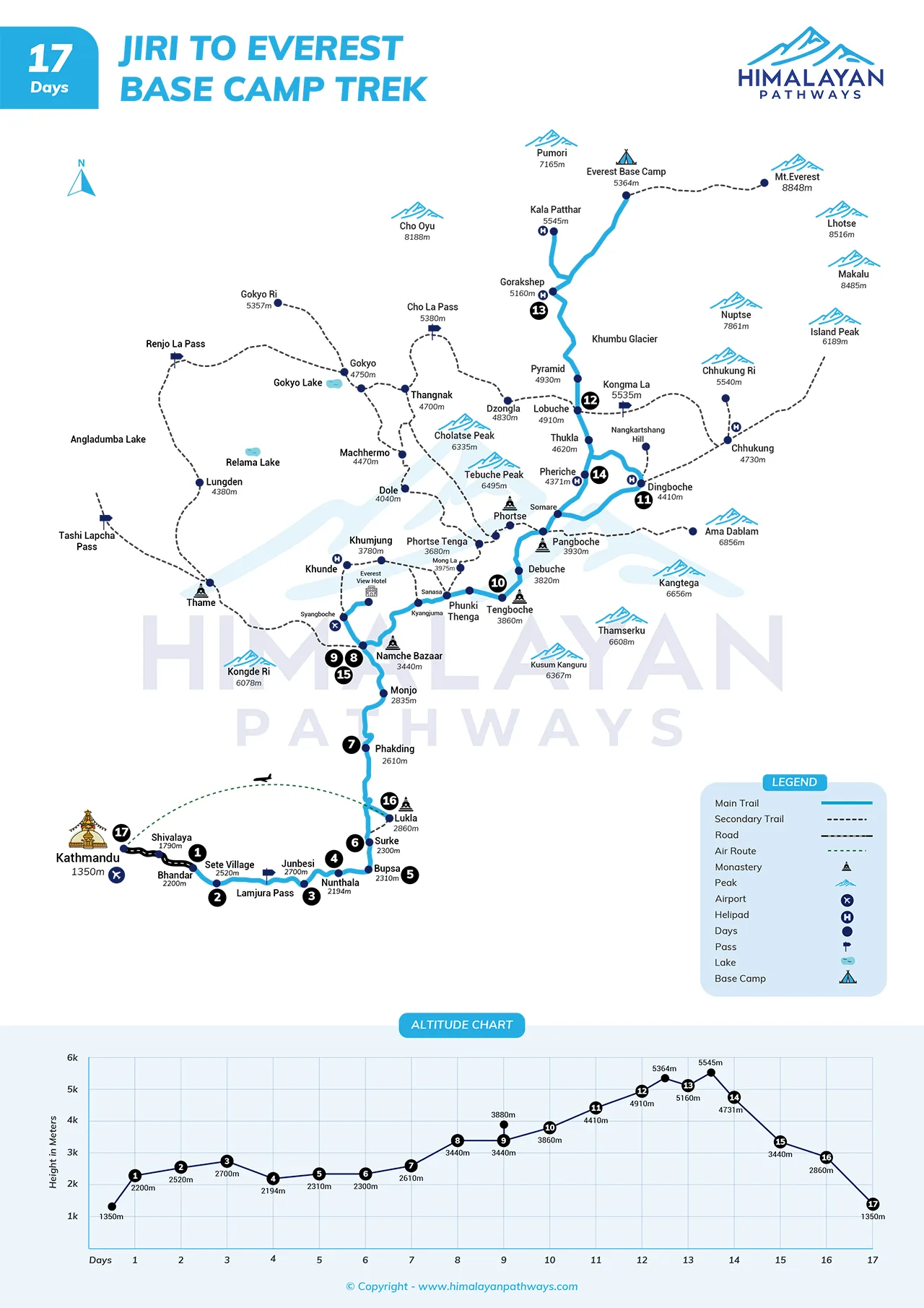
In the initial part, you cross high passes such as Lamjura La 3530m/11581ft, which may seem exhausting even for fit trekkers. The positive side is that the slower rate of altitude gain is helping your body to adapt as compared to the short Lukla start.
This is not a trek that requires climbing; however, it requires good stamina and a stable attitude. The walking time is 5-7 hours per day, and after Namche, the thin air is felt. Even little hills are more difficult at 5,170 m / 16,962 ft, the highest sleeping point, Gorak Shep. Most first-time trekkers make it to the Base Camp of Everest with preparation, the appropriate pace, and assistance from the Himalayan Pathways.
Weather and Best Season
On the Jiri to Everest Base Camp Trek, the weather varies significantly as you go through hot hills and cold valleys. Spring (March-May) and autumn (late September-November) are the best seasons for this trek.
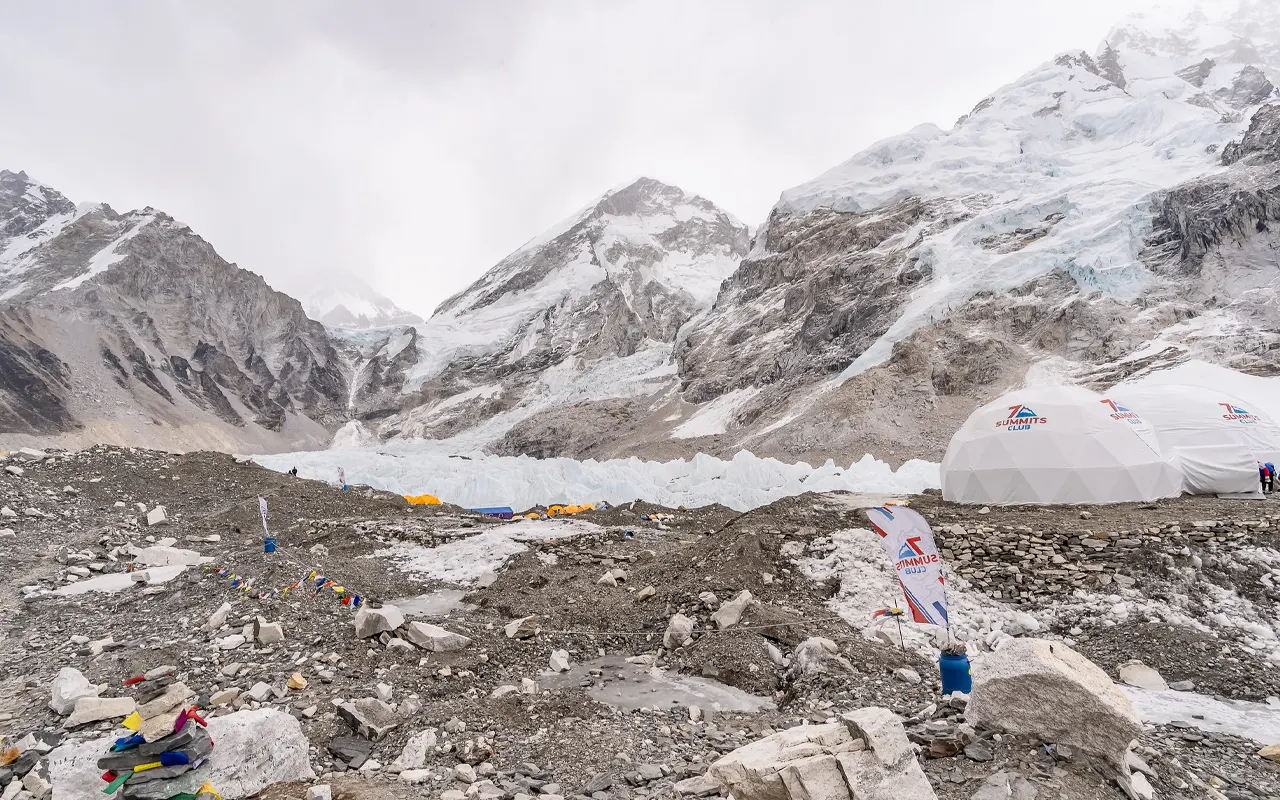
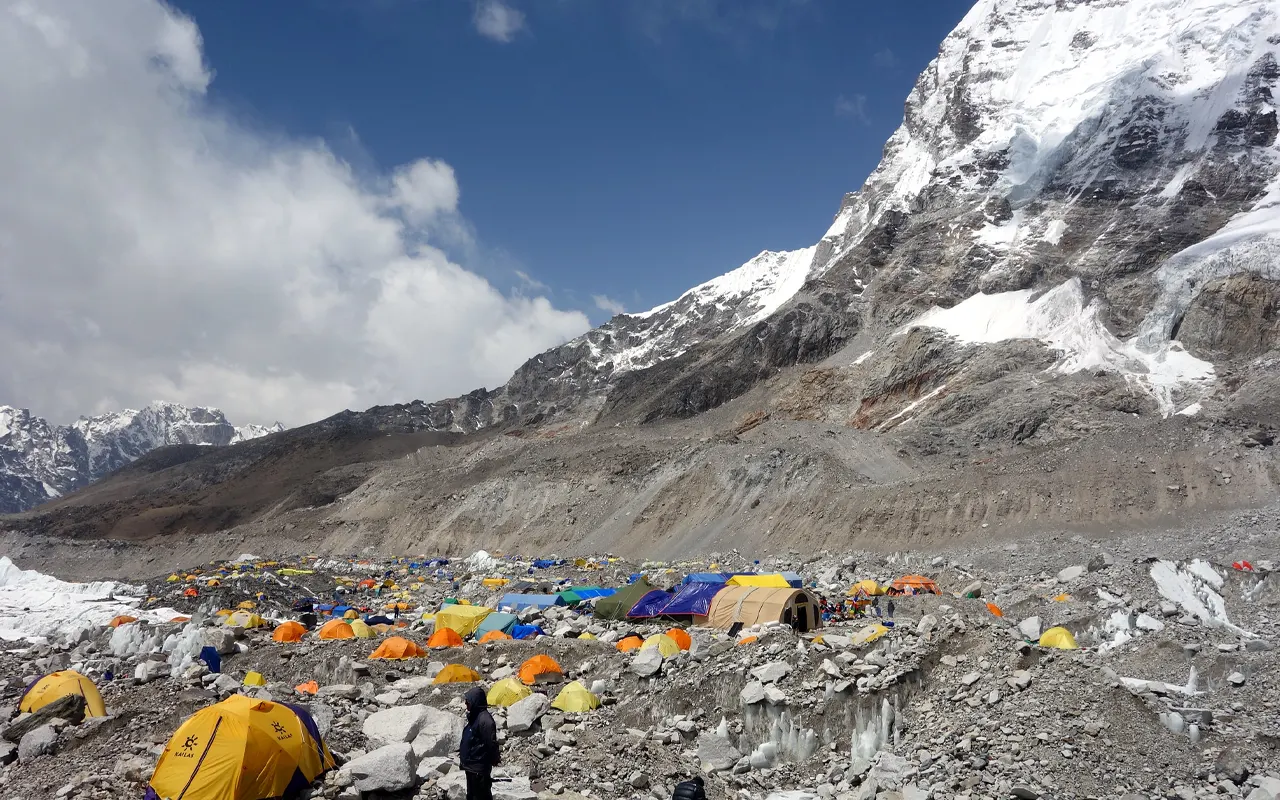
During spring, the lower villages are warm and flowery with rhododendron forests, whereas the higher regions, such as Dingboche at 4,410 m / 14,469 ft, are cold in the morning and evening. Spring can be exciting since there can be climbing teams and tents at the Everest Base Camp.
Autumn is also known for clear, mountainous, sharp views, particularly in October, but night is colder.
Monsoon (June-August) is not good since trails are muddy and slippery during the Jiri part due to rain, and clouds easily obscure the views. Winters (December-February) are quite chilly, and even the possibility of snow on the passes, such as Lamjura La, 3,530 m / 11,581 ft.
To the majority of trekkers, spring or autumn makes the Jiri to Everest Base Camp Trek the safest.
Food & Drink During the Trek
In the Jiri to Everest Base Camp Trek, the majority of meals are taken in teahouses, and the food is basic, hot, and substantial. The usual meal is dal bhat, rice, lentil soup and vegetables, and it is usually complemented with free refills, a good post-workday meal.
You will also have noodles, fried rice, soups, momos, potatoes and occasionally pasta or pancakes. The typical breakfast is porridge, eggs, toast, Tibetan bread or muesli. There is meat in lower locations, yet most of the trekkers opt to have vegetarian food after Lukla.
Soft drinks like black tea, milk tea, ginger-lemon-honey tea, coffee and hot chocolate are available. The higher you go, the higher the prices are, particularly around Gorak Shep, which stands at 5,170 m/16,962 ft.
In the case of water, boiled water in lodges is safer to use or treat the water yourself with purifying tablets. The guides at Himalayan Pathways can assist you in making safe choices; as a result, you would remain strong to the end of the Jiri to Everest Base Camp Trek.
Altitude Sickness and Suggestions
The Jiri to Everest Base Camp Trek has a real threat of altitude sickness because you are extremely high, such as the Everest Base Camp of 5,364 m / 17,598 ft and the Kala Patthar of 5,545 m / 18,192 ft. The Jiri is beneficial as you get up gradually, giving your body time to acclimatise.
Nevertheless, you have to walk slowly, consume plenty of safe water and eat adequately. The most frequently observed symptoms are a headache, fatigue, insomnia, and lack of appetite. Do not go higher, in case the symptoms get worse, such as vomiting, difficulty breathing at rest, confusion, or stumbling.
Resting or going down is the best remedy. Another question that is asked by many trekkers to their doctor prior to the trip is about Diamox. Himalayan Pathways guides will look out for warning signs and assist you in making a safe decision, hence you will be safe and have fun on the Jiri to Everest Base Camp Trek.
Preparation and Fitness
The Jiri to Everest Base Camp Trek would be a lot more fun with good preparation. You don’t need to be an athlete, but 8-12 weeks of preparation before your trip will make it easier. Focus on cardio-based activities, such as walking up hills or jogging, cycling, climbing stairs, and strengthening the legs and core. Go on hikes covering 5-6 hours with a daypack.
Mental preparation is important as the weather may change easily, you will have minimal facilities and hours of walking.
Break in your boots and take a few layers for warm layers. Consumption of water and healthy eating during training is important. Himalayan Pathways assists you with pacing, planning and local guidance. Through consistent training and a positive mind, the majority of individuals will successfully manage to undertake the Jiri to Everest Base Camp Trek without problems.
Visa and Permits
The correct visa and permits are required before the start of the Jiri to Everest Base Camp Trek. A Nepal tourist visa is usually issued to most of the visitors at Kathmandu on arrival, and carrying passport photos and cash is advisable.
Trekking permits needed for this trek are the Gaurishankar Conservation Area permit, Sagarmatha National Park entry permit and the Khumbu Pasang Lhamu Rural Municipality fee. Checkpoints along the path will require the presentation of such documents, particularly around Monjo before entering the park on the path to Namche at 3,440 m / 11,286 ft.
Keep permits dry and safe in a waterproof pouch. Himalayan Pathways will get you the permits prior to, so you need not waste time and stress in Kathmandu.
Having the documents prepared, you will be able to enjoy the villages, mountains and experience everything going on in the Jiri to Everest Base Camp Trek.
Health & Safety
The Jiri to Everest Base Camp Trek is health and safety conscious since you are walking long distances and reaching up to high altitudes. Use safe water: either boiled or purified, and wash hands frequently to prevent stomach troubles. Consume fresh and hot food and do not eat raw salads.
Wear sunscreen and sunglasses to protect yourself against the sun as UV is more intense at high altitudes, particularly near Gorak Shep at 5,170 m / 16,962 ft. The weather is unpredictable, and you should always have a waterproof jacket and warm layers in your bag.
Care about your feet and wear good socks, and treat the injured spots early before they can form a blister. In case you experience the signs of altitude sickness, inform your guide immediately.
You can enjoy the experienced support and the gradual pace plan with Himalayan Pathways, and this will reduce risk. The Jiri to Everest Base Camp Trek is safer and more enjoyable because of simple habits, which include hydrating, keeping clean, wearing layers, and listening to your body.
Transportation
Jiri to Everest Base Camp Trek begins with a lengthy road journey from Kathmandu to Jiri or sometimes up to Shivalaya/Bhandar, depending on the basis of the road conditions. The distance is approximately 187km, and it can be reached in 8-10hours traveling by bus or in a shorter time in a personal jeep.
Once at the trailhead, transportation becomes easy: it is simple to walk. In the primary trekking path, there are no roads until Lukla is reached. On the route, you will come across porters and pack animals carrying stores, whereas you will be making your way with your two legs. This gradual pace is one of the reasons why the Jiri to Everest Base Camp Trek is a unique experience, as you experience how the scenery is transformed day by day.
After the trek, you fly back to Kathmandu at an altitude of 2,840 m / 9,318 ft from Lukla. Weather can put a hold on flights, and it is prudent to have an extra buffer day. Himalayan Pathways assists in scheduling road transportation and air travel, and helps you navigate any kind of delay, thus making your journey hassle-free.
Travel Insurance
The Jiri to Everest Base Camp Trek is a trip that requires travel insurance since it will be very costly to evacuate from remote high-altitude regions. Your policy must explicitly include trekking above 5,000 m / 16,404 ft because the trail goes to Everest Base Camp at 5,364 m / 17,598 ft and Kala Patthar at 5,545 m / 18,192 ft.
Emergency medical care and helicopter evacuation are the most valuable cover as they may cost thousands of dollars in case of a serious injury or severe altitude sickness. Trip delay must also be covered, as flights between Lukla can be cancelled in case of bad weather.
Look carefully at the insurance policy, as certain standard policies have altitude restrictions unless you purchase an adventure upgrade. Always have a digital and a printed version of your insurance information, together with the emergency phone number.
Having the appropriate insurance, you are free to go to Jiri to the Everest Base Camp Trek without worry.
Alternative Routes
The Jiri to Everest Base Camp Trek is a classic overland trip, yet there are numerous alternative paths and extensions to suit the purpose.
Some prefer to trek from Jiri to Everest Base Camp and back by plane at Lukla, which is 2,840 m / 9,318 ft, which saves time on the way back.
Others cut the initial portion by taking a drive to Salleri or Phaplu and entering the route at Kharikhola, eliminating the number of days spent on the trek, but retaining some of the classic atmosphere.
For people who have additional energy and time, it is possible to include the Gokyo Lakes trail and cross Cho La Pass 5,420 m / 17,782 ft, which offers breathtaking views and is less crowded.
Side trips are also popular, such as the short hiking to Chhukung at 4,730 m / 15,518 ft.
Himalayan Pathways can make the Jiri to Everest Base Camp Trek suit your time, fitness and interest so that it comes out to be an authentic experience.
Your Extra Expenses
Some of the expenditures are not covered in the package during the Jiri to Everest Base Camp Trek, and it is hence worth planning. In Kathmandu, you buy your lunches and dinners. Drinks, snacks, bottled or boiled water, hot showers, Wi-Fi, and device charging are also extra on the trail.
The higher the altitude, the higher the prices; even tea and water are costly near Gorak Shep at 5,170 m / 16,962 ft.
A phone or a camera can also be very expensive to charge over a series of days. Another cost that is expected, and a show of appreciation to your guide and porter, is tipping them.
There is also a high rate of spending money on souvenirs in Namche Bazaar at 3,440 m / 11,286 ft. by many trekkers.
It is prudent to bring along adequate Nepali rupees in Kathmandu because the ATMs are not reliable beyond Kathmandu.
Language & Communication
The issue of language is not a major concern in the Jiri to Everest Base Camp Trek, particularly when one is trekking with the guide. In the lower Jiri part, Nepali is the local language; higher up in the Khumbu above Namche at 3,440 m / 11,286 ft., the Sherpa (a Tibetan-based language) is used more often, particularly in major trekking villages.
English is also used widely in lodges, shops and by guides. It is nice to learn some words such as Namaste (hello) and Dhanyabad (thank you), which are welcomed and generally result in smiling.
Mobile Network, Internet & Charging Facilities
The Jiri to Everest Base Camp Trek has poor connectivity, something that most trekkers find refreshing. In the Jiri part, cell phone coverage is minimal and can be found on high ridges frequently.
Once inside the Khumbu, basic phone connections are available in Lukla and Namche Bazaar at 3,440 m / 11, 286 ft; primarily with Nepal Telecom. The internet is mostly available in the form of Everest Link Wi-Fi in lodges above Namche, such as Dingboche at 4,410 m / 14,469 ft and Lobuche at 4,940 m / 16,207 ft, but it is slow.
Phones and cameras can be charged at a fee in the dining halls, and electricity is usually free and sourced through solar power.
It is quite convenient to carry a power bank, and this is particularly useful once around Gorak Shep with a height of 5,170 m / 16,962 ft. Expect little connectivity once you’re on the Everest Base Camp Trek.
Don’ts on This Trip
The Jiri to Everest Base Camp Trek has a couple of significant rules that one can follow without breaking. Be not in haste, or competition with others, because you must go slow, steady up-hill.
Consumption of alcohol or smoking in high altitudes, such as Dingboche at 4410 m / 14469 ft, aggravates the symptoms of altitude. Altitude sickness can be easily missed; it is always safer to go down than to continue on.
Do not litter and bring all rubbish along, and save the mountains. Respect local culture by going clockwise around mani stones and take off your shoes in monasteries, including Tengboche on 3,870 m / 12,697 ft. level.
Do not walk alone at night or outside the main trail without notifying your guide. Avoid taking pictures of people without their consent. Himalayan Pathways focuses on these few guidelines in order to make the Jiri to Everest Base Camp Trek a pleasant and responsible experience among the trekkers.
Trip Extension
Having completed the Jiri to Everest Base Camp Trek, a lot of people decide to spend more time in Nepal. It is a common activity to spend a couple of relaxing days in Kathmandu and enjoy heritage sites and recovery massages.
Other places of interest include Pokhara, which has lakeside and warmer weather, as opposed to Everest Base Camp, and wildlife lovers can be taken to the Chitwan National Park, where they can go on jungle safaris and see the rhinos.
Those with additional time and funds can find a trip to Bhutan or Tibet to offer additional cultural experiences. You can even opt to go on another short trek, such as Poon hill as a means of rest.
These extensions will enable your body to rest and see another face of Nepal. Himalayan Pathways would be able to take care of your post-trek arrangements to ensure that you keep on with the journey.
 Unbeatable Holiday Offers - Save Up to 20% on Your Next Adventure!