How Difficult is the Everest Gokyo Chola Pass Trek?
Everest Gokyo Chola Pass Trek is regarded as a difficult high-altitude trek and is more suitable for trekkers who are well-fitted and have minimal experience in trekking. You take approximately 5-8 hours daily walking on rocky and rough mountain paths with lots of up and down on the mountain.
The challenge primarily consists of the elevation since the trail leads to Kala Patthar, 5,550 m / 18,209 ft and passes through Cho La Pass, 5,420 m / 17,782 ft. The air at these heights is thin and thus, walking in it may feel tiring, even making one move slowly.
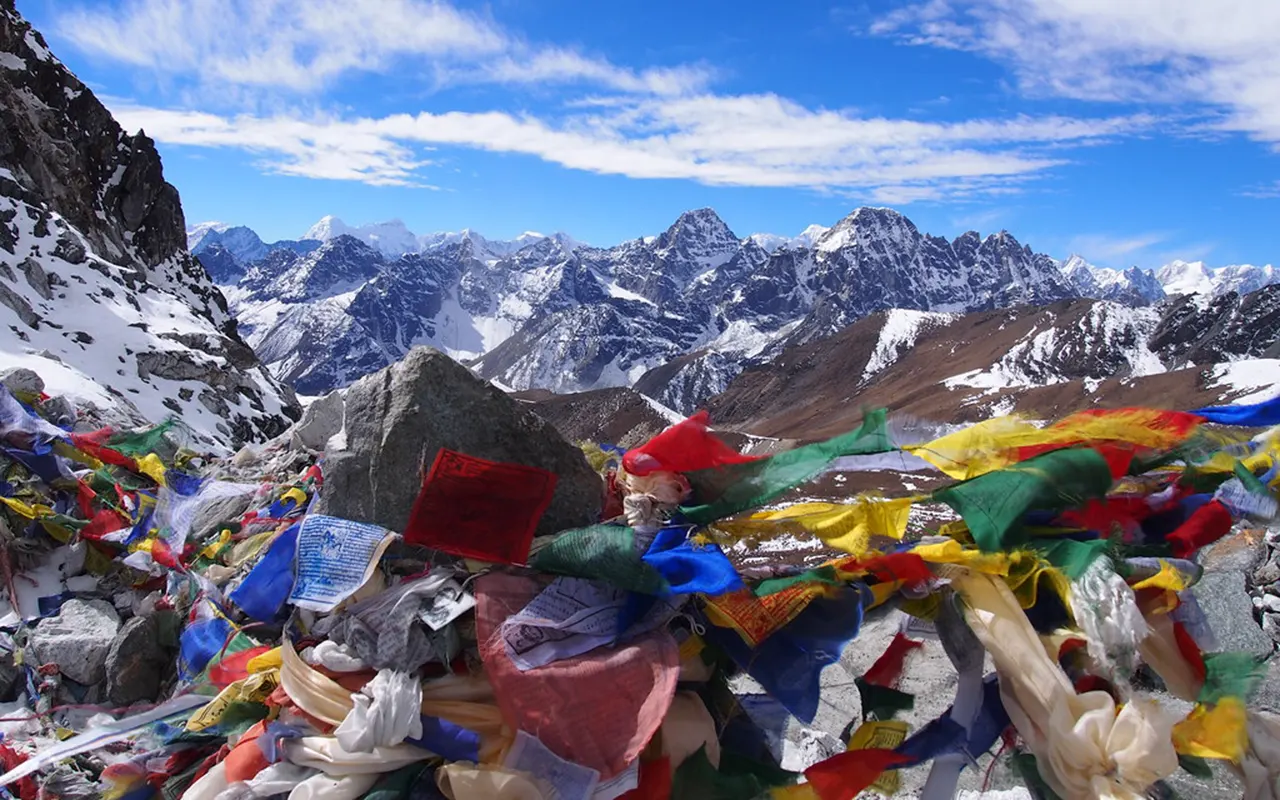
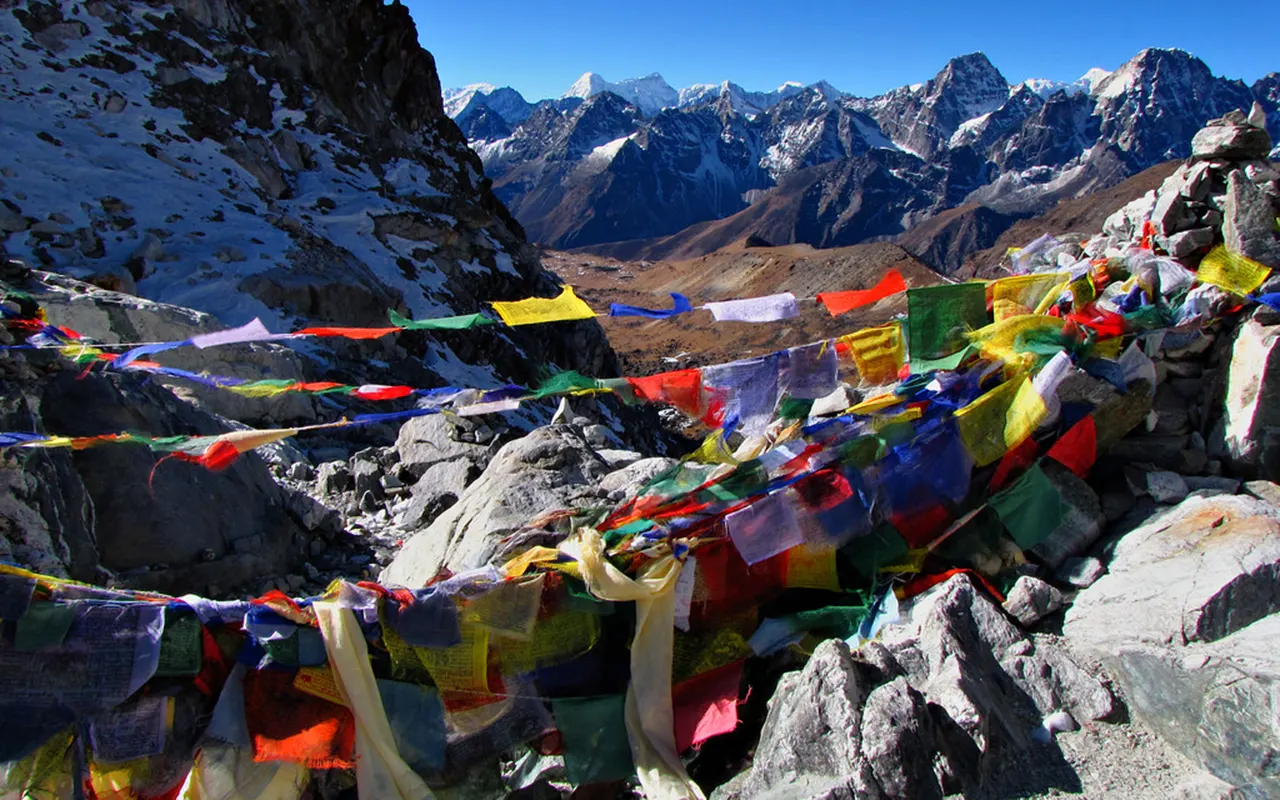
The Cho LaPass is steep and is also snowy or icy, and might need the application of micro-crampons. There are no technical climbing skills required, though. Through adequate acclimatisation, a gradual trek, and psychological will, trekkers can finish the Everest Gokyo Chola Pass Trek and consider it as a challenge, yet a very fulfilling one.
Weather and Best Season
Everest Gokyo Chola Pass Trek is done in spring (March to May) and autumn (September to November). These seasons bring about stable weather and clear skies, as well as great views of the mountains.
During spring, the weather is pleasant, the flowers start to bloom along the trails, and the time of day is extensive. Autumn is associated with cool weather, good visibility and easy trekking. At Namche Bazaar (3,440 m / 11,286 ft), the day temperatures do not exceed 10 °C to 20 °C during the day, whereas nights at elevations above 4,790 m (Gokyo) are considerably lower.
The rainy season (June to August) is characterised by heavy rain and clouds, and delays at the airport, leading to a hard time trekking. The winters (December to February) are sunny but very cold and snow-white, particularly in Cho La Pass (5,420 m / 17,782 ft). The spring and the autumn are favourable to the majority of trekkers.
Food & Drink during the Trek
The meals are provided in tea houses along the way during the Everest Gokyo Chola Pass Trek. The food is not complicated;it is very filling and keeps your body full of energy to help you survive long trekking days.
A typical and widely eaten dish is dal bhat that consists of rice, lentil soup, vegetables and pickles, and is served in unlimited refills. The other choices are noodle soup, pasta, fried rice, momos (dumplings), porridge, eggs, and pancakes.
The higher you are, the smaller the menu available, but the food is still sustaining. A lot of trekkers prefer vegetarian food because meat is transported from low altitudes, and this does not necessarily mean that it is fresh.
Hot drinks such as ginger tea, lemon tea, and milk tea are very common as far as drinks are concerned. To remain hydrated and healthy at high altitude, drink boiled water or purified water only.
Altitude Sickness and Suggestions
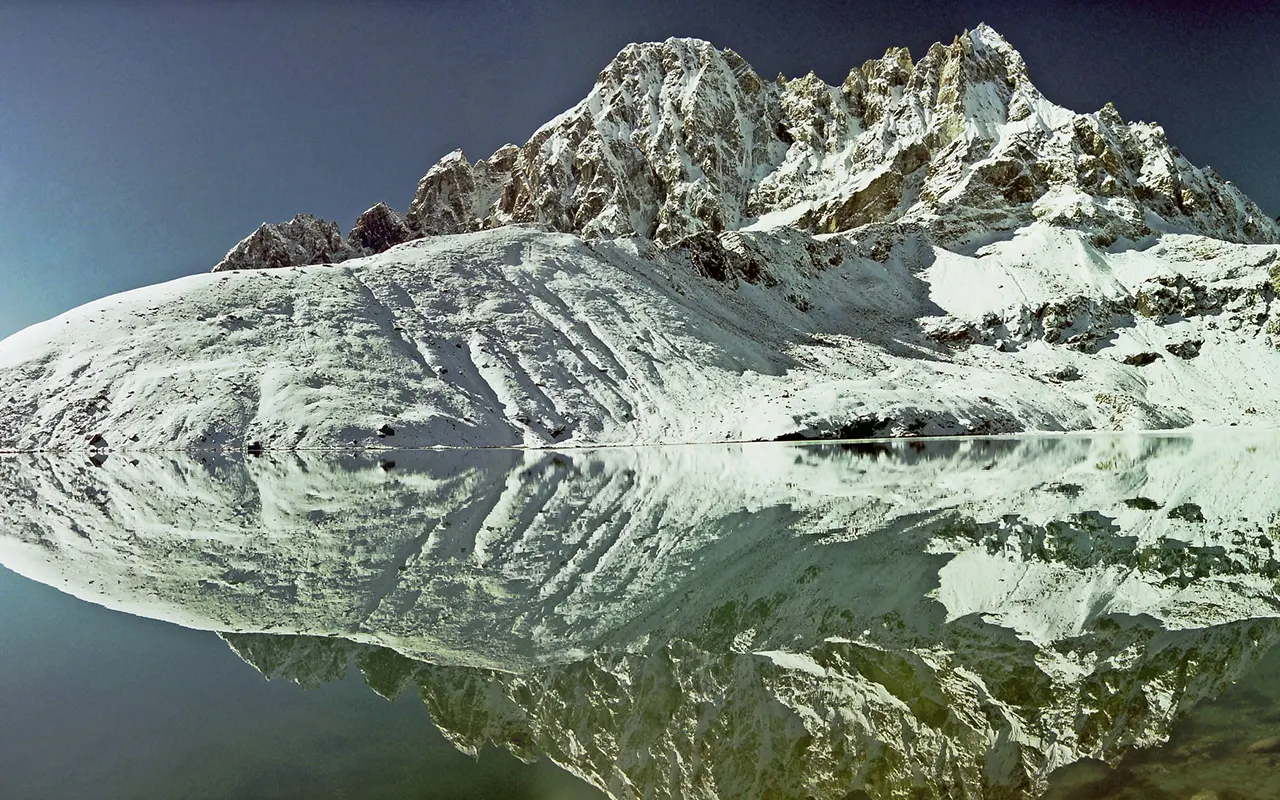
The Everest Gokyo Chola Pass Trek has a significant issue of altitude sickness since the path remains above 3,000 m / 9,843 ft throughout most of the days. Acute Mountain Sickness (AMS) is characterised by a headache, nausea, lack of appetite, dizziness, and insomnia. The symptoms may be found in such locations as Namche Bazaar (3,440 m / 11,286 ft) or Gokyo (4,790 m / 15,715 ft).
The most effective prevention is gradual ascending and correct acclimatisation. Take a lot of water, eat better, and no alcohol or smoking. Slowly going up and down the mountain, by taking the rule of trek high, sleep low, can get your body accustomed to it.
Some trekkers use Diamox only after visiting a doctor. In the event of an increase in symptoms, the most effective way out is to go down the mountain or undergo a helicopter evacuation. Everest Gokyo Chola Pass Trek guides are medically trained to identify AMS, and they will make your safety a priority in all situations.
Preparation and Fitness
The Everest Gokyo Chola Pass Trek is much easier with good preparation. This is a trek that is hard to undertake. You will need to begin training at least 8-12 weeks before the trip. Pay attention to developing cardiovascular health by hiking, jogging, riding a bicycle, or climbing stairs. Do long walks with a backpack to trainfor the daily trekking of 6-7 hours. Legs and core strength training are used to assist with steep descents and ascents.
The psychological training is also a major factor because cold weather, basic facilities, and weather delays may be quite demanding.
Ensure that your trekking shoes are of good quality and have been sufficiently broken in, and that you test your equipment before the trip. By being in shape, ready, and in the right mind, you can enjoy the success of the Everest Gokyo Chola Pass Trek.
Visa and Permits for the Everest Gokyo Chola Pass Trek
The foreigners looking to join the Everest Gokyo Chola Pass Trek will be required to have a Nepal tourist visa and two trekking permits. A Nepal visa is available upon landing at Kathmandu Airport, and as long as your passport is valid for at least 6 months.
In the case of trekking permits, the first is the Sagarmatha National Park Entry Permit, which is needed to enter the Everest region, which is near Monjo. The second one is the Khumbu Pasang Lhamu Rural Municipality Permit, which is typically acquired in Lukla (2,840 m / 9,318 ft). This region does not need a TIMS card. These authorisations are inspected at various stages of the trail.
Himalayan Pathwaysmakes all the permits for you so that you don’t have to engage in the hassle of documentation. You should always bring your permits on the trek to prevent wastage of time.
Health & Safety
In the Everest Gokyo Chola Pass Trek, health and safety are very crucial. Good hygiene is a way of avoiding stomach issues. You should wash your hands frequently and consume boiled or treated water only. Consume freshly cooked food and do not consume raw vegetables.
Taking the trek with a guide is much safer, particularly in the high and remote regions such as Cho La Pass (5,420 m / 17,782 ft). Wear heavy boots and carry trekking poles to keep the balance on a rocky or icy path. The altitude will change the weather very fast; therefore, warm clothes and a rain jacket should be included in the daypack.
The sun is very strong at such locations as Kala Patthar (5,550 m / 18,209 ft), so sunscreen and sunglasses become very necessary. The guides have oxygen monitors and first aid kits, and in case of necessity, a helicopter rescue. A well-managed and safe adventure by Himalaya Pathways, the Everest Gokyo Chola Pass Trek is a safe journey with sensible precautions.
Transportation
The means of transportation in the Everest Gokyo Chola Pass Trek include driving and flying. The trip is typically started by a domestic flight from Kathmandu or Manthali to Lukla (2,840 m / 9,318 ft). It is a scenic and exciting 30–35-minute flight, which is subject to weather. In high seasons, passengers can travel by road for 4-5 hours to Manthali Airport, and then fly to Lukla.
The only means of transport in the Everest area is on foot, since there is no road in Lukla. Porters and pack animals transport supplies.
The trek ends with flying down from Lukla to Kathmandu (1,400 m / 4,593 ft). The weather could trigger flight delays, so it would be prudent to have an additional buffer day. Most of the transport is handled by Himalayan Pathways in order to have a hassle-free trekking experience.
Travel Insurance
The Everest Gokyo Chola Pass Trek mandatorily require travel insurance since you will be hiking in remote regions with high elevations. It goes as far as Kala Patthar at 5550m 18209 ft, where there is a shortage of medical assistance in the mountains.
The comprehensive insurance must include high-altitude trekking at least up to 5,550 m / 18,209 ft and emergency helicopter evacuation to Kathmandu. Rescues by helicopters are extremely costly, and therefore, insurance covers you in the event of high expenses in case of an emergency.
Other things your insurance must cover are emergency medical treatment, trip cancellation or interruption, lost baggage and flight delays, particularly because flights to Lukla (2,840 m / 9,318 ft) can be postponed due to weather.
Carry a hard copy of your insurance policy and contacts of your emergency contacts, and leave another copy at home. Himalayan Pathways would assist in putting things into place on the ground, but it is up to you to ensure proper insurance when trekking the Everest Gokyo Chola Pass Trek.
Alternative Routes
The Everest area offers a wide variety of routes, based on the amount of time and comfort level. Everest Gokyo Chola Pass Trek is famous since it is a combination of Gokyo Lakes, Everest Base Camp, and high pass crossing.
In case you seek an even greater adventure, the Everest Three Passes Trek includes Cho La Pass, Renjo La (5,360 m / 17,585 ft) and Kongma La (5,535 m / 18,160 ft). This is more tedious and time-consuming.
In case you prefer not to cross Cho La Pass (5420 m/17782 ft), you can opt to visit Gokyo only (4790 m/ 15715 ft) and climb Gokyo Ri only (5357 m/17575 ft) and go back by the same way.
The other traditional one is the Everest Base Camp trek through Tengboche (3,860 m / 12,664 ft).
Himalayan Pathways provides you with an opportunity to tailor your Everest Gokyo Chola Pass Trek itinerary according to schedule and fitness.
Your Extra Expenses
Although your trekking package would include major expenses, still be prepared to spend some additional money on personal expenses during the Everest Gokyo Chola Pass Trek on personal expenses.
In Kathmandu, you have to pay for themeals and drinks that are not included in the package. Foods such as chocolate, energy bars, soft drinks, and coffee are also sold on the trail, but are more costly the higher up you go. Hot showers, Wi-Fi and charging devices are also paid for in teahouses. It can be a few dollars each time to charge a phone or camera battery, and Wi-Fi cards are likely charged.
Bottled water is chargeable; most trekkers prefer boiled water and purification tablets in reuseable water bottle.
It is normal to tip your guide and porter after the trek. Always keep cash in Nepali rupees because there are no reliable ATMs after Kathmandu.
Language & Communication
The Everest Gokyo Chola Pass Trek normally has no difficulty in communication since most of the guides and teahouse operators understand English. English menus and signs are frequent in such popular locations as Lukla (2,840 m / 9,318 ft) and Namche Bazaar (3,440 m / 11,286 ft).
The guide of Himalayan Pathways will use the English language and help you translate the interaction.
Nevertheless, it is a pleasant idea to learn some Nepali words to get in touch with people. In Nepali, you can say Namaste for hello, and you can thank using dhanyabad. Tashi Delek may also be used in Sherpa regions. Even a couple of simple expressions may make people smile.
Trekkers of various countries and nations will be met on the trail, and English is likely to be a common language. Being friendly and patient can be of great help. Altogether, language is not a significant obstacle, and the Everest Gokyo Chola Pass Trek does not seem to be hostile to foreigners.
Mobile Network, Internet & Charging Facilities
You can stay connected in the Everest Gokyo Chola Pass Trek, but it may be limited. In Lukla (2,840 m / 9,318 ft) and Namche Bazaar (3,440 m / 11,286 ft), mobile networks such as NTC and Ncell have good signal, but they weaken in elevation, such as Gokyo (4,790 m / 15,715 ft) and Gorak Shep (5,140 m / 16,864 ft).
The WIFI is provided by the teahouse or lodges, usually with a minimal fee. It is typically sufficient with messages and photos, but it can be slow and costly in high altitudes. You can charge phones and cameras in lodges and teahouses at a cost using solar power.
Carry a power bank and additional batteries, and leave your phone in aeroplane mode when there is no signal. A universal adaptor comes in handy. Staying in touch during the Everest Gokyo Chola Pass Trek is not hard if you plan a bit.
Don’ts on This Trip
To have a safe and respectful Everest Gokyo Chola Pass Trek, it has several significant “don’ts.’ Don’t hurry or neglect the acclimatisation process, particularly when going above Namche Bazaar (3,440 m / 11,286 ft) and to such destinations as Gokyo (4,790 m / 15,715 ft).
Do not disregard the presence of a headache, nausea, or dizziness and inform the guide about your situation. One should not drink or smoke at high altitude, as it may aggravate the dehydration and acclimatisation issues.
Do not litter, but keep your wrappers and bottles with you till you can dispose of them properly. Respect local culture, do not take photos of people without permission, and obey monastery regulations in areas such as Tengboche (3,860 m / 12,664 ft).
Do not walk alone,leaving your group, particularly near glacier locations and during the crossing of the Cho La Pass (5,420 m/ 17,782 ft), which can change weather quickly. These are just some of the don’ts that can make your Everest Gokyo Chola Pass Trek safer and more enjoyable.
Trip Extension
Most of the travellers decide to spend their Nepal trip either relaxing or on another adventure after doing the Everest Gokyo Chola Pass Trek. On the tourist list is the Chitwan National Park, where one can view rhinos, crocodiles, deer and probably tigers.
The other option is Pokhara, a quiet mountain lake city with boating, mountain views and optional activities such as paragliding.
In case you are culture-oriented, then Kathmandu Valley sightseeing is the place to be, with its UNESCO heritage sites and old towns.
Other trekkers will also incorporate a short trek in a different area to have some variety. Following days of the elevated altitude, up to Kala Patthar (5,550 m / 18,209 ft), a lower and warmer place may be invigorating.
Himalayan Pathways will be able to assist you in planning a trip extension to any schedule that suits you, whether you need the wildlife, culture or some rest. Your Everest Gokyo Chola Pass Trek trip can be even more fulfilling and memorable by adding a couple of days.
Photography & Drone Rules on Everest Gokyo Chola Pass Trek
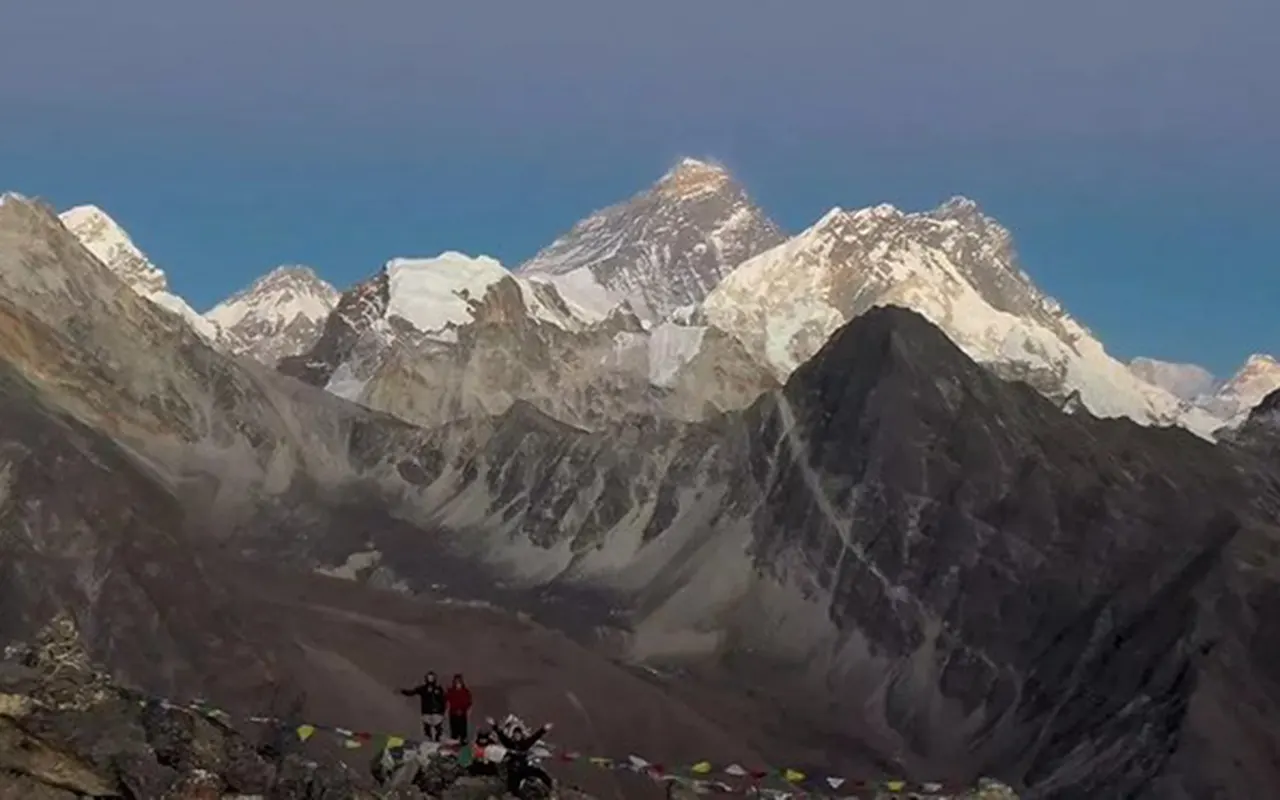
The Everest Gokyo Chola Pass Trek is one of the best places for photography with stunning vistas at places such as Gokyo Ri (5,357 m / 17,575 ft) and Kala Patthar (5,550 m / 18,209 ft).
Taking photos on trails and in villages is welcome, but it is considered courteous to seek permission before taking photos of local people. In monasteries, the photography is different, as the courtyard is usually okay, but it can be limited or even prohibited in prayer halls. Never take chances or talk to your guide if you are unsure.
Use of drones is highly regulated in the Everest area due to the fact that it is a reserve. Flying drones normally takes special permission from the authorities and the national park, which may be costly and time-consuming. Drones can be fined and seized without the use of permits. To the majority of the trekkers, leaving the drones at home and enjoying the numerous spectacular perspectives along the Everest Gokyo Chola Pass Trek is better.
Tips for First-Time Visitors
If the Everest Gokyo Chola Pass Trek is your first visit to Nepal, planning will go a long way. Reach Nepal 1-2 days before the start of the trek to acclimatise and test your equipment. Use well broken in boots, awarmdown jacket, gloves, sunglasses/shades, and a nice sleeping bag.
Pre-train with cardio and walk5-8 hours per day to train your legs. Take your time and ease into it, particularly when ascending beyond Namche Bazaar (3,440 m / 11,286 ft) and above to greater elevation destinations such as Gokyo (4,790 m / 15,715 ft).
Take lots of water and eat well. Be prepared forsimple teahouses and nights. Be flexible, as Lukla (2,840 m / 9,318 ft) flights are liable to delays. All the trekkers are guided well by Himalayan Pathways and therefore feel safer and more at ease. Above all, have fun along the way.
 Unbeatable Holiday Offers - Save Up to 20% on Your Next Adventure!