Weather and Best Season
Spring and autumn are the best times to undertake the Jomolhari Trek as the weather is generally more stable and the views of the mountains are clearer. The trail is lovely in the spring when the rhododendrons are in bloom, the valleys are green, and the days are warm.
The Jomolhari Trek is another great time of year in the autumn, when the weather conditions are dry, the skies are clear, and the visibility of the Himalayan peaks is excellent. The months are great for trekking since the trails are more predictable and the weather is more suited to long days in the outdoors.
Cold weather is another factor to take into consideration during the winter months at higher altitudes because of the snow and blowing winds. Rainfall, muddy trails, and low visibility of the mountains can occur during the monsoon months.
A proper Jomolhari Trek itinerary helps visitors choose an appropriate time of the year based on the weather conditions, comfort, and expectations of the trek.
Foods and Drinks
The food is simple and nutritious along the Bhutan Jomolhari Trek and is made up to complement the long days in the mountains. Typical meals are high-energy, warm foods to ensure good levels of strength at high altitudes.
Often, porridge, bread, eggs, tea or plain hot food is served for breakfast. Rice, noodles, soups and vegetables, along with Bhutanese-style meals, may be served at lunch and dinner, depending on the route and camp setup. Warm meals are useful in cooler mountainous conditions.
Tea, coffee, soup, and hot water are often included in drinks to help hydrate and keep the person comfortable in different types of weather. It is crucial to drink plenty of fluids during trekking at altitude.
The higher you get up, the more remote areas you are going to, which makes it easier to choose food. With the help of a well-organized trip by Himalayan Pathway, you will be able to plan your meals positively during the trek.
Altitude Sickness
One of the key factors to keep in mind when doing the Jomolhari Trek is the occurrence of altitude sickness, which can happen at high elevations where the body needs to acclimatize. Headache, nausea, fatigue, insomnia, dizziness, or loss of appetite.
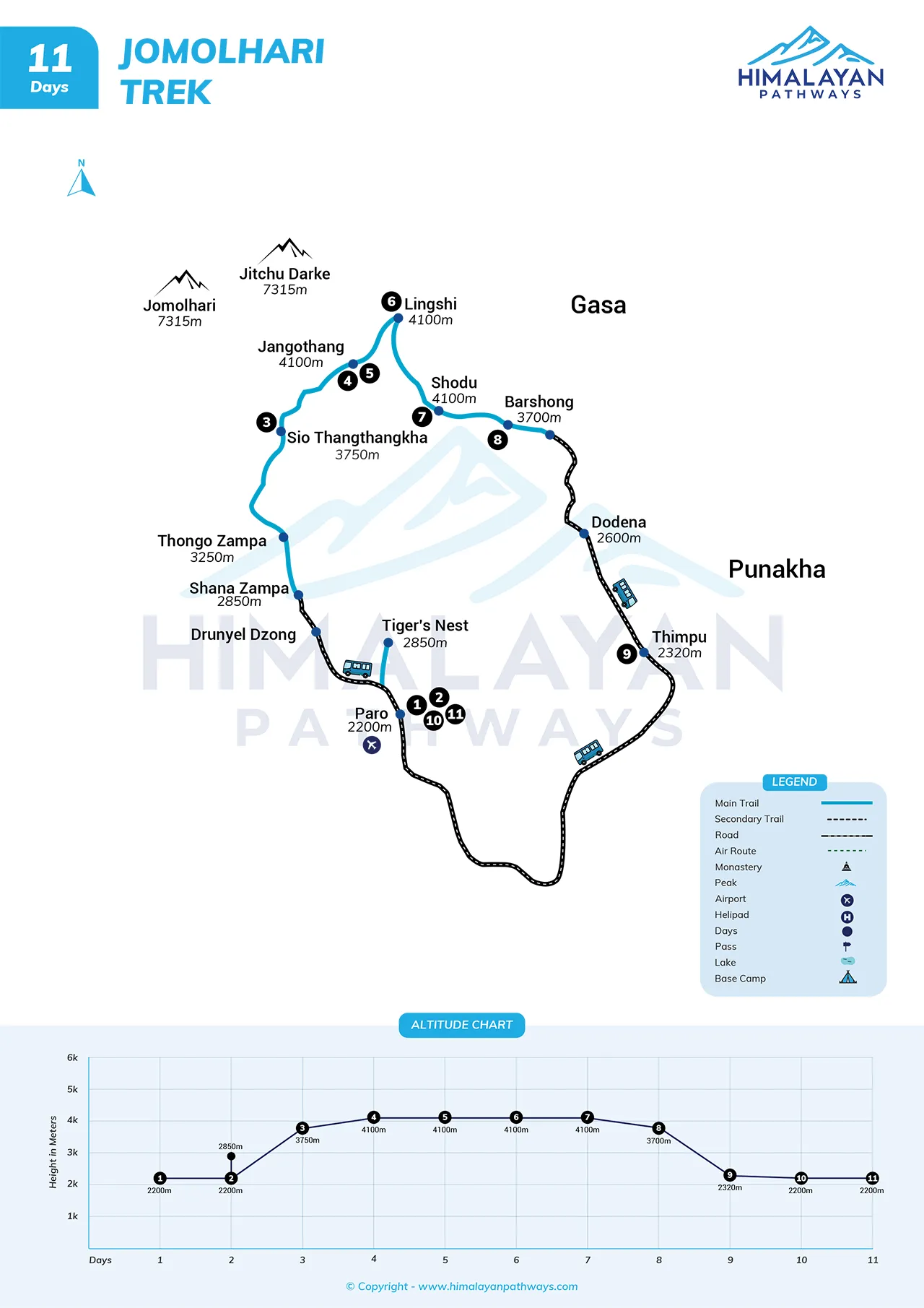
The journey rises gradually to Jangothang (4,050 m / 13,287 ft) for an overnight stay, as well as crossing high mountain passes above (4,800 m / 15,748 ft). Acclimatisation is a crucial part of a safe trek.
For a good Jomolhari trek, there should be some rest days so that the body adjusts naturally. Practicing good walking techniques, drinking fluids, eating good nutrition, and communicating with your guide can help minimize risks.
There is a need for awareness during the journey, as failure to do so can worsen conditions. Whereas, if they can respect the altitude, follow the guidance, and grant the necessary time for safe acclimatisation in the high mountain environment of Bhutan, most trekkers make the trip without any trouble.
Preparation and Fitness
The Jomolhari trek is more enjoyable and comfortable if it is well prepared. This is a walk that involves several days of strenuous walking in the mountains, with several steep climbs and long descents, and high altitudes requiring some exertion.
Pre-trip exercises that can be helpful include regular walking, hiking, stair climbing, and cardio training. Strengthening and conditioning the legs will ease heavy days trekking, particularly on passes and with day-packs.
The Bhutan Jomolhari Trek is a trail for those who are active and fit, but not necessarily athletes. Mentally, it is also essential as there are changes of weather, long and far away camps, as well as taxing parts of the trek.
Backpacking before departure can be used to get your body ready. Layered clothing, comfortable hiking boots, and appropriate equipment also play a significant role. Good fitness makes for good enjoyment, makes you less tired, and makes you appreciate the landscapes, culture, and mountain experiences on the trek more.
Visa and Permits
The travelers who join the Jomolhari trek should have the proper travel documents before visiting Bhutan. In general, a Bhutan visa is required, and trekking permits are required for protected trekking areas for international visitors.
Trekkers can usually obtain permits via registered travel agencies, and it is easier for them. Routes typically cross controlled mountain territory, and there is no normal route to obtaining independent permits.
When the Jomolhari Trek itinerary is well planned, all the necessary permissions are taken care of before the trek. This will prevent delays and enable the travellers to concentrate on the journey, not the paperwork.
Always check your passport before travelling abroad. Keeping important documents in print and digital format is also helpful. Himalayan Pathway can provide you with the necessary information to make your trekking experience in Bhutan smoother.
Health and Safety
Ensuring the safety and health of participants is crucial during the Jomolhari trek given its remote mountainous terrain that lacks facilities. Simple preparation and consciousness minimize extra dangers on the journey.
Altitude awareness, hydration, pacing and appropriate clothing are all important factors. In higher place like the passes near Yeli La (4,820 m / 15,813 ft), the weather can turn bad within a few minutes.
It is crucial to follow the guides’ instructions during the trek. Support for organized trekking includes route planning, logistical support and practical decision-making in mountain conditions.
The Jomolhari Trek can be done safely and responsibly, but trekkers need to bring some personal medications, a basic first aid kit and essential equipment. One of the most essential safety tips is to listen to your body. Proper planning, realistic expectations and proper hiking habits make traveling in Bhutan’s gorgeous Himalayan terrain a safer and more enjoyable experience.
Transportation
The Bhutan Jomolhari Trek typically starts from Bhutan’s primary international gateway, Paro. Then, on the road, the guests are linked to the hotels, the trekking starting points, and sightseeing spots.
The journey is a combination of walking and road travel, as prescribed by the route. There are sometimes short transfers to and from vehicles before the trek starts on some days, and vehicles back to Thimphu or Paro are available on the return day.
Well-defined Jomolhari Trek route information can educate tourists about the necessity of road transportation and the flow of the route from the starting point to the end point. The roads in the mountains can be beautiful in Bhutan, but they can be slower than in the city.
There are usually organized trekking packages that offer airport transfers and other road logistics. This results in a better user experience, particularly for those overseas who aren’t used to local logistics. Good transport planning ensures the trip is comfortable, efficient, and well-organized throughout the trip.
Travel Insurance
Due to the high-altitude nature of the trek, remote camping spots and unpredictable weather conditions, travel insurance is highly recommended for the Jomolhari Trek. Good coverage gives additional confidence while travelling.
Ideally, insurance should include trekking activity, emergency medical support, evacuation protection, trip interruption and baggage-related support. Policies should be checked thoroughly before buying in high altitudes.
The Jomolhari Trek has remote areas in which random services might not be available, which makes insurance useful in case of an accident. It is important that travellers review the policy information to ensure they understand the conditions of the mountain trek, and that this includes the planned elevations. Printed and electronic insurance documents are beneficial when traveling.
For most trekkers, insurance is not a necessity, but it can be beneficial and provide protection. Planning is always done with the forethought that unexpected situations will arise in mountain environments.
Alternative Routes
While the Jomolhari Trek is one of the most rewarding treks in Bhutan, other trekking trips are available depending on the time, fitness, and interests of the trekking enthusiast.
For some, a shorter cultural trekking route may be preferable, or perhaps, mountain trekking routes including more high passes and remote valleys. Route selections are based on the level of adventure, acclimatization comfort, and available travel days. In conclusion, the Bhutan Jomolhari Trek offers a perfect combination of nature, culture, and traditional Himalayan trekking.
There are alternative trekking routes with other landscapes, interactions with the villages, and other levels of difficulty. Itinerary comparison enables travellers to select the most suitable one for their needs. Those who may want to customize trekking packages can get route planning assistance to match their tour objectives with one of Bhutan’s mountain trekking experiences.
Your Extra Expenses
Even though most of the major trekking packages are covered in your tour package, the Jomolhari trek might still come with extra costs on your personal part, so please do budget it in advance. The more funds you have, the more pleasant the ride.
Additional expenses might be for personal snacks, bottled water, tips for trekking staff, laundry service (if available), souvenirs, and personal shopping in cities such as Paro or Thimphu. Additional personal purchases that are necessary for emergency use should also be taken into account.
In the areas of the Jomolhari Trek, there are a few options to purchase things, and it is helpful to bring essential things with oneself in advance. Optional services may have different costs depending on the means and preferences of travel.
You may have to pay extra for trekking items such as travel insurance, visa fees and personal equipment purchases. Before booking, Himalayan Pathway can explain the inclusions to ensure expectations are clear. Having a plan in place helps to prevent surprises and helps one have confidence and flexibility to enjoy trekking.
Language and Communication
The communication during the Bhutan Jomolhari Trek is not that difficult for foreign visitors, particularly when accompanied by a trekking company. Tourist services, hotels, and guided tours are commonly conducted in English.
The national language of Bhutan is Dzongkha, but there are many in the tourism sector whose English language skills are basic. This simplifies interaction with most visitors.
During the Jomolhari Trek, in remote mountain areas, where local communities are smaller and facilities are limited, communications become limited. Simple communication is still possible – particularly with guides.
A few polite greetings can lead to positive interactions with the locals and cultural respect. It’s particularly important to communicate clearly with your trekking guide for your comfort, health, and logistics.
Organizing a Jomolhari Trek properly helps in minimizing the communication concerns as the major arrangements are taken care of beforehand, and the tourists can concentrate more on the trekking experience.
Internet, Gadget Charging, and Mobile Network
Access to the internet is limited as you climb higher into the remote areas of the mountains on the Jomolhari Trek. Travellers should expect limited connectivity in rural areas, as compared to urban areas such as Paro or Thimphu.
The wireless services are available in some lower regions, but further into remote mountainous regions, the services are less reliable. It is not possible to assume the Internet connection will be reliable along the way.
Depending on camp arrangements and facilities available, charging of an electronic device may also be limited. It is highly advisable to bring a power bank for all of your camera, cell phone, and other necessary electronics.
Jomolhari Trek is an excellent time to be away from constant use of the internet and focus more on the natural environment. When using the device wisely, it can be avoided from bringing inconvenience to people.
When planning a Jomolhari Trek, it is important to keep in mind that you will be going offline at some point, need to bring documents with you, and have to manage your battery usage while on the trail.
Don’ts of This Trip
While the Jomolhari trek is a rewarding mountain adventure, some errors can decrease your comfort, safety, and pleasure of the trip. Taking responsibility for your travel helps all of you to have a smoother journey.
Never ignore altitude symptoms, overexert yourself, or forget to hydrate while trekking at high altitudes. Mountain conditions can become a lot more difficult when a person suddenly overexerts themselves.
Please do not leave trash on the trail, bother wildlife, or be disrespectful around the cultural sites and monasteries. The protection of the environment and respect for culture are highly regarded in Bhutan.
In the Jomolhari trek, refrain from complete dependence on the internet, unnecessary heavy equipment, or untested footwear. Problems can be avoided if the preparation is poor. Never fly a drone without permission, or expect any photography to be okay in sacred areas. Guides help avoid misunderstandings by listening to the guides. By taking the time to understand and respect the mountains, local customs and practical trekking advice, one can enjoy a safer and more meaningful travel experience
Is the trip beginner-friendly?
The Jomolhari Trek is not a walk in the park, and hence it is advisable not to treat it as an easy trek, but rather a trek that can be done by the motivated. This is a trek with several long days of walking, mountain hiking, and high elevation.
The higher areas lead to more difficult destinations like Nylie La Pass (4,830 m / 15,846 ft) due to the altitude and weather. Comfort and confidence are enhanced by good preparation.
The Bhutan Jomolhari Trek is more suitable for those who are relatively active, have a sound mind, and are ready to walk for many hours throughout the day. Some experience in hiking is good, but not always a requirement. An itinerary properly planned over Jomolhari Trek and acclimatisation days makes the trek a lot more manageable for first-timers to the high-altitude trekking terrain.
Trip Extension
Some tourists prefer to take a few days in Bhutan after the Jomolhari trek to explore the country further. This enables you to have an overall cultural and touristic experience. Tours might also feature more time in Paro, Thimphu, cultural sightseeing, visits to monasteries, or tours to other scenic areas, depending on the number of days available and interests.
Although the Bhutan Jomolhari Trek is a great addition to cultural extensions, Bhutan has a lot more to offer. The rewarding travel combinations are historic architecture, spiritual sites, and peaceful landscapes. Some travellers even opt for a shorter time period of convalescence after hiking to chill out before they head back overseas. This can be particularly helpful following a physically challenging day in the mountains.
If you need help with arranging your trip with some extra practicalities, Himalayan Pathway may be able to help you make things easier for you by helping plan the smoother transition between trekking and other Bhutan travel experiences that can fit into your travel time and preferences.
Photography and Drone Rules
The Jomolhari Trek is a fantastic time for photography, ranging from the mountains, monasteries, and the Bhutanese landscape. A camera or phone is essential for travelers to be ready for shifting weather. It is generally ok to take photos in outdoor areas, although some religious venues may have restrictions on taking photos indoors. Please always ask before taking pictures in monasteries or sacred areas.
In the Jomolhari Trek, it’s imperative to take photos in a respectful way when taking photographs of people, the activity, or a private moment. Permission is always a best practice. The use of drones is far more limited and may require official permission in Bhutan. Do not presume recreational drone flights are permitted, particularly in the vicinity of cultural, protected, and controlled areas.
Responsible photography is a way to maintain the positive experiences of travel and to respect the national laws, privacy, and customs of the area throughout the trek.
Cultural Festivals on the Trails
However, the Bhutan Jomolhari Trek is not only about the mountains, but also about the Bhutanese culture, which you might experience as well depending on the time of your trip.
Colorful Religious Festival is a special attraction in Bhutan, where people celebrate traditional dances, perform religious rituals, wear colorful clothes, and are deeply engaged in the festivities. These events provide a good insight into the culture.
Festival opportunities can be found before or after the trekking period during the Jomolhari trek according to the festival schedule, but the trekking itself is about the remote mountainous scenery. For those interested in Bhutanese culture and religious history, attending a local festival can provide a valuable cultural experience.
Travel Tips for First-Time Visitors
People who are doing their first trek on the Jomolhari trek should take the necessary steps to smooth and enhance the trekking experience. Comfort, confidence, and overall trekking success are enhanced with good planning.
Pack light, but essential items to have like layers of clothing, trekking boots, personal medicines, sun protection, reusable water bottle. The weather may rapidly change in the mountains.
You may find the Jomolhari Trek rewarding if you are flexible, keep on moving, and are willing to listen attentively to the guide’s instructions. Trekking at high altitudes is a more pleasant experience if taken up with patience. Have some extra cash on hand for personal spending, print out some of the important travel documents, and charge electronics before going into remote areas.
Respect the Bhutanese customs, traditions, and environmental practices during your visits. First-timers have a great trekking experience in the Himalayas with a positive attitude, realistic expectations, and good preparation.
 Unbeatable Holiday Offers - Save Up to 20% on Your Next Adventure!