Trek Difficulty
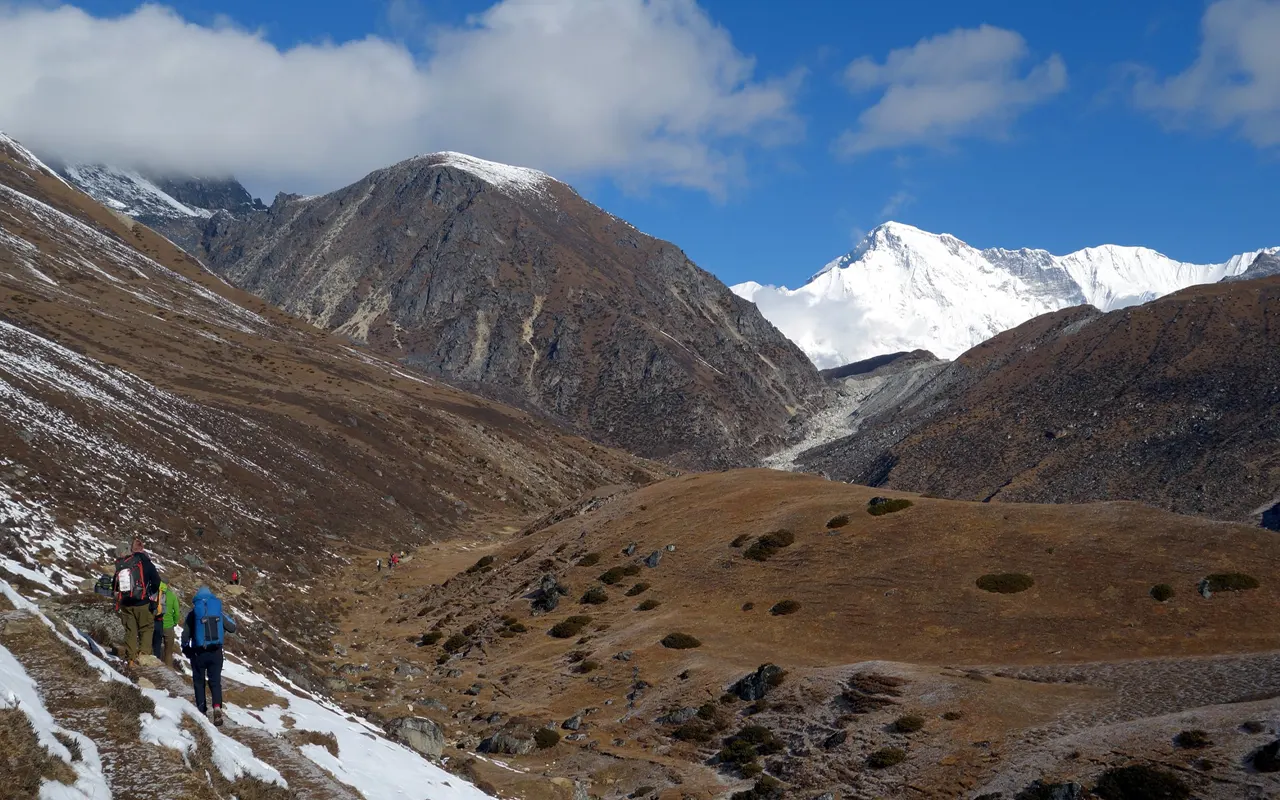
Gokyo Valley Trek is a moderate trek that has some challenging moments, though it can be done by the majority of people with good fitness. Climbing skills are not necessary since the path is easy to follow through the mountain trails. But you will come on rocky ways, sharp up and down, and steep steps. The average time spent on hikes is 5-7 hours on most days, and thus endurance is important.
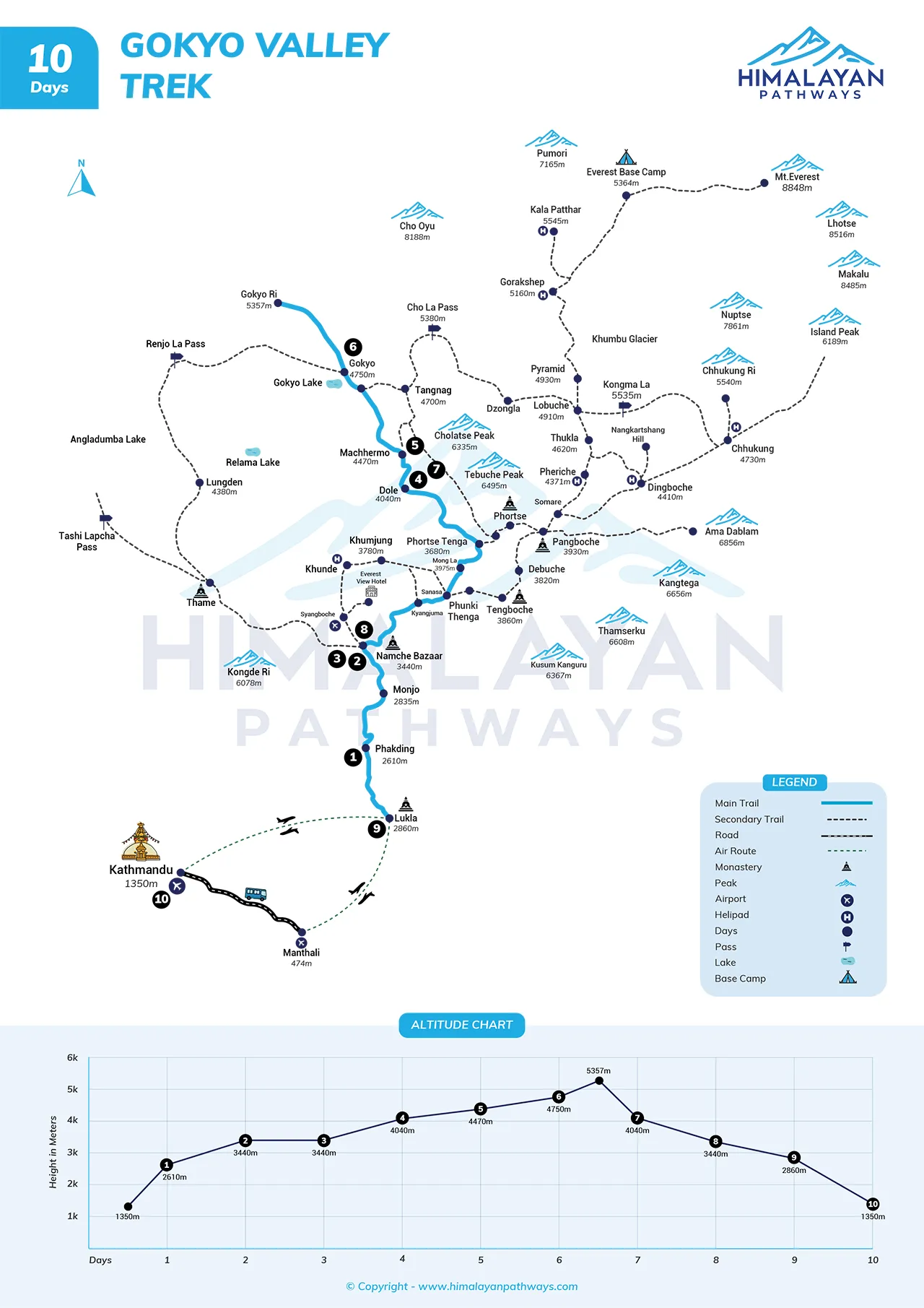
The greatest difficulty is altitude. You sleep up to Gokyo village (4,790 m / 15,715 ft) and ascend to Gokyo Ri (5,357 m / 17,575 ft), where it is very thin in the air and climbing is more difficult. The Gokyo Valley Trek is quite attainable and rewarding with proper timing, rest, and hydration.
Himalayan Pathways offer well trained guides who will assist you to maintain a safe pace and acclimatise to the altitude.
Weather and Best Season
The Everest region experiences a lot of change in the weather, and hence timing is a factor in the Gokyo Valley Trek. The spring period (March-May) and autumn period (September-November) are the best seasons. During these months, the sky is normally clear, and mountain views are at their optimum.
In spring, it is somewhat warmer and bright, and on lower trails, rhododendrons are blooming, whereas in high places, such as Gokyo (4,790 m / 15,715 ft), are cold at night. October is a month with beautiful visibility and clean air.
The rain, clouds, trails that can get slippery, and possible flight delays are present in the monsoon (June-August), but there are fewer crowds. The season of winter (December-February) is a quiet time with clear skies, but the temperatures are very low in high places such as Gokyo (4,790 m / 15,715 ft).
Food & Drink During the Trek
The food on the Gokyo Valley Trek is basic, comforting, and nutritious, which is ideal for enduring the long days of hiking. You dine in teahouses, and meals are cooked fresh and primarily carbohydrate-rich to provide energy.
The dish that most people prefer is the dal bhat (rice, lentil soup, vegetables), as it gives you enough strength to continue on the trek. There will also be noodles (thukpa), momos, fried rice, pasta, eggs, soups, and porridge. Bakeries with bread, cakes and coffee exist in larger locations, such as Namche Bazaar (3,440 m / 11,286 ft).
Consume as much water and hot tea as possible, such as ginger or lemon honey, which works well at altitude. Refilling a reusable bottle with boiled or filtered water is best, rather than purchasing plastic bottles.
Altitude Sickness and Suggestions
The altitude is a severe consideration during the Gokyo Valley Trek, as you will be staying several days at 3,500 m / 11,483 ft and ascending Gokyo Ri (5,357 m / 17,575 ft). At high altitude, oxygen is less, hence you might get fatigued, short of breath or headaches.
Light symptoms may be eased through rest, water intake, and a slow pace. Gradual ascent and drinking 3-4 litres a day, having good meals and no alcohol at higher villages such as Machhermo (4,470 m / 14,665 ft) and Gokyo (4,790 m / 15,715 ft) is the best method of prevention.
In case the symptoms become more severe, like vomiting, intense headache, confusion, difficulty in breathing, get down to the lower elevation. Himalayan Pathways guides are trained and made to exercise maximum attention to the health of the altitude and to act promptly. Through intelligent acclimatisation and effective communication, the majority of individuals make it safely and joyfully through the Gokyo Valley Trek.
Preparation and Fitness
The Gokyo Valley Trek becomes more pleasant and comfortable with good preparation. To achieve endurance, activate walking, hiking, jogging, cycling or swimming 8-12 weeks before your trip. Train legs by walking uphill and up the stairs, as the trail has steep ascents and descents.
Incorporate simple strength exercises such as squats, lunges, and step-ups and core exercises to ensure balance and comfort of the backpack. Wear in your hiking shoes before they set in to prevent blisters. Wear and pack layered clothes because mornings and evenings are cold, particularly around Gokyo (4,790 m / 15,715 ft).
It is important to bring gloves, a warm jacket, sunglasses and a headlamp when making early starts such as the hike to the Gokyo Ri (5,357 m / 17,575 ft). Himalayan Pathways is also able to assist with gear advice and rentals. Being fit and having the right attitude, the Gokyo Valley Trek will be an easy challenge.
Visa and Permits
To complete the Gokyo Valley Trek, you require a Nepal tourist visa and local trekking permits. The majority of the travellers receive a visa at Kathmandu airport upon presenting a valid passport (at least 6 months’ validity) and a photo.
To trek, you require the Sagarmatha National Park Permit and the Khumbu Pasang Lhamu Rural Municipality Permit. These are inspected on the road, in particular near Monjo and Namche Bazaar (3,440 m / 11,286 ft).
The permit arrangements are done by Himalayan Pathways, so when you are on the trail, you do not have to worry about the paperwork. All you need to do is carry a copy of your passport and keep your stuff secure. You will not have to worry about getting a visa and permits, and, instead, you can enjoy the scenery, villages, and high lakes of the Gokyo Valley Trek.
Health & Safety
The Gokyo Valley Trek is a very sensitive area in terms of health and safety since you are in remote mountainous areas and at high altitude. Before travelling, complete a simple medical check-up and carry along your personal medicines. Carry basic first aid such as blister pads, pain medication and stomach medicine.
To prevent stomach issues, drink only boiled or filtered water and wash your hands frequently. The safety of the trail is also important, so wear good boots, walk along marked trails, and avoid yaks and mules.
Above Namche Bazaar (3,440 m / 11,286 ft) and around Gokyo (4,790 m / 15,715 ft), altitude safety is important, and symptoms should be reported at an early stage and walk slowly.
The weather is unpredictable, and you should bring a rain jacket and warm layers of clothes with you. Himalayan Pathways guides will assist you with route directions, first aid, and altitude consciousness to make you feel safe and assured during the trek to Gokyo Valley.
Transportation
The Gokyo Valley Trek normally begins with a flight to Lukla (2,840 m / 9,317 ft), and then the trek starts. It takes a short yet scenic flight to the hills and the Himalayan mountains. Flights during busy seasons might be flown from Ramechhap (Manthali) rather than Kathmandu, which will require the first road drive.
The weather in the mountains may delay or cancel flights, and thus it is prudent to add a buffer day following the trek.
On the trek itself, there is no road, and everything is by foot, and the logistics are carried by yaks and porters.
Himalayan Pathways will handle your flights, airport transfers, and other necessary road transportation; thus, you do not have to handle logistics. The mountain adventure is easily concluded at the end of the Gokyo Valley Trek with the flight back to Lukla (2,840 m / 9,317 ft) to Kathmandu.
Travel Insurance
Travel insurance is necessary in the Gokyo Valley Trek since you trek to high altitudes and remote places. You should have a policy of trekking to at least heights of 5,500 m / 18,045 ft because the Gokyo Ri is at 5,357 m / 17,575 ft. Above all, it should feature evacuation by helicopters in the event of an emergency and medical care. The cost of a helicopter rescue in the Everest area may be enormous; appropriate coverage will save you from massive expenses.
Your insurance should also assist in the delay of a trip, particularly in Lukla flights, and may additionally finance lost baggage or additional hotel accommodation.
Bring a copy of your policy and emergency contacts on the trek. The Gokyo Valley Trek can be taken without any worry with proper insurance.
Alternative Routes
The Gokyo Valley Trek is itself beautiful; however, there exist great alternative paths for those who want a bit of adventure.
One of the most frequently used choices is to hike Gokyo and cross Cho La Pass (5,420 m / 17,782 ft) to join the Everest Base Camp, which makes the trip longer and more difficult.
The other great option is the crossing of Renjo La Pass (5,360 m / 17,585 ft) that creates a loop to Namche Bazaar, and provides overlooks the Gokyo Lakes.
In case you are not in a hurry, a side walk to the Fourth and the Fifth Lakes by the Gokyo village (4,790 m / 15,715 ft) is also worthwhile.
Himalayan Pathways can design these trails according to your fitness, time, and acclimatization and transform your Gokyo Valley Trek into something more unique.
Your Extra Expenses
Though the Gokyo Valley Trek package includes major expenses, you need to budget for personal expenses. These will be your Nepal visa, Kathmandu hotel and food, snacks, beverages, Wi-Fi, hot showers, charging devices and souvenirs. Prices increase with altitude, particularly around Gokyo (4,790 m / 15,715 ft), where the bottled water and charging are more expensive.
Porters and guides are expected to be tipped. There might also be additional money required due to flight delays in Lukla (2,840 m / 9,317 ft). Always bring as many Nepali rupees as you can from Kathmandu, because ATM is no reliable ATMs after that.
Language & Communication
The Gokyo Valley Trek has a large number of English-speaking guides, lodge owners and trekking staff. This ensures that most visitors find it simple to communicate. The Sherpa people have their own language, but Nepali is commonly spoken. The guides will help you translate the language if necessary. Most of the menus and signboards are in Nepali and English, so there is no issue regarding language and communication in this trek.
Dhanyabad (thank you) and Namaste (hello) are simple words that are welcome. Always greet people with a smile on your face and be courteous.
Having Himalayan Pathways guides will assist in maintaining contact and keeping you informed throughout the Gokyo Valley Trek, and also aid in communication where necessary.
Mobile Network, Internet and Charging facilities
On the Gokyo Valley Trek, the mobile network functions well until Namche Bazaar (3,440 m / 11,286 ft). After that, the coverage becomes unavailable or weak. The majority of trekkers rely on paid Wi-Fi internet at tea houses in even higher villages such as Gokyo (4,790 m / 15,715 ft).
The phones and cameras can be charged, but it will be an additional fee, and at high altitudes, the prices are high. Solar power is the primary source of electricity and is therefore not always available. It is quite convenient to have a power bank.
Cold temperatures consume batteries very fast, hence keep devices warm. This piece of advice can be applied to the Gokyo Valley Trek, which helps prevent the misuse of power and connection.
Don’ts on This Trip
Do not overlook the symptoms of altitude, particularly above Namche Bazaar (3,440 m 11,286 ft) or near Gokyo Ri (5,357 m 17,575 ft). Do not litter or pollute trails, rivers or holy Gokyo Lakes. Do not be disrespectful of culture. Ask permission before taking pictures, and put on modest clothes in monasteries.
Do not go off track or neglect the counsel of your guide. Consuming alcohol and smoking in high elevations is unsafe.
Do not bring or fly drones without authorisation. Himalayan Pathways focuses on responsible trekking to enable you to conserve nature, observe the local culture, and be safe during the Gokyo Valley Trek.
Trip Extension
Once you have finished the Gokyo Valley Trek, the next destination for many travellers is to travel further in Nepal. Cultural tours in Kathmandu Valley, wildlife safaris in Chitwan National Park, and rest by the Phewa Lake in Pokhara are some of the popular options.
The adventure lover can go rafting, paragliding or do a scenic helicopter flight in the Everest. In case you want to explore the mountains more, you can travel further or take a small hike in Namche Bazaar (3,440 m / 11,286 ft) nearby.
These extensions make your Gokyo Valley Trek even more fulfilling, naturally and culturally. The trek can be followed by extensions planned by Himalayan Pathways, that is, depending upon your time, energy, and interests.
Photography & Drone Rules
The Gokyo Valley Trek is the dream of photographers, which provides lakes, glaciers, and the Himalayan mountains. You can take landscape shots and follow-up shots.
Never take pictures of local people without their consent or in monasteries. Don’t use inside the monasteries or on people’s faces. Gokyo Ri (5,357 m / 17,575 ft) is particularly popular at sunrise, so you can capture the rays of the sun touching the mountains and painting the sky with hues of aesthetic.
Drones are highly prohibited in Sagarmatha National Park. One should have a special license to fly, and failure to fly with permits and use of a drone may result in seizure. Himalayan Pathways highly discourages the carrying of drones. Phones and cameras will be sufficient to document the memories of the Gokyo Valley Trek.
Cultural Festivals on the Trail
Everest is a culturally rich area with Sherpas, and at times, you are likely to experience festivals in or close to the Gokyo Valley Trek. The most well-known Sherpa festival is Mani Rimdu, which is celebrated either in October or November in Tengboche Monastery.
In early summer, in Sherpa villages such as Namche Bazaar (3,440 m / 11,286 ft), the Dumji Festival is celebrated.
Losar is the Tibetan New Year, which occurs during winter. Without festivals, however, there will be prayer flags, mani walls and daily practices on the path to Gokyo (4,790 m / 15,715 ft).
The Himalayan Pathways guides describe the local culture, which makes the experience of the Gokyo Valley Trek more cultural.
Tips for First-Time Nepal Visitors
When you are in Nepal, be open and patient; this is your first visit there. It is a slower place to live, and flexibility is a virtue here, particularly when flying into the mountains to Lukla (2,840 m / 9,317 ft).
Wear simple clothes, greet with Namaste, and adhere to local traditions. Drink only purified, bottled, boiled or treated water, and cash is necessary, because ATMs are very scarce after Namche Bazaar (3,440 m / 11,286 ft).
The Gokyo Valley Trek should be expected to be simple in terms of the living conditions, particularly around Gokyo (4,790 m / 15,715 ft). The language is English, with the locals being very accommodating. First-time tourists are normally made to feel safe and at home in Nepal with the directions of the Himalayan Pathways.
 Unbeatable Holiday Offers - Save Up to 20% on Your Next Adventure!