Difficulty Level
Lower Dolpo Circuit Trek is an adventure that is average in difficulty and is located in the remote Himalayas in the western part of Nepal. It is not as strenuous as some of the Dolpo trails, although it needs one to be in good physical health and have experience in trekking. The trek typically takes about two weeks and involves several long walks over forest, rivers, dry valleys, and alpine pastures.
The altitude is one of the primary obstacles of the Lower Dolpo Circuit Trek. The trekkers usually sleep at an elevation higher than 3,500 m / 11,482.9 ft, and some mountain passes along the route are above 5,000 m / 16,404 ft.
Due to such high altitudes, Himalayan Pathways makes the itinerary very meticulous by including acclimatization days and a gradual pace. When adequately equipped, well directed, and determined, most trekkers can complete this trek with a lot of pleasure, viewing the magnificent scenes of the Dolpo region.
Weather and Best Season
The climate in the location of the Lower Dolpo Circuit Trek is very dissimilar to other trekking places in Nepal. Dolpo is located in the rain shadow of the Himalayas, which implies that it does not get much precipitation during the monsoons. Owing to this special climate, trekking here can be done throughout most of the year except the cold winter season.
Spring and autumn are the most favorable seasons for the Lower Dolpo Circuit Trek. The spring normally spans between April and May, when the atmosphere becomes warmer since winter is over, and the skies tend to be clear. Another terrific period is during autumn, which falls between mid-September and the end of October, when the mountain scenery is most beautiful.
The trek goes through Shey Phoksundo National Park with an altitude from approximately 2,130 m / 6,988 ft to 6,885 m / 22,588.5 ft. Due to such a great elevation difference, the temperature may vary rapidly. Carry warm clothes and any other equipment necessary to deal with cold mornings and evening in the trek.
Foods and Drinks
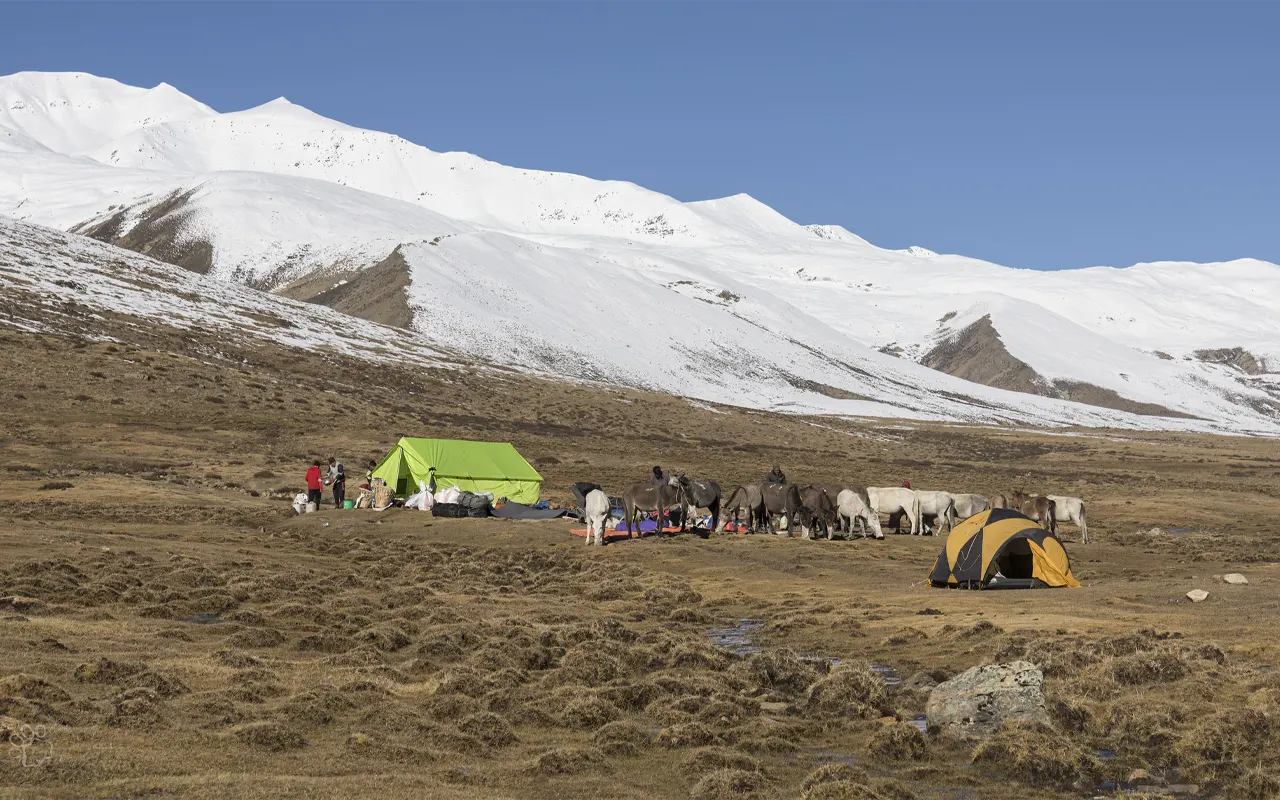
The food in the Lower Dolpo Circuit Trek is simple, nutritious, and freshly cooked by the trekking staff. Himalayan Pathways uses the trek as a camping trip; the camp chef will cook the food in a kitchen tent, and trekkers will be accommodated in cozy camping tents. Breakfast and dinner will be at the campsite, and lunch will be on the trail as the trek goes on.
The standard breakfast is porridge, bread, and occasionally roti, a Nepalese flatbread. Lunch and dinner may contain pasta, noodles, pizza, or dal bhat, one of the common Nepalese meals, cooked with rice, lentils, and vegetable curry. It is also common to have afternoon snacks such as fried potatoes or popcorn.
Hot beverages like tea, coffee, and boiled water are provided throughout the trek. As trekkers tend to sleep at altitudes higher than 3,500 m / 11,482.9 ft in the course of the Lower Dolpo Circuit Trek, avoid alcohol and keep yourselves well-hydrated, energized, and healthy.
Altitude Sickness and Recommendations
Another factor that should be considered when doing the Lower Dolpo Circuit Trek is altitude sickness, since the route covers a number of high mountain areas. Trekkers frequently camp above 3,500 m / 11,482.9 ft, and a few of the passes on the path go above 5,000 m / 16,404 ft. At such heights, the oxygen in the air is also low, and it can cause headache, dizziness, fatigue, or even nausea.
Himalayan Pathways pays attention to the itinerary to minimize the risk of getting altitude sickness, having acclimatization days, and a slow increase in altitude. On the trek, the guides advise the trekkers to move at a slow pace, consume as much water as possible, and have frequent rests.
Trekkers are advised to pay attention to their bodies and report any symptoms to the guide in case they are unwell. Through the recommendation of the guide and a slow pace, a majority of the trekkers can safely experience the Lower Dolpo Circuit Trek and acclimatize easily to the high Himalayan conditions.
Preparation and Fitness
The Lower Dolpo Circuit Trek requires proper preparation and fitness. You should get good stamina prior to their arrival in Nepal. The walk is typically between 6-8 hours daily on average, which have few longer days based on the trail conditions and elevation.
The trekkers are advised to be ready by engaging in routine physical exercises like jogging, cycling, or walking long distances. The tightening of leg muscles and cardiovascular fitness will help the trek to be more comfortable and enjoyable. Physical preparedness is particularly relevant as the road goes through mountain passes (above 5,000m / 16,404 ft) and spending the night above 3,500 m / 11,482.9 ft.
Proper gear is also necessary, besides fitness. Carry warm clothes, a good sleeping bag, a good trekking boot, and some basic medical aid.
Mental conditioning is also a plus, as the Lower Dolpo Circuit Trek is set in isolated locations, where patience, stamina, and a positive mind are likely to make the trip more fulfilling.
Visa and Permit
Trekkers have to obtain a Nepal visa and other trekking permits before they start the Lower Dolpo Circuit Trek. A Nepal visa is accessible to most travelers on arrival at Tribhuvan International Airport in Kathmandu. The visa will be granted a 15-day, 30-day, or 90-day visa based on the traveler’s plans.
Along with the visa, the Lower Dolpo Circuit Trek also needs special permits since the area is restricted, and it is a part of the Shey Phoksundo National Park. These permits are arranged in advance by Himalayan Pathways for the trekkers.
The permits required are the Restricted Area Permit of Lower Dolpo and the Shey Phoksundo National Park permit.
The Shey Phoksundo National Park encompasses an area with heights of 2,130 m / 6,988 ft to 6,885 m /22,588.5 ft. The permit fees assist in safeguarding the wildlife in the park and support the culture of local people.
Health and Safety
The Lower Dolpo Circuit Trek places great emphasis on health and safety due to the fact that the route is located in remote mountainous areas. Himalayan Pathways offers experienced guides who are aware of difficulties faced during trekking at high altitude and how to react to crises.
Trekkers commonly camp over 3,500 m / 11,482.9 ft, and the trek has high passes, which exceed 5,000 m / 16,404 ft, so they need to take suitable precautions. Move slowly, drink plenty of water, have frequent meals, and have sufficient rest during the trek. Guides observe the trekkers with altitude sickness symptoms and offer help where necessary.
Personal medicines, a small first aid kit, and travel insurance against high altitude trekking should also be carried by the trekkers. It is a safety measure to follow the instructions of the guide and stay in the group. Under proper planning and the guidance of the experts, the Dolpo Circuit Trek can be a safe and enjoyable adventure.
Transportation
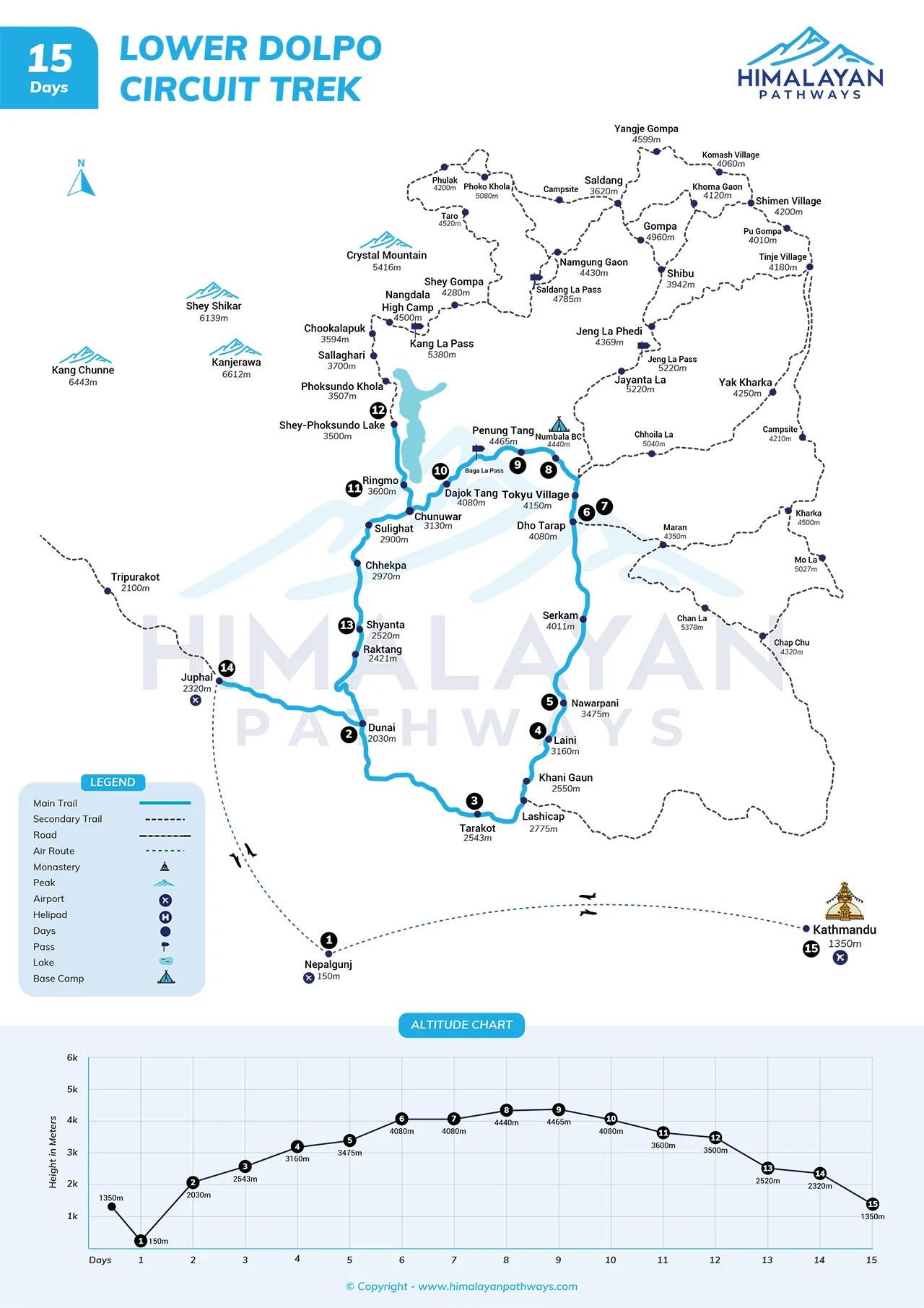
The Lower Dolpo Circuit Trek has a combination of trekking and flights as transportation. Himalayan Pathways makes all the required travel in Nepal and allows the journey to be comfortable and easy. The journey normally starts at Kathmandu, where trekkers fly a domestic flight to Nepalgunj in western Nepal.
Another transportation involves a short flight that can carry trekkers from Nepalgunj to Juphal, which is the primary entrance to the Dolpo region. Juphal is the mountain that is the point of beginning the Lower Dolpo Circuit Trek. Here, the road goes on foot through villages, woods, rivers, and mountainous terrain.
After completing your trek through Shey Phoksundo National Park, we arrange return flights to Nepalgunj and Kathmandu, bringing this spectacular Himalayan journey to a close.
Travel Insurance
The Lower Dolpo Circuit Trek highly depends on travel insurance, as the trek will proceed in the remote part of the Himalayas. The trek consists of several days of long walks and isolated campsites, mountain passes, and many nights above 3,500 m / 11,482.9 ft. Due to this elevation, trekkers should be insured on high altitude trekking insurance and emergency evacuation insurance.
Helicopter rescue, as well as medical treatment, trip cancellation, and flight delays should be covered in your insurance policy. Weather conditions can occasionally cause flights to Juphal to be delayed; the insurance gives the added security.
Through adequate travel insurance, trekkers are able to have a good time and adventure, knowing that they are insured in this isolated Himalayan trek.
Alternative Routes
The trek starts from Kathmandu, Nepalgunj, and Nepalgunj to Juphal, which is an entry point to the Dolpo Valley. The trail traversing Juphal leads to the Shey Phoksundo national park, which is then traversed by the traditional villages like the Dho Tarap, before one finds the renowned Phoksundo Lake. The path finishes off the circuit by taking the same path back into Juphal.
This is the primary path, but Himalayan Pathways can change the itinerary as per the weather conditions, speed of trekking, or acclimatizing. Because the trek will visit mountain passes above 5,000 m / 16,404 ft and camp above 3,500 m / 11,482.9 ft, at times, guides will introduce rest days or modify the trail route a bit more safely. Such minor changes enable the trekkers to have a comfortable time in the Lower Dolpo Circuit Trek and yet have the same view of the forests, rivers, alpine fields, and the spectacular Himalayan landscapes.
Your Extra Expenses
When you make a booking with Himalayan Pathways, most of the great expenditures of the Lower Dolpo Circuit Trek are covered. It is usually organized beforehand, including transportation, camping shelter, lunch on the hike, guides, porters, and permits. Nevertheless, trekkers are not left without incurring certain personal expenses on the trip.
A typical additional cost is the gifts at monasteries or gompas on the way. People are used to making a small donation when visiting these religious places.
You can also consider carrying a few dollars for snacks, local small things, or beverages in such places as Nepalgunj before or after the trek. Since the majority of nights, one has to spend above 3,500 m / 11,482.9 ft, it is convenient to pack some personal snacks, like chocolate or power bars.
Guide, chef, and porters’ tips are also another cost that is not included in the price of the trek.
Language and Communication
During the Lower Dolpo Circuit Trek, communication is an experience on its own. Dolpo is influenced by Tibetan culture, and most of the locals speak dialects affiliated with both Tibetan and Nepali. Himalayan Pathways has skilled guides who are English and Nepali speakers, thus assisting the trekkers to communicate conveniently with local people on the route.
Since the trek goes through isolated villages and high mountainous regions, communication with the guide is highly significant, both in terms of safety and comfort. The guide assists in translating the conversation, describing the cultural customs, as well as any local arrangements during the trek.
Residents are thankful even when people attempt to communicate in a polite manner. The cultural exchange in the Lower Dolpo Circuit Trek is also a part of the adventure.
Internet and Mobile Network, Charging Facilities.
The Lower Dolpo Circuit Trek is in a remote sector of western Nepal, and thus, there are no modern facilities. As the majority of the trek is camping, the trekkers must not expect access to electricity, internet, or mobile signal all the way through the trip. Above the altitude of 3,500 m / 11,482.9 ft (which is extremely scarce in power sources), there are numerous camping days.
Carry a small solar charger or a power bank to charge small electronic devices. During the trek, the headlamps, cameras, and phones may require additional batteries. There might be a connection of mobile signal in certain villages, but not guaranteed. These remote mountain areas are also very low in Internet connection.
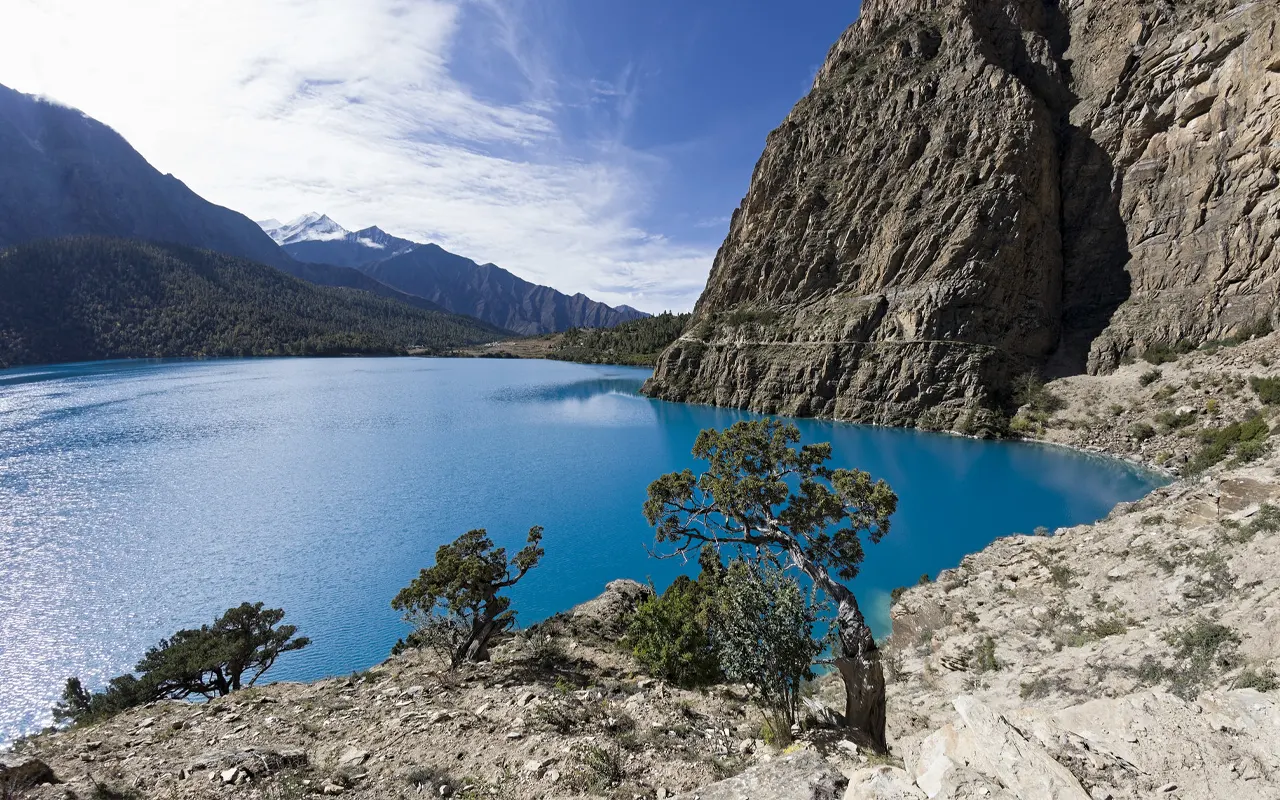
Due to this reason, the Lower Dolpo Circuit Trek is an opportunity to forget about modern technologies and to have complete contact with nature. Visitors to Shey Phoksundo National Park tend to like the serene location, the clear skies, and the magnificent Himalayan landscapes.
Don’ts on This Trip
When trekking on the Lower Dolpo Circuit Trek, it is important to observe several crucial points that would guarantee both safety and fun. The most significant thing is to avoid hurrying up with the trek. Since you will be spending most of your nights above 3500 m/11,482.9 ft, as well as going over mountain passes above 5000 m/16,404 ft, having to walk at an excessive speed may put you at risk of developing altitude sickness.
The trekkers are also not to consume alcohol during the trek, as this may aggravate dehydration as well as increase the effects of altitude. The other important guideline is not to walk out of the group or go to far-off places without the notice of the guide. It has forests, rivers, and trails of rocks where one can easily lose track.
Another recommendation is avoiding missing meals or drinking insufficient water. During the Lower Dolpo Circuit Trek, energy and health rely on good nutrition and hydration. With these easy rules and taking the recommendation of the guide, trekkers will be able to have a safe and memorable adventure through the Himalaya.
Trip Extension
Himalayan Pathways can extend the adventure with other travels in Nepal after they have completed the Lower Dolpo Circuit Trek. One of the most popular is going to the Bardia National Park in the western Terai of Nepal, about 80 km / 50 miles to the west of Nepalgunj.
The Bardia National Park lies in the lowlands of Nepal and is one of the largest wildlife reserves in Nepal, with an area of approximately 968 square kilometers. It provides an entirely contrasting setting to the high Himalayas. Jungles, jeep safari, and birdwatching are available in Bardia. The park contains numerous animals, including Royal Bengal tigers, elephants, and Gangetic dolphins.
Himalayan Pathways may prepare safari lodges and tours in the park that will enable the trekkers to take a rest and see the rich wildlife in Nepal once they have completed the Lower Dolpo Circuit Trek.
 Unbeatable Holiday Offers - Save Up to 20% on Your Next Adventure!